

Four arrested over suspected poisoning of elephants in Kenya
An investigation is looking into whether the deaths were caused by pesticides sprayed on tomato crops.
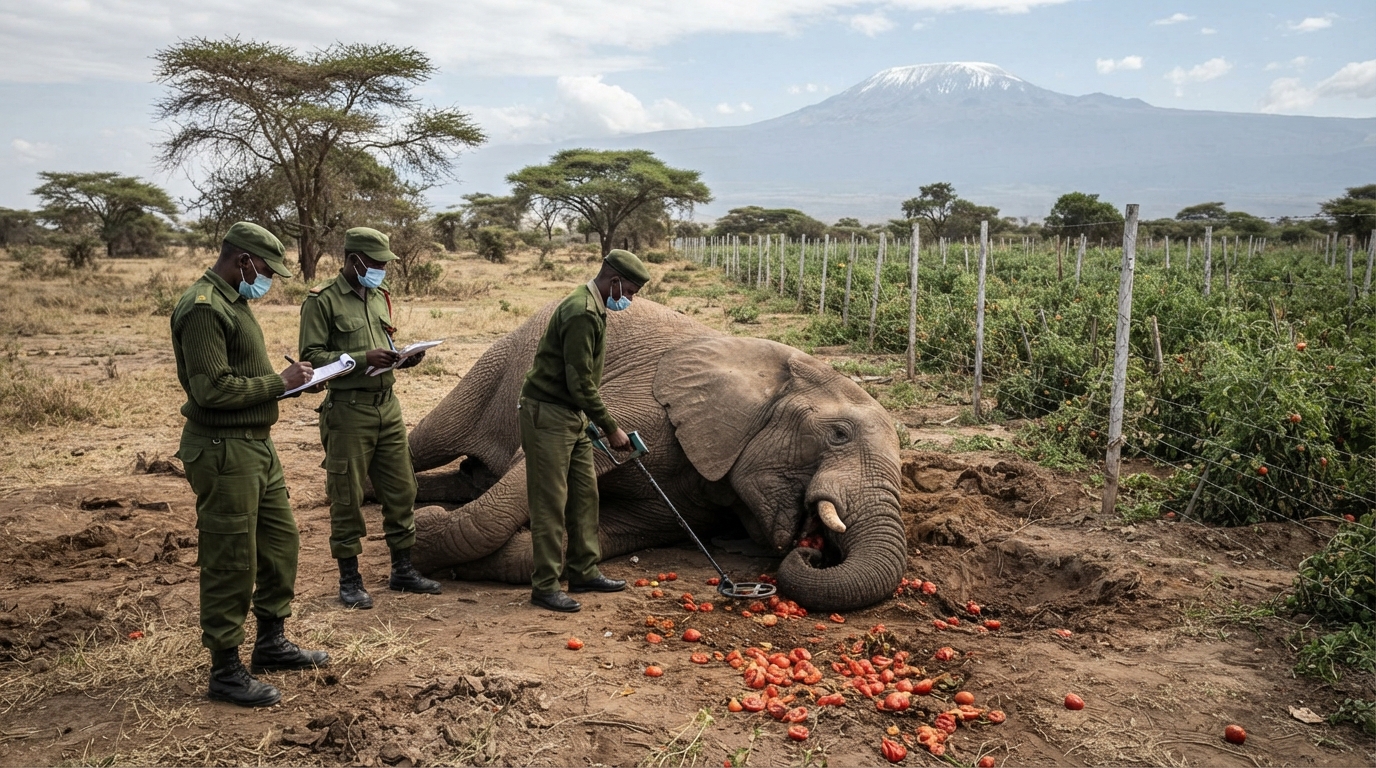
Four individuals have been apprehended in Kenya in connection with a series of unexplained elephant fatalities that have occurred over the past two months, according to official reports.
The Kenya Wildlife Service informed the BBC that three Kenyans and one Tanzanian are in custody, suspected of poisoning at least 18 elephants within Amboseli National Park. The investigation is exploring the possibility that the elephants succumbed to cyanide poisoning after consuming significant amounts of tomatoes treated with illicit pesticides.
Initial laboratory analyses have detected cyanide traces in crop samples extracted from the elephants' stomachs. All affected elephants, primarily adult females and their offspring, exhibited symptoms of paralysis, which authorities also attribute to cyanide poisoning.
Tomato farms are situated in the Kimana area, a corridor connecting Amboseli National Park and Tsavo National Park in southern Kenya. This expansive region, known as the Amboseli ecosystem, spans the border with Tanzania, where over 2,000 elephants migrate in search of sustenance and water.
Pesticides banned in Kenya are occasionally smuggled across the permeable border with Tanzania and utilized on farms within the Amboseli area. Here, elephants reside in proximity to human settlements and are known to forage on farms for food. Despite existing regulations against illegal agrochemicals, enforcement is lax, and the potential impact on animals receives minimal consideration.
The suspects have been released on bail as the investigation proceeds. The remains of Genghis Khan, an 11-year-old bull elephant, were discovered near the periphery of Amboseli National Park.