

Electricity instead of ammunition: a new anti-drone weapon has been tested
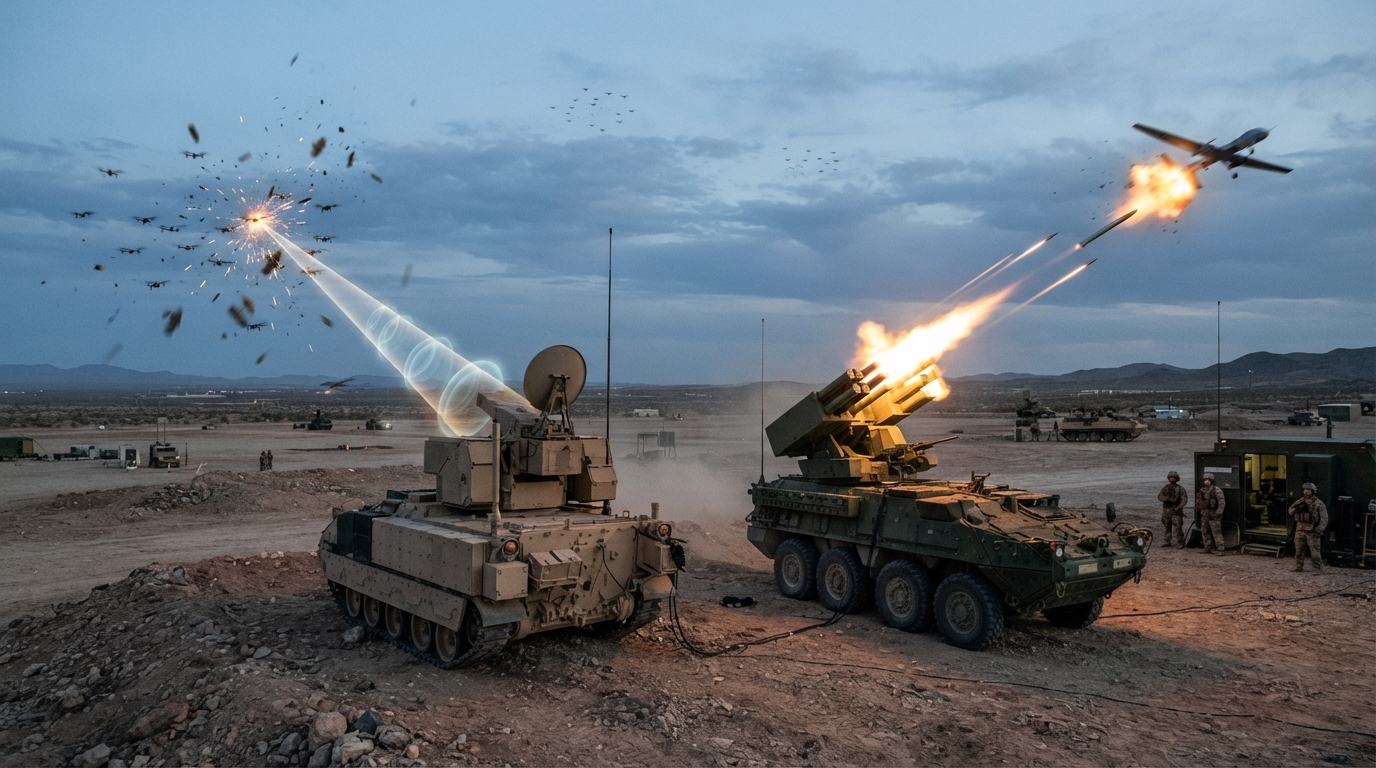
BAE Systems announced that its high-power microwave weapon designed to counter drone swarms has passed tests at open ranges and reached technology readiness level six. The system engages targets with electromagnetic energy instead of conventional ammunition.
Electricity instead of ammunition: a new anti-drone weapon has been tested
At the AUSA–2026 exhibition, the company presented two developments for the US Army. One of them is a powerful microwave HPM system, and the other is the MDACS multi-purpose artillery complex used against aerial and ground targets.
The HPM directs electromagnetic energy at a swarm of drones. According to the company, if a power supply is available, the system can continuously strike new targets. This reduces the need to constantly replenish ammunition supplies, as is the case with conventional weapons.
Such a capability could be crucial against mass drone attacks aimed at overloading air defense systems. Missile interceptors have a limited stock of ammunition and require additional resupply to replace expended missiles.
According to BAE Systems, more than 99 percent of the HPM's design consists of commercially available, mass-produced components from the open market. The company emphasized that this approach simplifies manufacturing and maintenance.
It is planned to deploy the modular system in a stationary position, as a towed complex, on combat vehicles, or on naval platforms.
The company stated that during testing, several billion microwave pulses were generated to study the impact on targets.
The second development — the MDACS artillery system — is designed to intercept aerial targets with high-speed guided HVP projectiles. This air-transportable platform uses various high-precision munitions depending on the mission and target type.
For use against stationary and moving ground targets, the Scorpio-XR munition can be employed. BAE Systems stated that its firing range is twice as long as existing high-precision munitions fired from 155-millimeter artillery.
The company views HPM and MDACS as complementary components of a multi-layered defense. While the former affects drone swarms with directed energy, the latter enables strikes on aerial and ground targets using projectiles.