

Electricity generated, but heat not wasted: how cogeneration works
It turns out that the heat generated during electricity production doesn't necessarily have to be released into the atmosphere. It can be reused—and this is the principle behind cogeneration plants. Unlike conventional power plants, where a significant portion of the heat becomes a byproduct, cogeneration allows for the simultaneous generation of electrical and thermal energy from the same fuel. The generated electricity is sent to […]
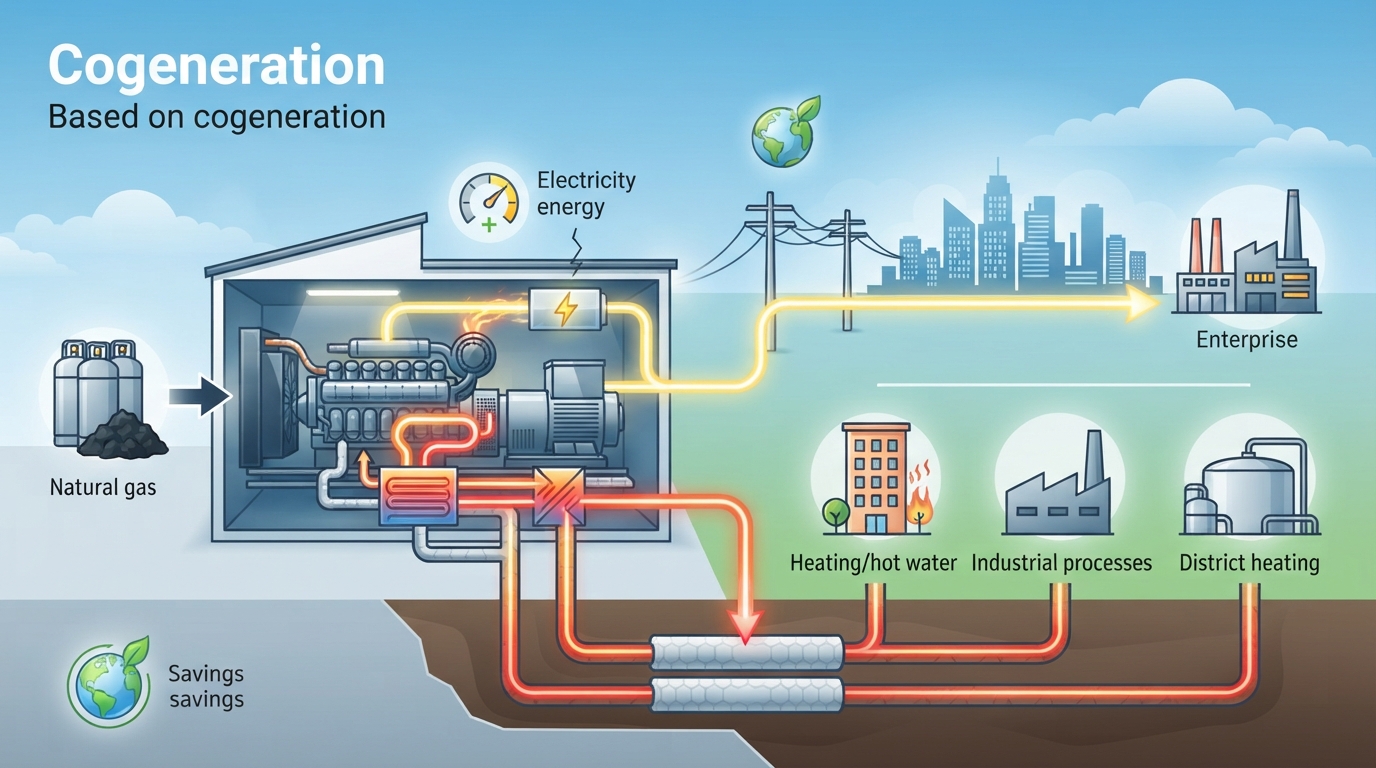
Electricity generated, heat stored: the operating principle of cogeneration
The thermal energy released during electricity generation does not necessarily have to be dissipated into the atmosphere. It can be effectively reused—this is the principle underlying the operation of cogeneration units.
Unlike traditional power plants, where a significant amount of heat is a byproduct, cogeneration makes it possible to simultaneously generate electricity and heat from the same fuel.
The generated electricity is fed into the power grid of a company or city, while the heat is used for heating, hot water supply, and various industrial processes.
Thus, the simple principle is realized: one fuel—two valuable energy resources.
This approach promotes more efficient fuel consumption, minimizes energy losses, and increases overall energy efficiency.