

Ecology before launch: How Türkiye established control over its first nuclear power plant
Environmental monitoring of a nuclear power plant begins even before its commissioning. The experience of Turkey, where the first Akkuyu NPP project is being implemented, shows that radiation monitoring is not the only important factor. Baseline environmental data, consistent monitoring, the participation of various agencies, and the availability of results are also crucial. This experience may be of interest to Uzbekistan primarily from the perspective of […]
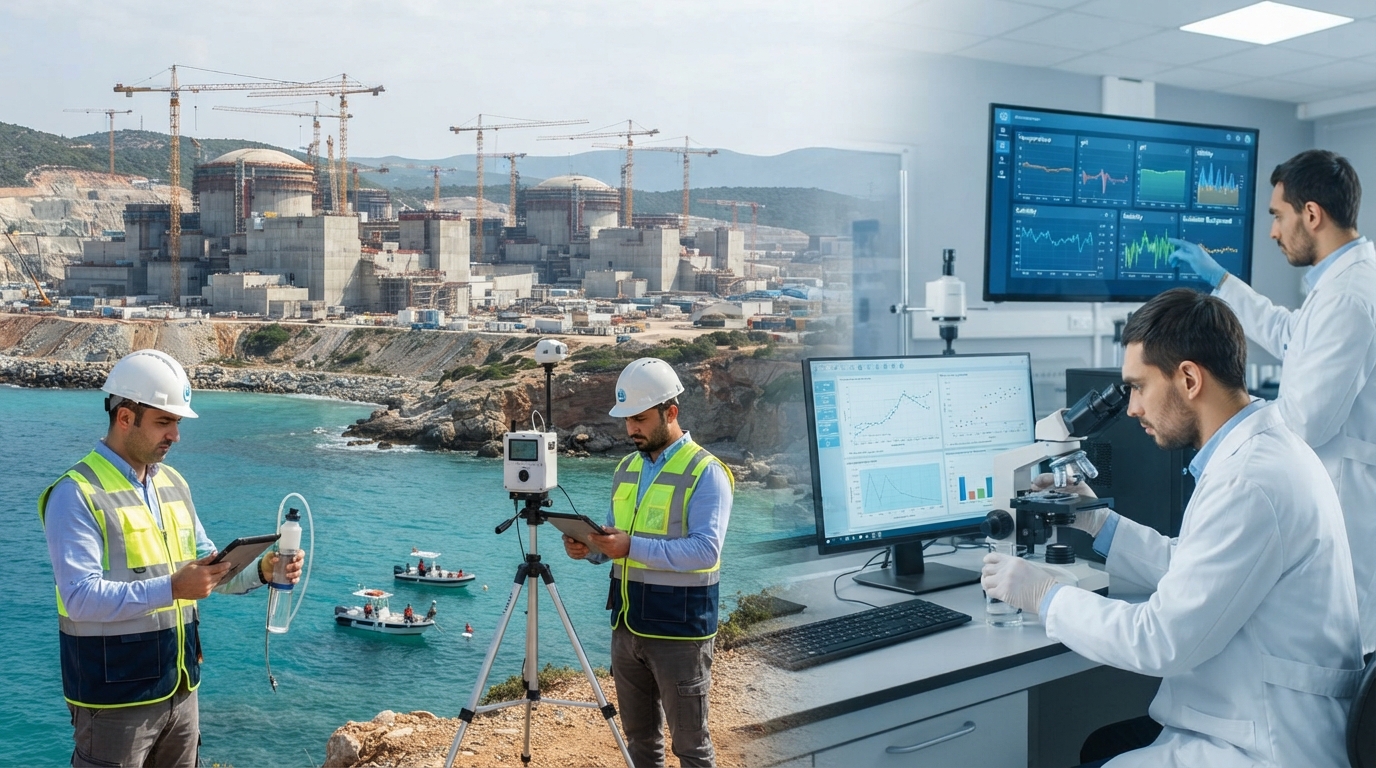
Environmental monitoring of nuclear power plants begins long before their commissioning. The experience of Turkey, where the first NPP, Akkuyu, is being built, demonstrates the importance of not only radiation monitoring but also baseline environmental data, continuous monitoring, the participation of various agencies, and the availability of results. For Uzbekistan, this experience could be particularly valuable in terms of establishing an environmental monitoring system even before the plant's operation.
Professor and Doctor of Science Ahmet Demirak, Director of the Center for Research and Application of Environmental Problems at Mugla Sıtkı Koçman University, spoke in detail about how such monitoring is organized in Turkey, why it is critical to begin monitoring before the NPP's operation, and the role of open environmental data.
According to Demirak, environmental safety requirements were already taken into account during the construction of the Akkuyu NPP.
"I can confidently state that the radioactive waste management system and environmental safety measures at the Akkuyu NPP were developed in accordance with international radioactive waste management principles, IAEA GSG-1 and SSR-5 standards, European Union regulations, and Turkish nuclear legislation. During the construction phase of the Akkuyu project, steps were taken to minimize the impact on the marine environment and protect soil and air quality. Otherwise, construction would not have been possible, as the project is being implemented under a construction process open to international oversight," Demirak emphasized.
**Multi-Level Control System**
Environmental monitoring around Akkuyu is not the sole responsibility of the project's implementing company. As Demirak explains, the primary responsibility lies with the Turkish Nuclear Regulatory Authority (NDK). The system also involves the Turkish Standards Institute, the Ministry of Environment, Urbanization and Climate Change, and the project company, Akkuyu Nükleer A.Ş. Thus, environmental monitoring of the facility involves the regulator, government agencies, and the project company itself.
"This approach involves analyzing environmental samples with the necessary analytical sensitivity, including highly sensitive analysis and the use of sensitive analytical methods for studying various environmental components. Today, the Akkuyu NPP is the first nuclear power plant and the largest nuclear construction site in the Republic of Turkey. Given the significance of this facility, its impact on coastal waters and the marine ecosystem is studied through environmental studies with the necessary analytical precision, both as part of the environmental impact assessment (EIA) and in subsequent scientific studies," the professor explains.
Real-Time Monitoring
Demirak places particular emphasis on the availability of monitoring results. According to him, environmental impact assessment reports and monitoring results are regularly published. “What’s most important to me is that the EIA reports and monitoring reports are published on the Akkuyu NPP website. Furthermore, the Akkuyu NPP operates a real-time environmental monitoring system. Data is collected continuously, monitoring seawater temperature and salinity, as well as a number of its chemical parameters,” the expert notes.
Continuous monitoring allows us to track not only the current state of the environment but also the dynamics of these indicators over time. This makes it possible to compare data and take into account natural and seasonal fluctuations. In the case of Akkuyu, a significant portion of the research is related to the marine environment, as the plant is located on the Mediterranean coast.
**The Importance of the Turkish Experience for Uzbekistan**
Directly replicating the Turkish model in Uzbekistan would be impractical due to the significant differences in the natural and climatic conditions of the two countries. Akkuyu is located on the Mediterranean coast, so a significant portion of the observations are related to seawater and the coastal ecosystem. In Uzbekistan, the set of monitored parameters will be determined by different conditions.
Nevertheless, the approach to environmental monitoring itself is of practical interest. The Turkish experience demonstrates that monitoring begins even before the plant's commissioning, multiple entities are involved in monitoring, some indicators are tracked continuously, and the monitoring results are publicly available. This consistency allows for not only recording changes but also comparing them with baseline data and understanding environmental changes after the facility begins operating.
Therefore, one of the key lessons from the Akkuyu experience for countries developing nuclear infrastructure is that environmental monitoring begins long before the plant's launch. Even before construction begins, when preparing the necessary documentation for obtaining a NPP construction license, engineers prepare one of the key documents—the Environmental Impact Assessment (EIA), which allows for an assessment of the facility's potential environmental safety, ecosystem preservation, and human safety. All EIA data are publicly available and are also presented to the public in detail during public hearings. All this confirms that preserving the region's ecosystem has traditionally been one of the priorities in the implementation of such infrastructure projects.