

ECHR closes nearly 900 cases against Russia
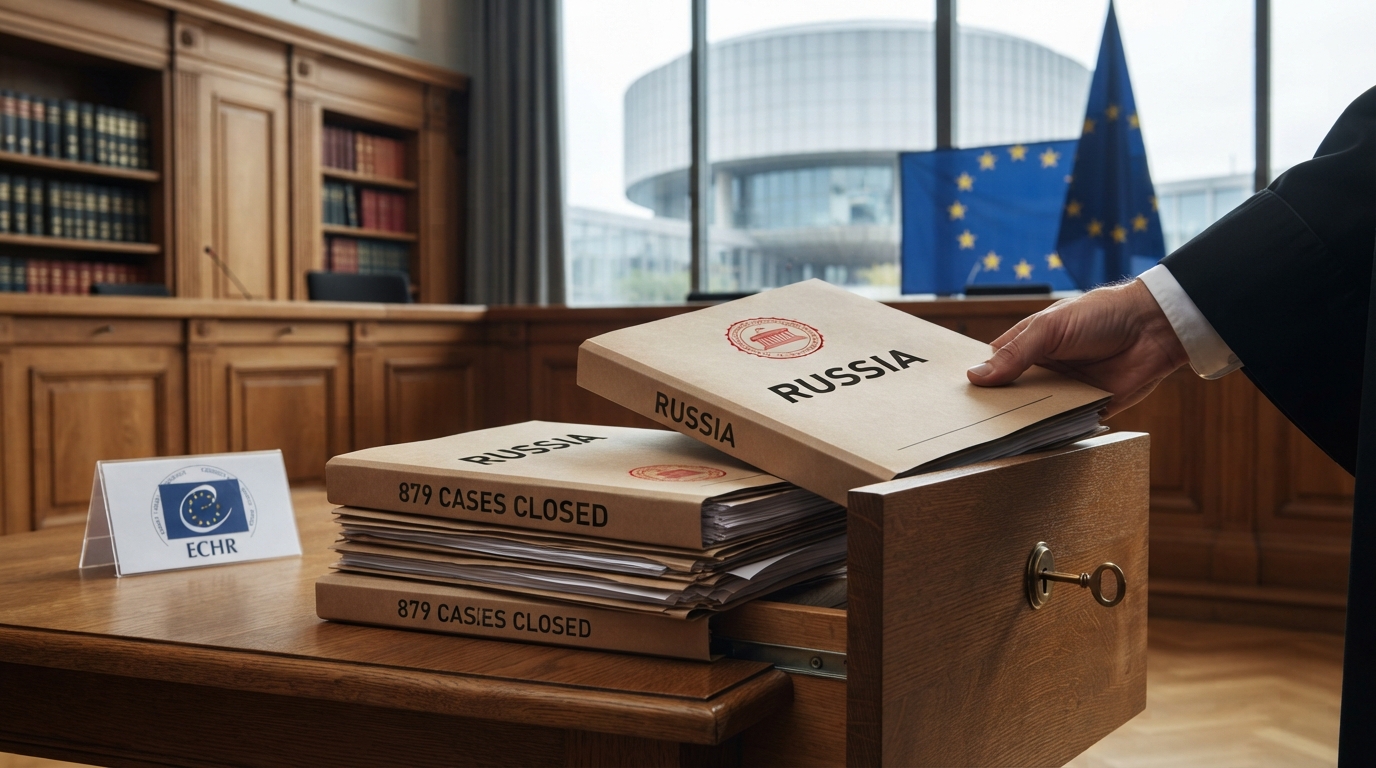
The European Court of Human Rights (ECHR) has suspended the consideration of 879 individual complaints filed against Russia due to a lack of resources. The court stated that it does not consider it justified to spend the large volume of resources that would be required for these cases.
ECHR closes nearly 900 cases against Russia
On September 3, the European Court of Human Rights (ECHR) decided to strike out 879 individual applications against Russia. The Strasbourg-based court explained this decision by the need to allocate available resources.
"The expenditure of the significant judicial resources required to process these individual cases cannot be justified," the court's statement said.
Among the cases struck out are complaints related to the treatment of political opposition representatives and activists in Russia, legislation assessed as repressive, as well as restrictions on freedom of expression and assembly.
The court's statement noted that the ECHR has already sufficiently expressed its position on similar cases in the past.
Russia was excluded from the Council of Europe in 2022 after starting a full-scale war against Ukraine. Even after that, the ECHR continued to consider cases related to events that occurred before Russia's exclusion from the organization.
Meanwhile, Moscow has stated that it does not recognize the ECHR's rulings against it and refuses to pay the designated monetary compensations.
According to the ECHR, the decision to strike out the 879 cases is final. However, the court specifically emphasized that this does not mean Russia's international legal responsibility has been waived.
If necessary and if relevant circumstances arise, proceedings in individual cases may be reopened. At the same time, cases related to Russia's wars with Ukraine and Georgia will continue to be considered by the ECHR.
One of the applicants in the cases that were struck out was Ivan Zhdanov, the former director of the Anti-Corruption Foundation. He stated that he accepted the ECHR's decision with understanding.
According to Zhdanov, the process in the ECHR is based on the principle of adversarial proceedings. If one of the parties does not present its objections and does not implement the court's decisions, it becomes difficult for the court to function effectively under such conditions.