

Dust and smog have covered Tashkent. Doctors explained how to protect one's health
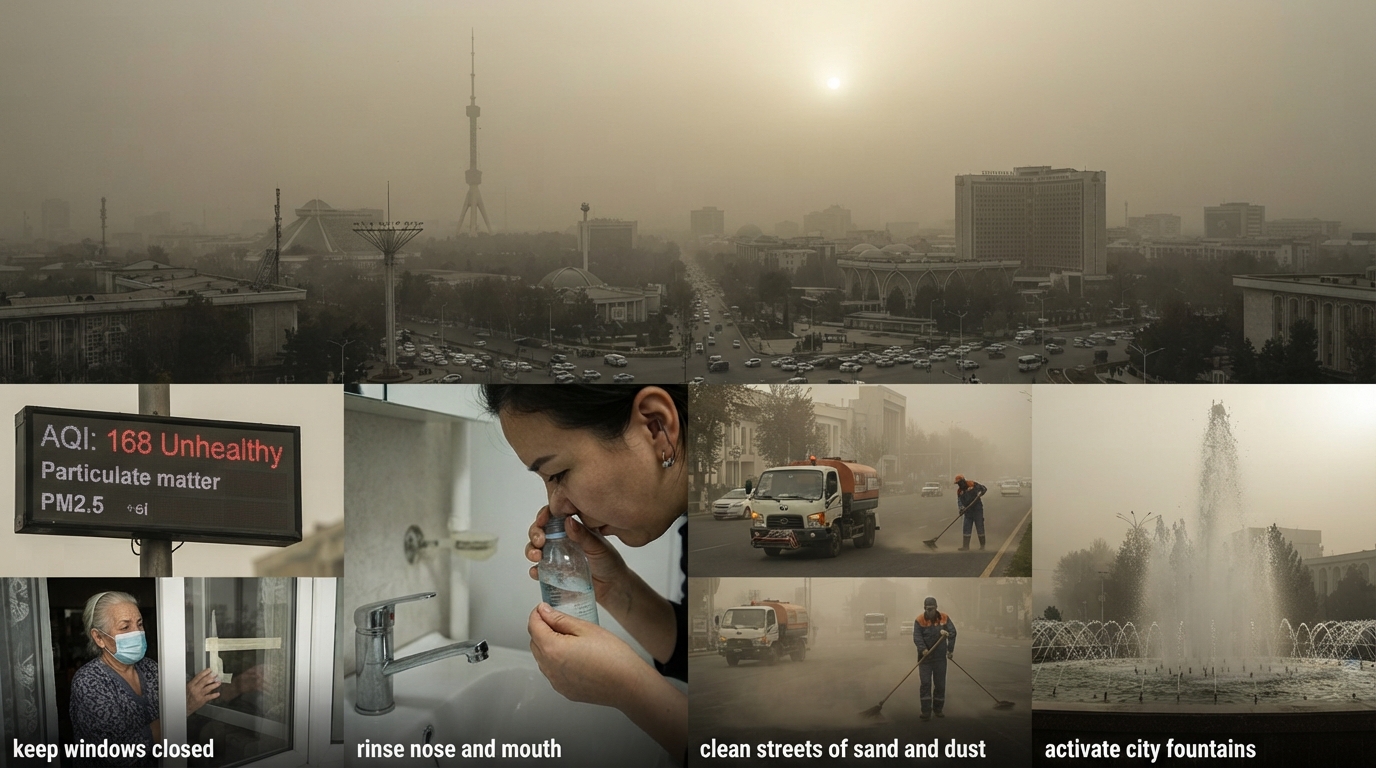
Dust and smog cover Tashkent. Doctors explain how to protect your health
In Tashkent and other major cities in Central Asia, the air has become more dangerous to health: the AQI index has exceeded 100, and the inversion may last for another ten days. The Ministry of Health explained how to protect your health under conditions of increased concentrations of dust and harmful impurities.
The deterioration of air quality was facilitated by an anticyclone that established itself at the end of October, weak winds, and a lack of precipitation. Due to the temperature inversion, emissions from transport, industrial enterprises, and energy facilities, as well as natural dust, accumulate in the lower layers of the atmosphere and do not disperse.
Doctors advise reducing time spent outdoors as much as possible. It is especially important to follow this recommendation for people with bronchial asthma, allergic rhinitis and conjunctivitis, bronchitis, and other chronic respiratory diseases. Anti-allergic medications should be taken only on a doctor's recommendation.
To reduce dust exposure at home, experts recommend keeping windows closed, doing wet cleaning more often, and using air conditioners and air purification systems. Additionally, you can hang wet towels and place containers of water indoors and near buildings.
Medical professionals also advise drinking more water, taking showers, and rinsing the nose and mouth with a saline solution. This will help ease breathing and reduce irritation of the mucous membranes.
If shortness of breath, nasal congestion, a runny nose, itching or redness of the eyes, as well as a cough appear against the background of dusty conditions, you should consult a family doctor.
The Ministry of Health also reminded that if emergency medical care is needed, you can call 103 around the clock.
, to reduce the concentration of particles in the air in Tashkent and the regions, instructions were given to clean the streets of sand and dust, as well as to turn on the city fountains.