

Does blood sugar levels change with age? 4 facts that many people don't know
**Does blood sugar levels change with age? 4 important facts that many people don't know**
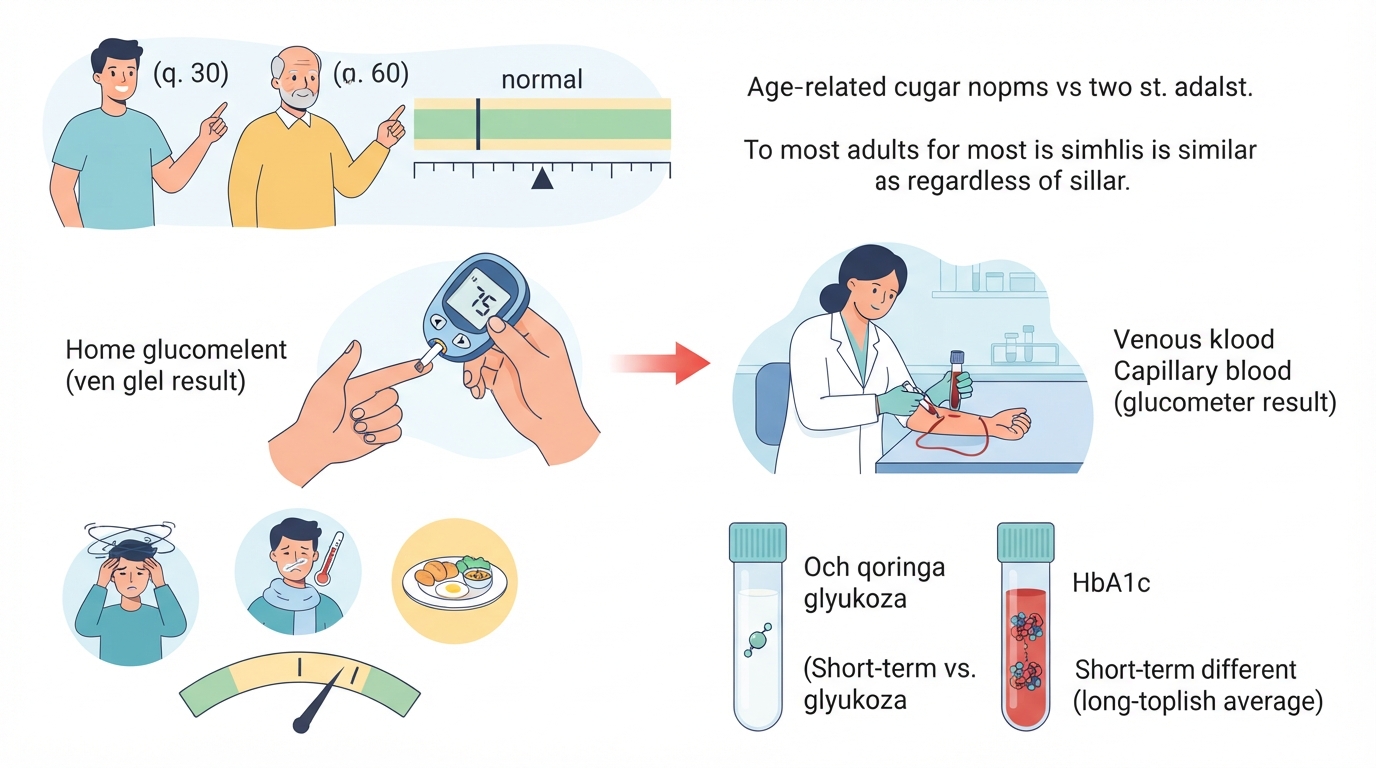
Many people have a misconception that blood sugar levels change with age. In fact, there is no specific "sugar norm" for the human body that changes every decade as we age. For most adults, almost the same indicators are taken as a basis. Therefore, when checking the results of the analysis, it is necessary to rely on the analysis indicators, and not on general information on the Internet. Because the numbers for determining the amount of glucose may vary slightly depending on the actual laboratory test method.
**Why should blood sugar be measured?**
Usually, blood sugar is understood as the concentration of glucose. It is the main source of energy for the body's cells. Most often, glucose levels are measured in blood taken on an empty stomach - after not eating for at least 8-12 hours at night. There are also other types of analysis: postprandial glucose, a sugar load test, and a glycated hemoglobin analysis, which shows the average value over the last 2-3 months.
It is very important not to confuse these types of analysis. Fasting glucose and glycated hemoglobin standards have completely different units of measurement and cannot be directly compared.
**What are the main criteria for adults?**
The normal range of glucose in a healthy person's fasting blood plasma is approximately 4.1 to 5.9 mmol/l. Fasting values around 5.6–6.9 mmol/l are usually considered a sign of diabetes and require vigilance. If the result is 7.0 mmol/l or higher when the analysis is repeated, then it is necessary to see a doctor.
These numbers are not a strict rule for all laboratories, but are just a guideline. Normative values depend on whether the blood is taken from a vein or from a finger, what equipment and reagents the laboratory uses. Therefore, the same sugar level may differ slightly in different laboratories.
**What is the difference between blood taken from a finger and blood taken from a vein?**
Another confusion is related to where the blood was taken from. A home glucometer that measures sugar from a finger and a blood test taken from a vein in a hospital laboratory, even when tested at the same time, show different numbers. Blood plasma taken from a vein usually comes out slightly higher than blood taken from a finger. This is not a device error, but a natural physiological feature of the body.
Therefore, it is incorrect to compare the result of a home glucometer with the norm of venous blood on a laboratory form. Usually, the instructions for glucometers contain a separate table for determining the results.
**Why does age matter?**
Although there is no single age standard for adults, with age, the sensitivity of the human body to insulin gradually decreases and the risk of abnormalities in the analysis increases. Therefore, after a certain age, it is recommended to regularly check the glucose level. This is especially important for those who are overweight, have a sedentary lifestyle, and have diabetes in close relatives.
The norm in children and adolescents differs significantly from that in adults. However, among the adult population, for example, there is almost no difference in the norm of a 30-year-old and a 60-year-old person. In this situation, the general health of a person is much more important than age.
**Who is recommended to check the glucose level in the body more often?**
There is no specific age limit that would dramatically change the timing of the tests, but there are risk factors that doctors recommend regular monitoring of blood sugar. These include being overweight, especially belly fat, a sedentary lifestyle, having diabetes in close relatives, and high blood pressure.
**It is a mistake to check the normal range online**
The most common mistake is to look up the norm online. Instead, you should look at the reference values column on the results sheet itself. The laboratory will usually write the normal range for the method it uses next to your number. If your result falls within this range, then everything is fine. If the result is high or low, this is a signal to see a doctor.
It is important to pay special attention to whether the test was taken on an empty stomach and how many hours have passed since the last meal. Even a slight deviation from the preparation rules can change the result. Usually, before taking a fasting glucose test, you are asked not to eat anything for 8-12 hours. You can drink water, but tea, coffee, and various sweet drinks can cause false-positive results.
**Fasting glucose and glycated hemoglobin: Are both tests necessary?**
A fasting glucose test shows the blood sugar level in the morning on the day the test is taken. Glycated hemoglobin, which is often written as HbA1c on forms, works differently: it reflects the average level of blood sugar not at a specific time, but over the past 2-3 months.
The advantage of a glycated hemoglobin test is that you don’t have to be fasting to take it. It is not affected by temporary factors such as stress the day before or an accidental violation of the diet. Therefore, doctors recommend evaluating both indicators together. While fasting glucose shows today’s result, glycated hemoglobin shows the general trend over the past few months.
**Stress, colds, and insomnia can affect test results**
Blood sugar levels are very sensitive to temporary factors. Stress, insomnia, colds or any inflammation, heavy physical exertion the day before the test, some medications, and even drinking tea before donating blood can change the result from normal.
Therefore, a single test result that is higher or lower than the norm is not a reason to panic or make an immediate diagnosis. When the results are suspicious, doctors usually order a repeat test to clarify the diagnosis.
**It is recommended to see a doctor immediately if the following conditions are observed:**
* Constant thirst and dry mouth;
* Frequent urination;
* Unexplained fatigue and weakness;
* Unexplained weight loss;
* Slow healing of skin wounds and ulcers.
**The 4 most popular misconceptions about blood glucose levels:**
1. **A single spike in blood sugar after eating sweets at a holiday table means diabetes.** This is not true. Even in a healthy person, blood sugar levels rise after eating and then fall on their own. A single measurement cannot be used to make a diagnosis.
2. **A home glucometer is more accurate than a laboratory one.** No, household devices have their own level of error. They are convenient only for daily self-control, but are not suitable for making an accurate diagnosis.
3. **If the analysis is good once, you don’t need to re-test.** Blood sugar levels vary depending on age and lifestyle, so regularity of testing is important.
4. **If the blood sugar level is within the normal range, there is no problem in the body.** This is not the case. Other indicators, such as glycated hemoglobin, can detect signs of disease long before fasting blood sugar changes.