

Do not look down on partners…
Russian business in Uzbekistan: five mistakes when entering the market — expert opinion
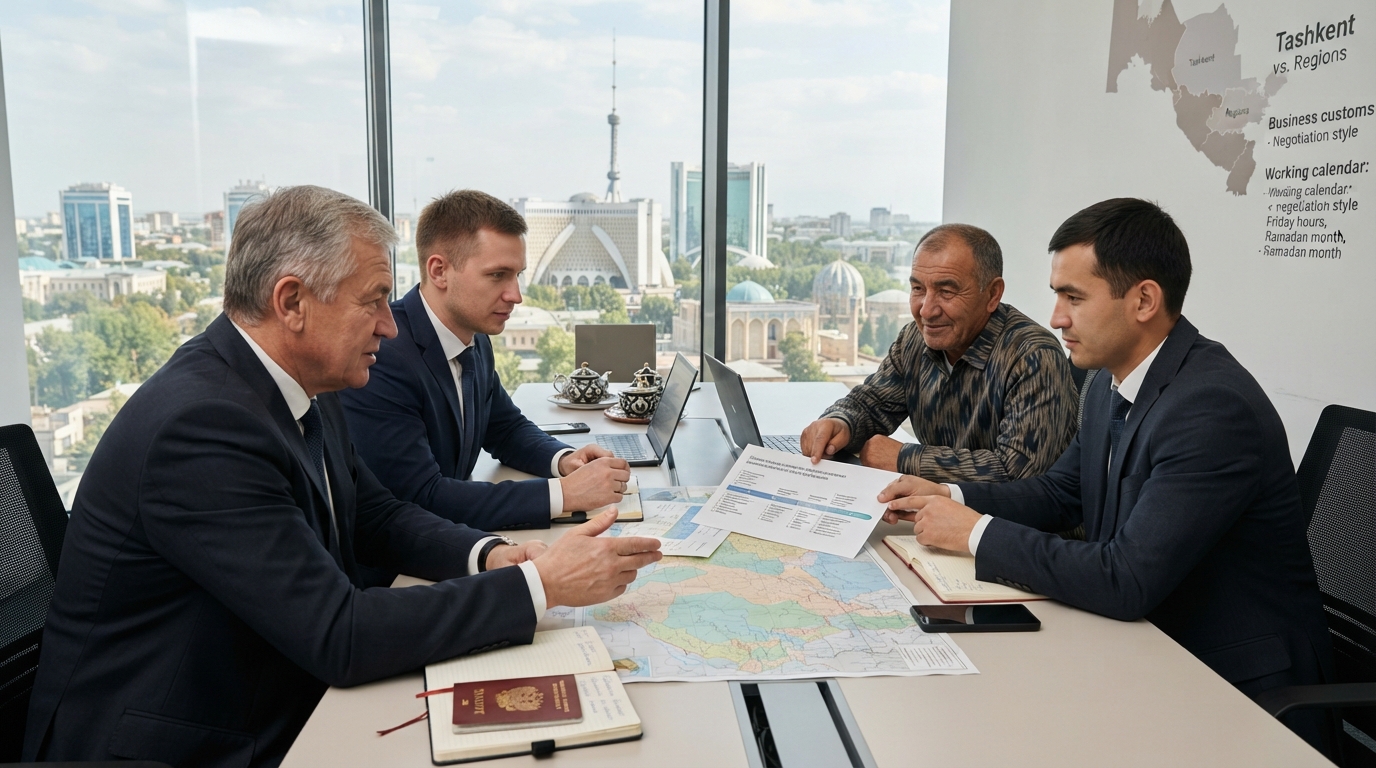
One should not look down on partners…
Russian entrepreneurs are increasingly entering the Uzbek market, counting on the similarity of the linguistic and business environments. However, transferring business models familiar to Russia is far from always effective in local conditions.
Uzbekistan attracts businesses with high rates of economic growth, rising investments, and the development of the digital economy. Among the additional advantages for Russian companies are geographical proximity and the widespread use of the Russian language in the business environment.
At the same time, Tashkent and the country's regions differ significantly from each other in terms of income levels, infrastructure, and purchasing power. Therefore, the experience gained in Russian or even Tashkent business cannot always be transferred without changes to other parts of the republic.
One of the key mistakes is assuming that the markets of Russia and Uzbekistan are structured in roughly the same way. As Galifanov notes, differences are particularly noticeable in the B2B environment and business practices. An entrepreneur has to take into account the local specifics of negotiations, decision-making, and building relationships with counterparties.
For this reason, before entering the market, it is important to study not only the legislation but also real business processes, including the specifics of working with clients and contractors.
Remote management can become a serious problem, especially at the start. The author emphasizes that in Uzbekistan, personal connections and the presence of a manager often play an important role in closing deals and resolving organizational issues. A manager located in Russia finds it more difficult to promptly assess the situation and deal with issues arising on the ground.
Because of this, companies have to choose between the permanent work of a manager in Tashkent and forming a strong local management team.
Another difficulty is the shortage of experienced managers and highly specialized professionals. The salary expectations of qualified employees in Tashkent can be comparable to those in Moscow, while there are significantly fewer suitable candidates for certain positions. In some cases, searching for a specialist takes several months.
Relocating employees from Russia is also not easy: relocation requires additional costs, and the specialists themselves are not always ready to move to Uzbekistan for a long time.
The Russian management model with a broad area of employee responsibility may require adaptation. Galifanov believes that in the early stages, more attention needs to be paid to the local team, and clearer control procedures should be introduced. Among the problems his business has faced, he names missed meetings, uncompleted tasks, and breached agreements.
This is not so much about distrust of employees as it is about the need to build a clear system of reporting, deadline control, and accountability.
When planning a business, national and religious holidays, as well as the specifics of the working calendar, must be taken into account. In particular, on Friday afternoon, business activity may decline, and during Ramadan, the usual work schedule changes. This affects not only the company's employees but also clients, suppliers, and government agencies.
If such periods are not taken into account when planning sales and projects, deadlines can increase significantly.
Galifanov advises Russian companies to budget in advance for a strong local manager or to consider relocating key employees from Russia. At the same time, in his opinion, the Uzbek division should not be perceived merely as a branch of a Russian company. The business model and management processes must take local conditions into account.
Another important principle is not to consider verbal agreement as a final deal. It is better to record deadlines and obligations in writing and regularly confirm their execution.
Uzbekistan remains an attractive destination for Russian business; however, successful market entry requires not a mechanical transfer of the Russian model, but its adaptation. The earlier a company takes into account local specifics of management, the labor market, and business culture, the lower the risk of costly mistakes.