

'Cowboy builders' targeted in new government clampdown
A database of trusted tradespeople and a system to protect customers' money is being launched by the government next month.
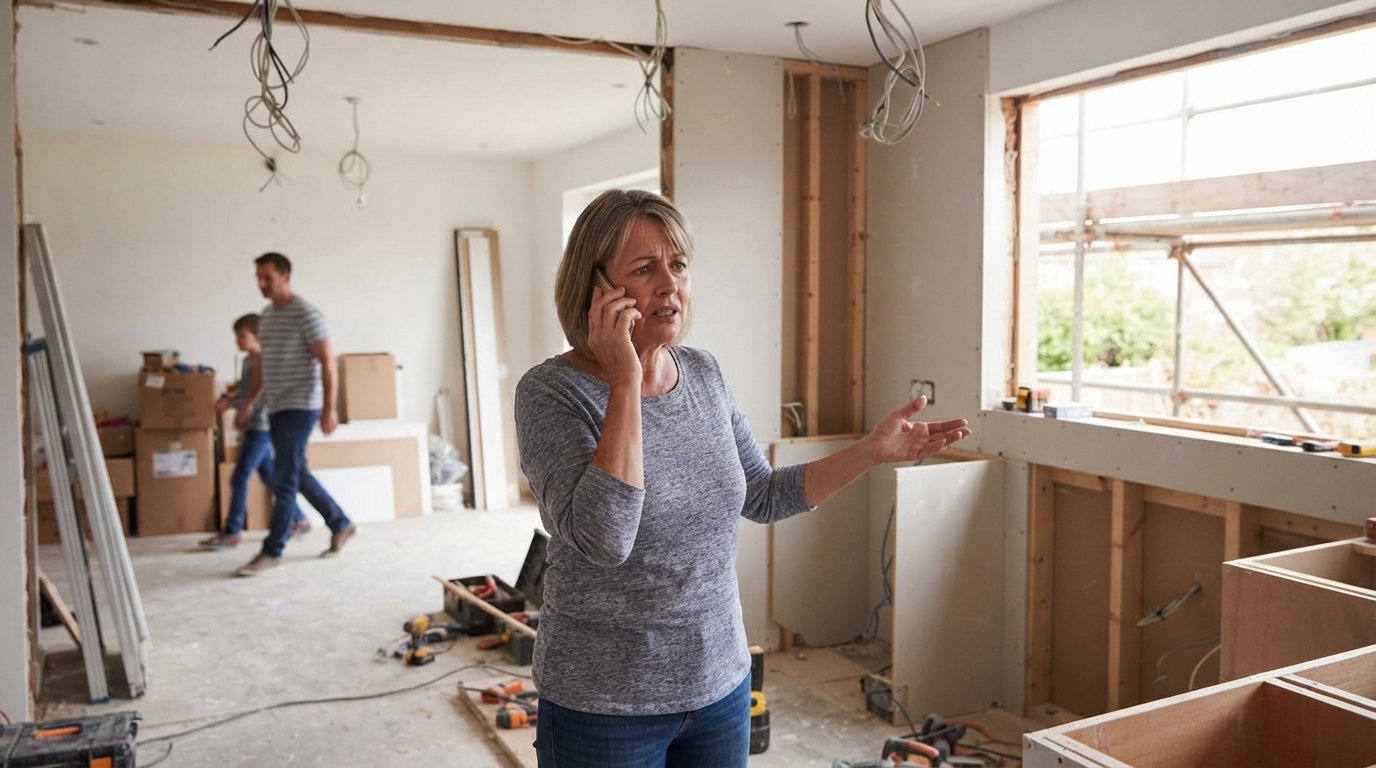
The government has announced a new initiative to protect individuals undertaking home renovations from "cowboy builders," which includes a new database of approved traders and a more secure payment system.
Starting next month, traders who join the scheme will be required to meet specific benchmarks for customer service, transparency, and dispute resolution.
Prime Minister Andy Burnham stated that dishonest tradespeople cause "months of stress" and leave projects unfinished for families.
However, the National Federation of Builders (NFB) expressed doubts that these changes would deter rogue operators, while the Tories suggested it would create additional administrative burdens for businesses already operating legitimately.
Citizens Advice has identified home renovations as a leading cause of consumer complaints.
The government reported that over a quarter of individuals who undertook home improvements in the last 18 months encountered issues, such as builders disappearing after receiving upfront payments. This data was supported by a survey conducted for the Competition and Markets Authority.
Under the new trader scheme, customer funds will be held in an escrow account and disbursed in stages as project milestones are achieved.
Adas Rico Wojtulewicz-Richmond, the NFB's director of policy, told BBC Breakfast that existing schemes for finding trustworthy builders already exist. He questioned the effectiveness of the new scheme, stating, "Is this scheme going to stop bad actors operating and ripping people off? I don't think it will."
He proposed that a more effective solution would be a "passport" for every project, documenting all work completed. He argued this would "protect consumers because you can find out which companies are doing a poor job, and it brings up the industry standards."
The Prime Minister asserted that rogue tradespeople tarnish the reputation of their "decent, hardworking" counterparts and that the new measures would "put the cowboys out of business."
Business Secretary Jonathan Reynolds commented that while home improvements can be stressful, "we're taking action to protect consumers, support reputable traders and make sure people can spend their money with greater confidence and security."
Shadow business secretary Andrew Griffith criticized the announcement, viewing it as "the sort of government initiative that risks the unintended consequence of piling more paperwork onto the majority of businesses who already do the right thing."
He added, "The government would do far better to beef up law enforcement and have tougher sentences for the minority who fraudulently rip off customers. Those who break the rules will keep breaking them regardless of whether there is an app in the way."
Liberal Democrat business spokesperson Sarah Olney stated, "Rogue builders cause real harm and ruin real lives every year. The current system is simply not fit for purpose and this half-baked announcement falls frustratingly short from fixing it."
She further argued, "A voluntary code for tradespeople completely misses the mark. Rogue operators won't voluntarily sign up - they will simply keep exploiting families in the shadows."
In addition to addressing rogue tradespeople, the government has unveiled plans to regulate private bailiffs in England and Wales. This aims to shield individuals in debt from "intimidating behaviour, unfair treatment or being pushed into excessive repayment arrangements."
These changes will grant individuals facing enforcement action access to an independent complaints process and hold private bailiffs to professional standards.
Sarah Sackman, minister for courts and legal services, acknowledged the important role of bailiffs but emphasized that "with that responsibility must come high standards."
As part of these reforms, the government will examine how organizations like Trading Standards collaborate with regulators and enforcement bodies to ensure "consumers are not passed from pillar to post."
Last year, a Freedom of Information request by Which? revealed that understaffing in trading standards teams was contributing to an increase in scams and the sale of dangerous products.