

Chinese artist jailed over satirical Mao sculptures, say rights groups
Rights groups say the case against Gao Zhen is an assault on artistic freedom.
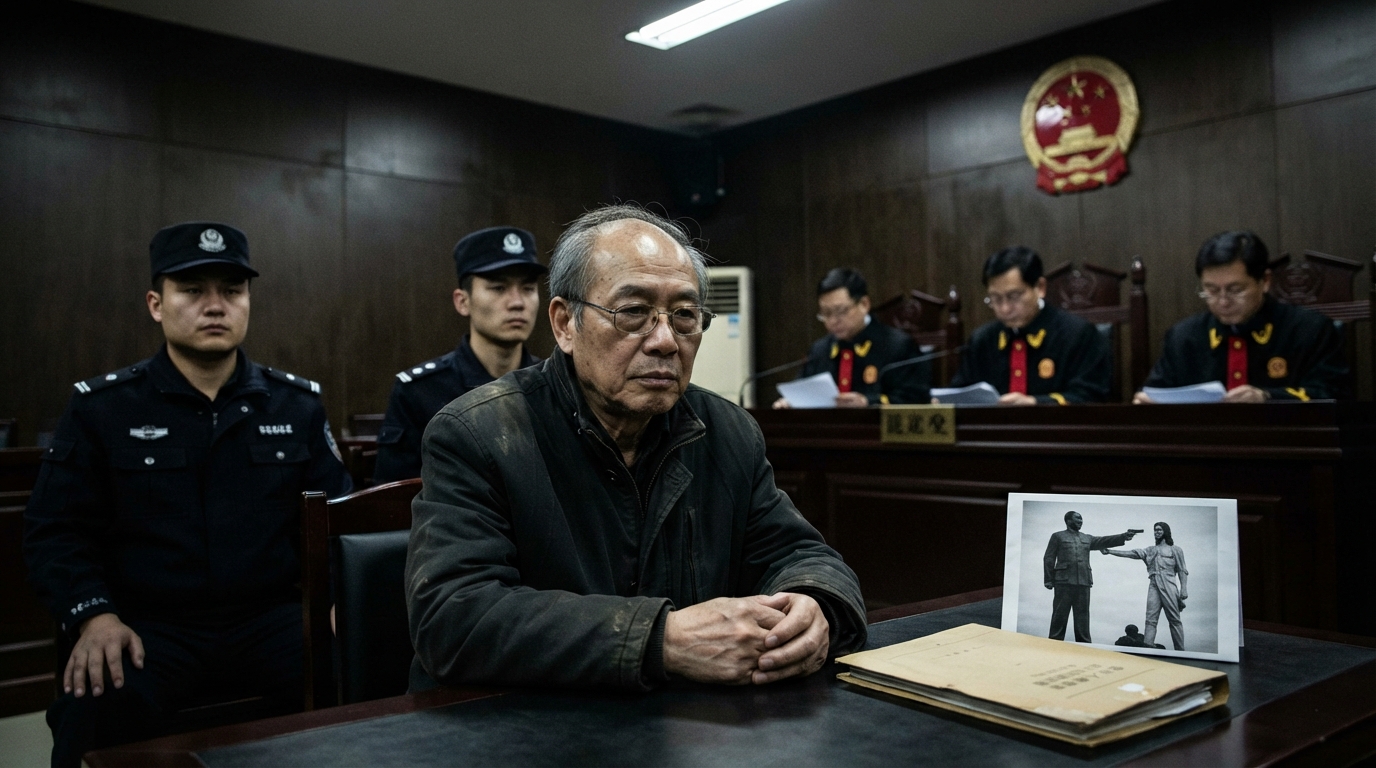
A Chinese artist, Gao Zhen, has been sentenced to a maximum three-year prison term for "slandering China's heroes," according to human rights organizations. The arrest of Gao, known for his satirical sculptures of Mao Zedong, occurred in 2024.
On Tuesday, a court in Hebei province determined that Gao Zhen's artwork "infringes upon the hero's reputation and harms public interest." Among his most recognized creations, made with his brother Gao Qiang, is a sculpture featuring a group of Mao-like figures pointing guns at Jesus Christ. Gao, 70, has been held for the past two years, prompting calls for his release from the UN and numerous rights groups. Amnesty International has condemned his sentencing as an "assault" on artistic freedom.
Gao had relocated to the US in 2022 but was apprehended at his studio on the outskirts of Beijing during a visit in August 2024. Authorities confiscated his artworks and prevented his wife and seven-year-old son from leaving China. Observers of China suggest that Gao Zhen's arrest illustrates the Chinese Communist Party's increasingly extreme grasp and reach, including its transnational and retroactive policing of citizens.
He was charged under a law enacted in March 2018, which prohibits the defamation of historical figures associated with the party. The Gao brothers' "Execution of Christ" sculpture was exhibited in 2009, along with two other sculptures cited in the case: "Mao's Guilt," a life-sized replica of the leader kneeling in solemn contrition, and "Miss Mao," which depicts him with large breasts and a long, Pinocchio-style nose.
Gao's case was heard in a one-day, closed-door trial earlier this year, which received limited media attention in China. Amnesty International stated on Tuesday that he intends to appeal the conviction. If the verdict is upheld, Gao would complete his sentence in August 2027, as the two years he has already spent in detention would be factored in.
The Gao brothers gained prominence in China's art scene during the 1990s and 2000s, achieving international recognition for works that critiqued their homeland's politics. Sarah Brooks, Amnesty International's China Director, stated on Tuesday, "No artist should face criminal punishment for creating work that challenges official narratives or encourages critical reflection on history." She added, "This trial demonstrates how broadly worded and politically motivated laws are used – and worse, in this case, used retroactively – to silence artists, activists and other individuals who dare to express views that differ from those of the Chinese government."
The UN's Human Rights Office informed AFP news agency that "The case against [Gao Zhen] raises particular concerns with regard to the retroactive application of criminal law, the use of criminal sanctions to punish artistic expression, and the impact on his family." Earlier this year, his brother Gao Qiang told the BBC that the trial's "message is clear." He remarked, "Even if a work was made 15 years ago, it can still be turned into a crime if today's political climate changes."