

HK's Tiananmen activists guilty in national security trial
Three activists were accused of inciting others to subvert state power under the China-introduced law.
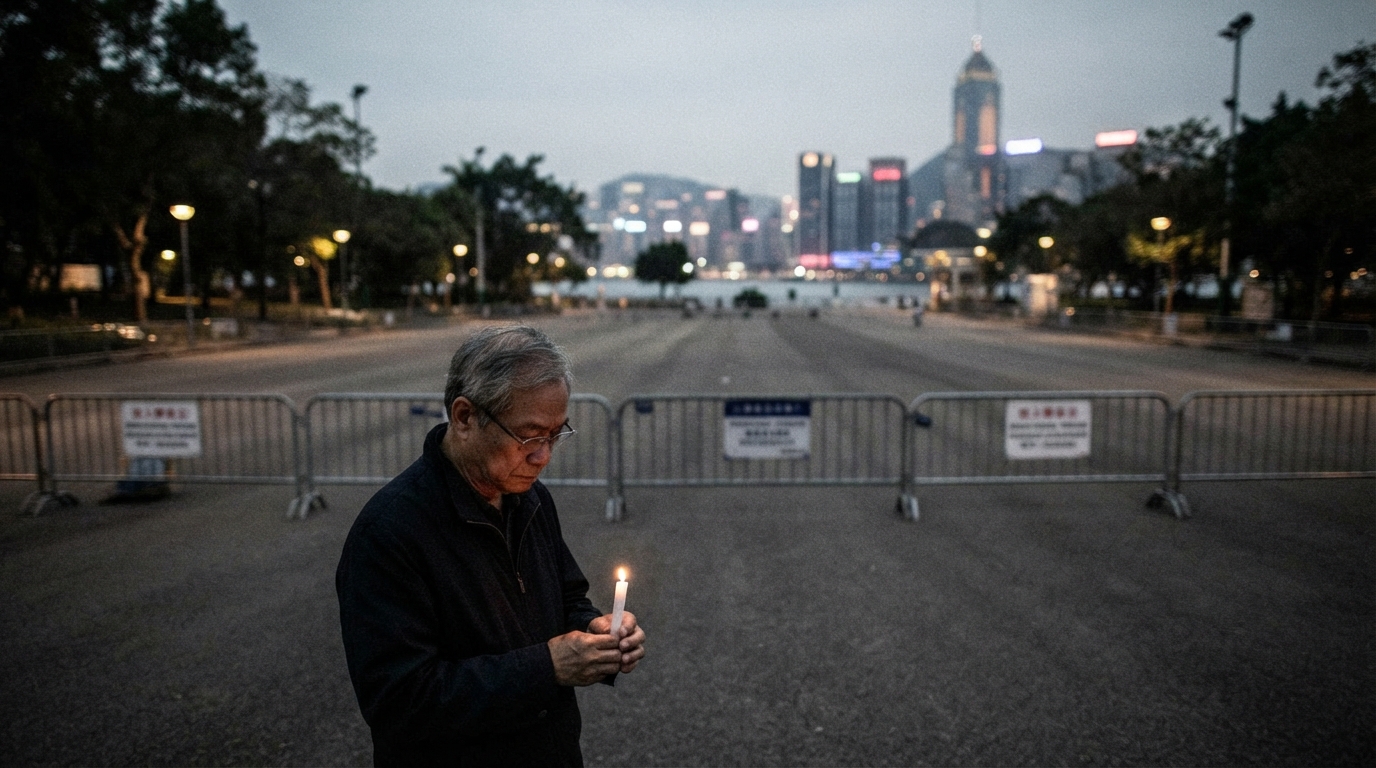
Hong Kong has found two activists guilty of inciting subversion of state power, a charge under the city's contentious national security law. The pair had organized yearly vigils remembering the 1989 Tiananmen Square crackdown.
Lee Cheuk-yan, 69, and Chow Hang-tung, 41, could each receive a maximum sentence of 10 years in prison following their conviction under the law, which was introduced by China. Their sentencing date is yet to be announced.
A third individual, 74-year-old former lawmaker Albert Ho, admitted guilt in January.
The prosecution contended that the defendants "endanger(ed) national security in the name of human rights." Chow, who represented herself, stated in court in May that the law itself was on trial.
Historically, Hong Kong was one of the few locations within Chinese territory where individuals could assemble to commemorate the fatal 1989 crackdown on pro-democracy demonstrators.
Authorities prohibited these gatherings in 2020, citing Covid-19 regulations, and they have not since resumed. The national security law, which criminalizes a broader spectrum of dissenting actions, also became official that year.
Lee and Chow were prominent figures in the now-disbanded Hong Kong Alliance (HKS), established in May 1989 to support students engaged in pro-democracy demonstrations.
Weeks later, the Communist Party suppressed pro-democracy protests in Beijing's Tiananmen Square using military forces and tanks. Estimates of fatalities vary widely, from several hundred to many thousands.
For the subsequent three decades, HKA urged authorities to acknowledge responsibility for the crackdown, release dissidents, and implement democratic reforms.
The Alliance's leaders were indicted in 2021 and have been incarcerated since.
Amnesty International, a human rights organization, has stated that the case "relies on vague, overly broad and arbitrary definitions of 'subversion'."