

China to pump $54bn into state banks and insurers to boost economy
It comes as Beijing is aiming to reshape its economy in the face of a number of challenges.
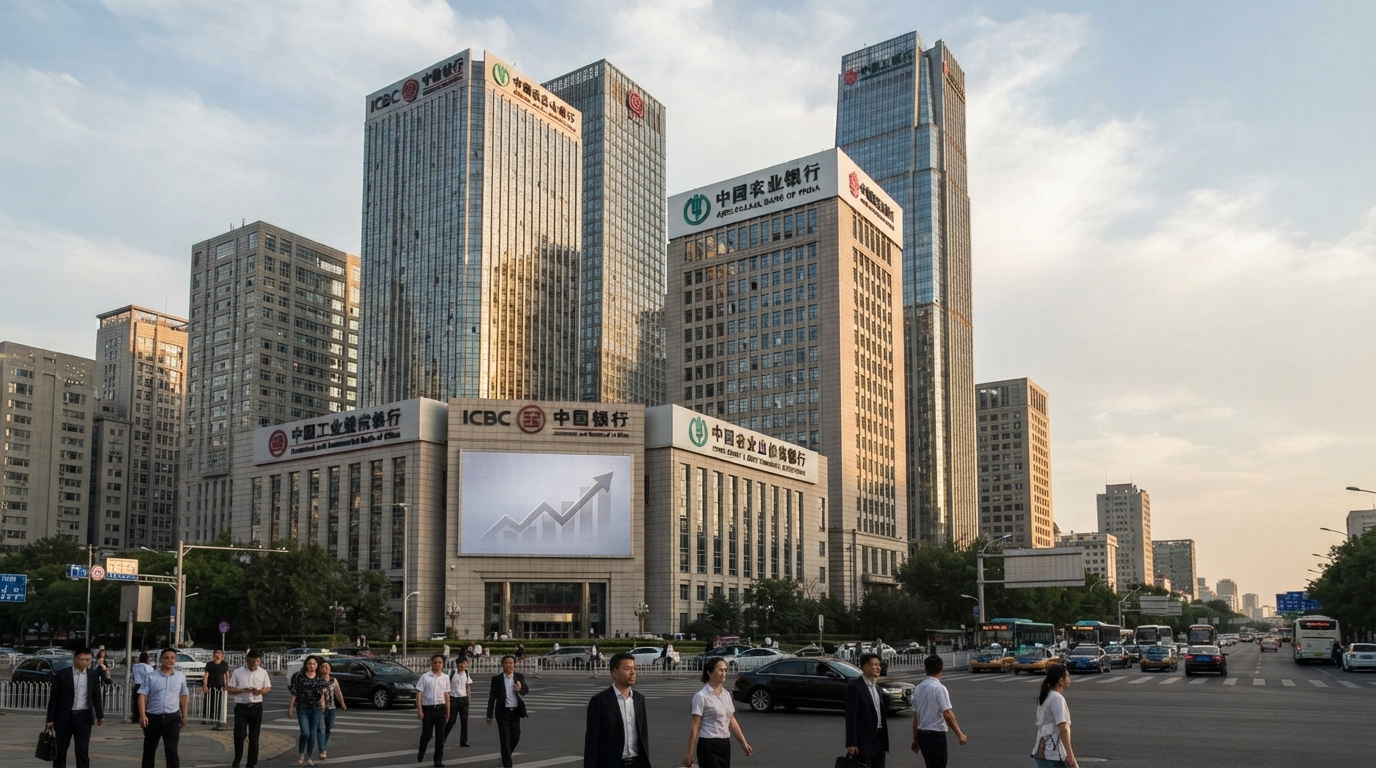
China plans to inject $54bn into state banks and insurers to support economy
China is channeling tens of billions of dollars into eight state-owned banks and insurance firms in an effort to strengthen the country’s financial system and support its slowing economy.
The capital boost, led by China’s finance ministry, will amount to 360 billion yuan ($53.6bn; £39.7bn), state news agency Xinhua reported on Sunday.
The agency said the step "will help further enhance their sound operating capabilities, risk resistance capabilities, and ability to serve the real economy".
It is the latest in Beijing’s efforts to revive the world’s second-largest economy as it grapples with problems including trade tensions with the West, the impact of the Iran war and an aging population.
The package will improve the finances of three major lenders and five insurers, including the Industrial and Commercial Bank of China, the Agricultural Bank of China and China Export & Credit Insurance Corporation.
State outlet the Global Times said this "will give banks and financial institutions more resources to channel into credit for the real economy, while strengthening their ability to withstand external shocks at a time of global financial uncertainty".
President Xi Jinping has long regarded financial stability as central to China’s national security.
This weekend’s announcements come as Beijing seeks to reshape the economy amid a range of challenges, including a shrinking workforce and continuing trade and technology rivalry with the US.
China’s economic growth slowed sharply from the beginning of April to the end of June as weak domestic demand and the Iran war’s effect on oil prices outweighed the country’s strong exports.
Official gross domestic product (GDP) data released in July showed the economy expanded 4.3% in the second quarter, below Beijing’s annual target and down from 5% growth in the first quarter.
In March, Beijing lowered the growth target to a range of 4.5%-5%, its weakest economic expansion goal since 1991, a move some analysts say gave Beijing room to acknowledge existing economic weakness.