

China tightens travel restrictions for citizens
Observers say the new rules will further tighten the Chinese government's control over its citizens.
**China tightens travel restrictions for citizens**
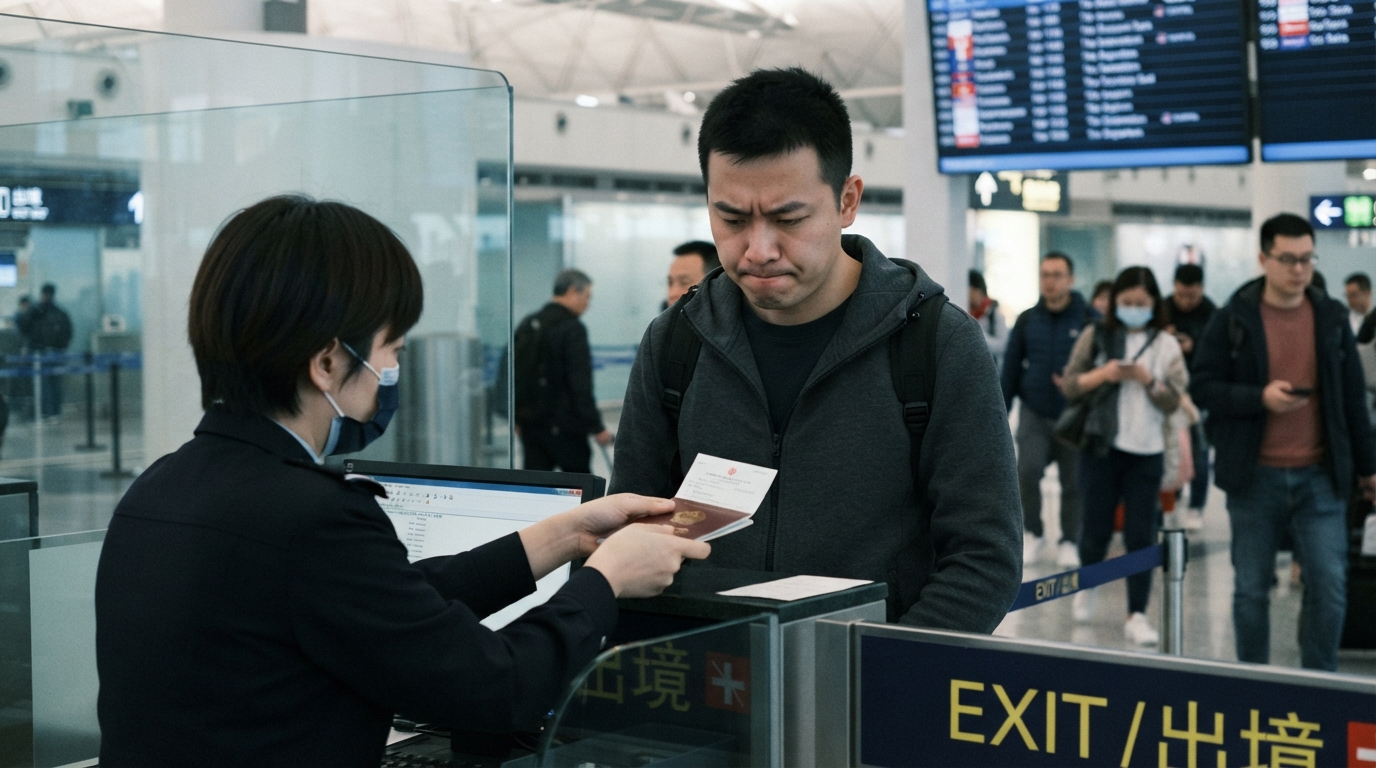
Chinese citizens may now face a ban on leaving China for as long as three years if they commit criminal acts that threaten national security.
Fresh rules on travel to and from China have now taken effect, in a development that observers say will give the government even tighter control over its citizens.
People judged to have "harmed" China's national security or interests while abroad can also be prevented from leaving China for up to three years after they return, while those who breach technological import and export rules may likewise be barred from departing.
Chinese officials say the measures are meant to "safeguard national sovereignty and security" and insist they do not limit the travel of "ordinary citizens".
Critics, however, argue that the new rules could further strengthen Beijing's power to pressure the overseas activities of Chinese nationals.
"This is another tool designed to control what Chinese citizens do and say overseas," Professor Tom Kellogg, Executive Director of the Center for Asian Law at Georgetown University, told BBC Chinese.
"In some cases, in order to prevent individuals from criticising the Chinese government overseas or to punish their rights advocacy activities, state security authorities directly refuse to issue passports," Kellogg adds.
Last week, Piyao, a Chinese government "rumour-refuting" platform, published a statement saying the new regulations were introduced to deal with "problems" such as people being tricked into leaving the country or taking part in illegal gambling and scam operations overseas.
The statement said the new rules "do not restrict the travel of ordinary citizens, but rather serve as a preventative measure against high-risk destinations and individuals with unusual travel patterns".
Still, some Chinese nationals say they have faced unclear travel restrictions for years.
A 26-year-old Chinese citizen who asked to be identified only as Pipi told BBC Chinese that his passport application in 2023 was turned down, and he believes this was because he attended the huge pro-democracy protests in Hong Kong in 2019.
Pipi said he was interviewed by Hong Kong media during the protests. After returning to China, he was questioned by state security police.
He said one immigration officer told him he could not obtain a passport "because of the Hong Kong issue" — but this was never confirmed to him in writing.
"If they have given me an official document, I could apply for administrative reconsideration. But all they said was one sentence: 'You can't go,'" Pipi said.
Pipi said he was afraid to push the issue further, worrying that he would "end up in prison".
"I'm just an ordinary person, right? I'm a young man, and I haven't done anything bad," he said.
"I don't know whether I'll ever be able to leave [China]."
Based on publicly available information, Chinese citizens currently have no way to check on their own whether they are subject to exit controls.
Unless they receive official written or verbal notice, people usually only find out they are restricted from leaving when they apply for documents or try to depart.
Under China's Administrative Licensing Law, if an administrative authority decides not to issue an administrative licence, it should provide the reasons in writing. But some people interviewed by the BBC said this rule is not being enforced.
Under the new rules that took effect on Tuesday, border officials must also warn Chinese nationals against travelling to countries and regions considered "high-risk".
Even before this, some people in China — from civil servants and state-owned enterprise workers to ordinary citizens — were already restricted from travelling to certain countries.
A man using the pseudonym Xiao Wang, who works at a state-owned financial institution in Beijing, told BBC Chinese that his colleagues have long been required to hand over their passports and seek approval for overseas travel.
The 32-year-old said managers have verbally reminded staff that "sensitive countries such as Japan are definitely off-limits".
Some of his civil servant friends, including those working in museums, find it "very difficult" to travel abroad and have been told they cannot apply for passports directly because of their jobs, Xiao Wang said.
Kellogg, the legal expert, described the widening travel restrictions as "deeply concerning" and said they reflect a "growing ideological control under Chinese leader Xi Jinping", similar to Mao Zedong's era.
China was largely isolated from the outside world under Mao's decades-long rule, and international travel only became part of everyday life for Chinese people in the 1990s, after China carried out a series of reforms and opening up.
Today's different travel restrictions, Kellogg said, "bring back memories of that painful era".