

China is strengthening its position in the disputed border area with India (photo)
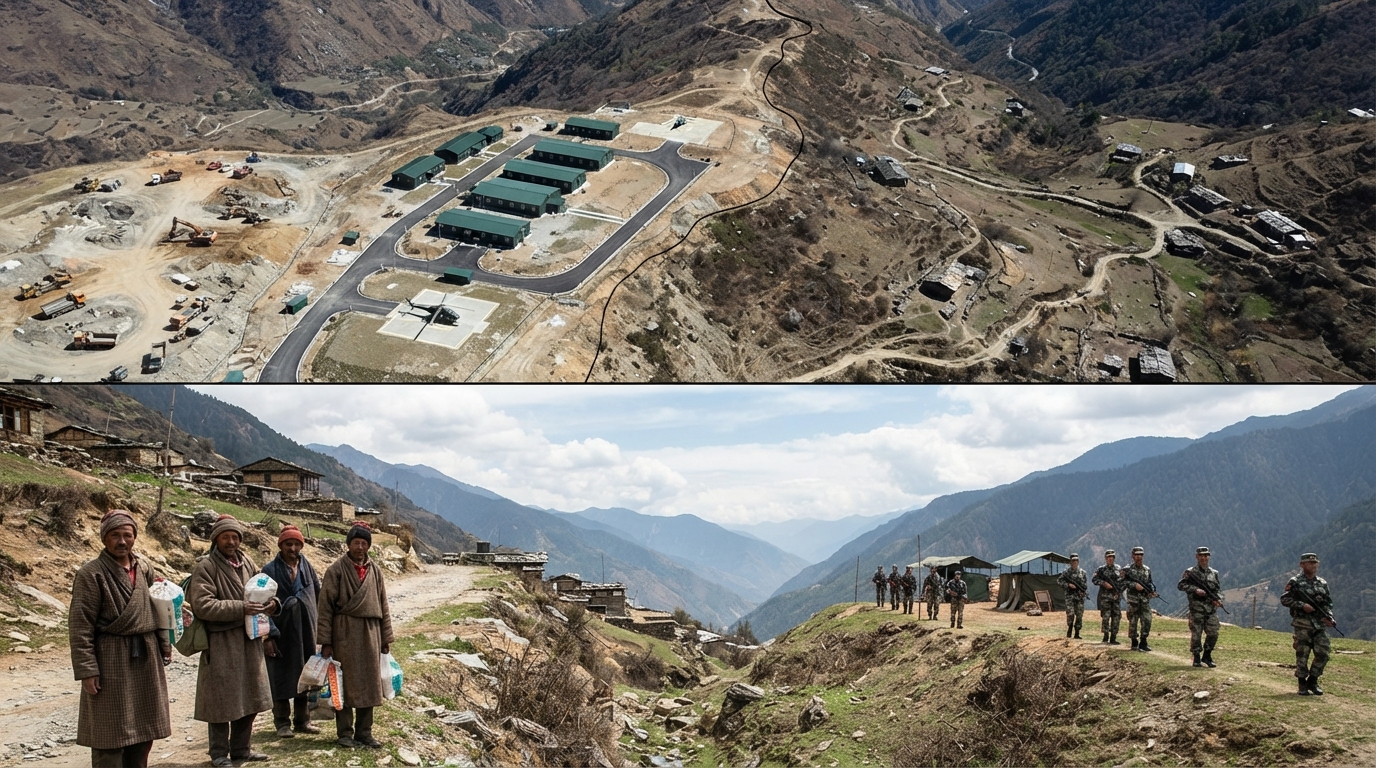
China is strengthening its position in the disputed border area with India (photo)
Residents in remote villages located in the border area between India and China are alarmed. Locals say the Chinese military is pushing them out of their ancestral hunting and grazing lands.
Satellite imagery obtained by The Independent showed a rapid expansion of military infrastructure near the disputed border in Arunachal Pradesh state. The images clearly show new buildings, roads, equipment, and helipads.
According to analysts from the intelligence company Janes, some of these facilities are located within the disputed territory that both countries claim as their own. Analysts stated that construction work has been ongoing in the Yohan Subansiri Valley since 2019. A cement plant has been set up there, and structures resembling a military base have been built.
In addition, new transport routes and larger helipads were put into operation between February and August 2026.
These reports emerged on the eve of Chinese President Xi Jinping's visit to New Delhi as part of the BRICS summit. Delhi and Beijing are trying to deny the existence of tensions, emphasizing the stability of the situation on the border. However, information provided by local residents and public organizations shows a completely different picture.
The Tagin Students' Union and local activists conducted a three-day inquiry in the border villages of Taksing and Gelemo. According to the report they prepared, the Indian army is retreating, while the Chinese military is advancing.
Also, starting from June 2026, local residents have been banned by the Chinese army from accessing pastures and sacred pilgrimage sites. Due to the lack of electricity, roads, and hospitals in the villages, residents are being forced to leave the border areas.
"This, in turn, is creating conditions for the Chinese military to easily occupy the vacated lands," the report says.
Locals are asking the government for weapons to protect their lands and call themselves the "eyes and ears" of the country.
An expert from Jawaharlal Nehru University describes these actions by China as a "salami slicing" strategy. In this approach, the country does not start a major war all at once, but gradually, in small steps, occupies neutral or disputed territories.
Although the Indian army dismissed these reports as baseless, Delhi warned that the border issue could affect relations between the two countries. Beijing officials, meanwhile, stated that the situation is under control.
In August, China and India reached an 8-point agreement, reaffirming their commitment to maintaining peace and tranquility along the Himalayan border between the two countries, as well as striving to resolve the border issue in a fair and mutually acceptable manner.