

China is building an artificial island in a disputed area
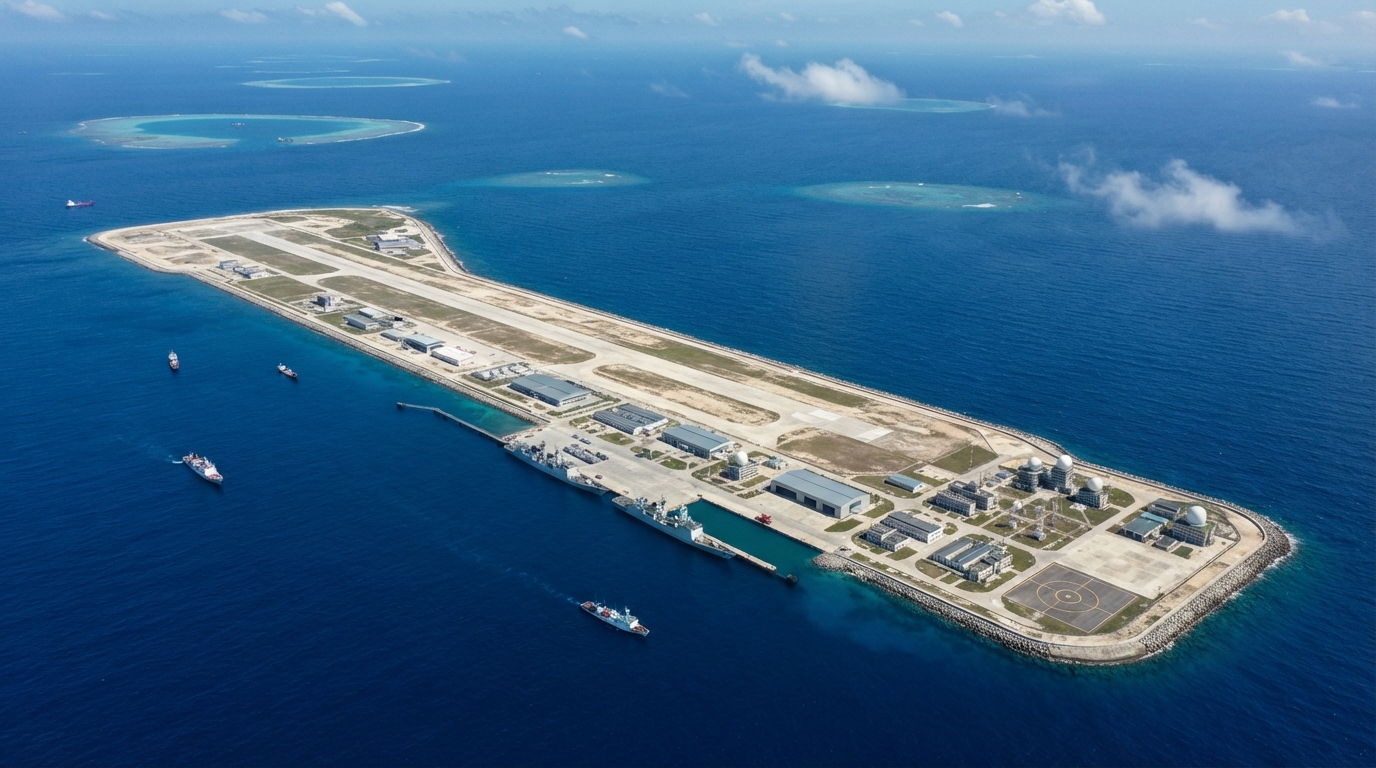
China has completed the first phase of construction on an artificial island in the disputed territory. The facility is located on Antelope Reef in the Paracel archipelago, and analysts believe it will become part of the country's largest military base. This was reported by Reuters.
According to satellite images reviewed by the publication, after six months of construction work, ships and dredgers (special equipment or vessels designed to extract and clean mud, sand, gravel and soil from the seabed) have left the area. Images taken by the Vantor company on July 19 show that construction of a helipad and other buildings has begun in the southeastern part of the island.
China's Ministry of Defense has not commented on the situation. According to state media, the facility will serve civilian needs such as weather forecasting and scientific research. However, experts are confident that the island will strengthen China's military position in the region.
The island is almost 6 kilometers long. A runway can be built there along the more than 3 kilometers of straight coastline. A 680-meter deep-water port has also been built there.
Antelope Reef will become an important strategic point in the event of a conflict with Taiwan. According to expert Ben Lewis, it is larger than the nearby Woody Island and more convenient for defense.
Chinese scientist Ding Duo emphasized that these works are being carried out for peaceful purposes. However, Vietnam strongly opposes these actions and claims sovereignty over the island.
The island gives China a great advantage in monitoring submarines and military activities in the vicinity. Australian professor Carl Thayer said that these facilities make it easier to monitor the United States and its allies in peacetime, but create additional complications in wartime.
Earlier, it was reported that the Philippines and China recalled each other's ambassadors due to a clash at sea. At that time, a clash in a disputed area in the South China Sea and the injuries of military personnel strained diplomatic relations between Manila and Beijing.