

Charlie Kirk murder suspect pleads not guilty as judge clears way for death penalty trial
The 23-year-old is charged with aggravated murder, a capital offence in Utah, and six other counts.
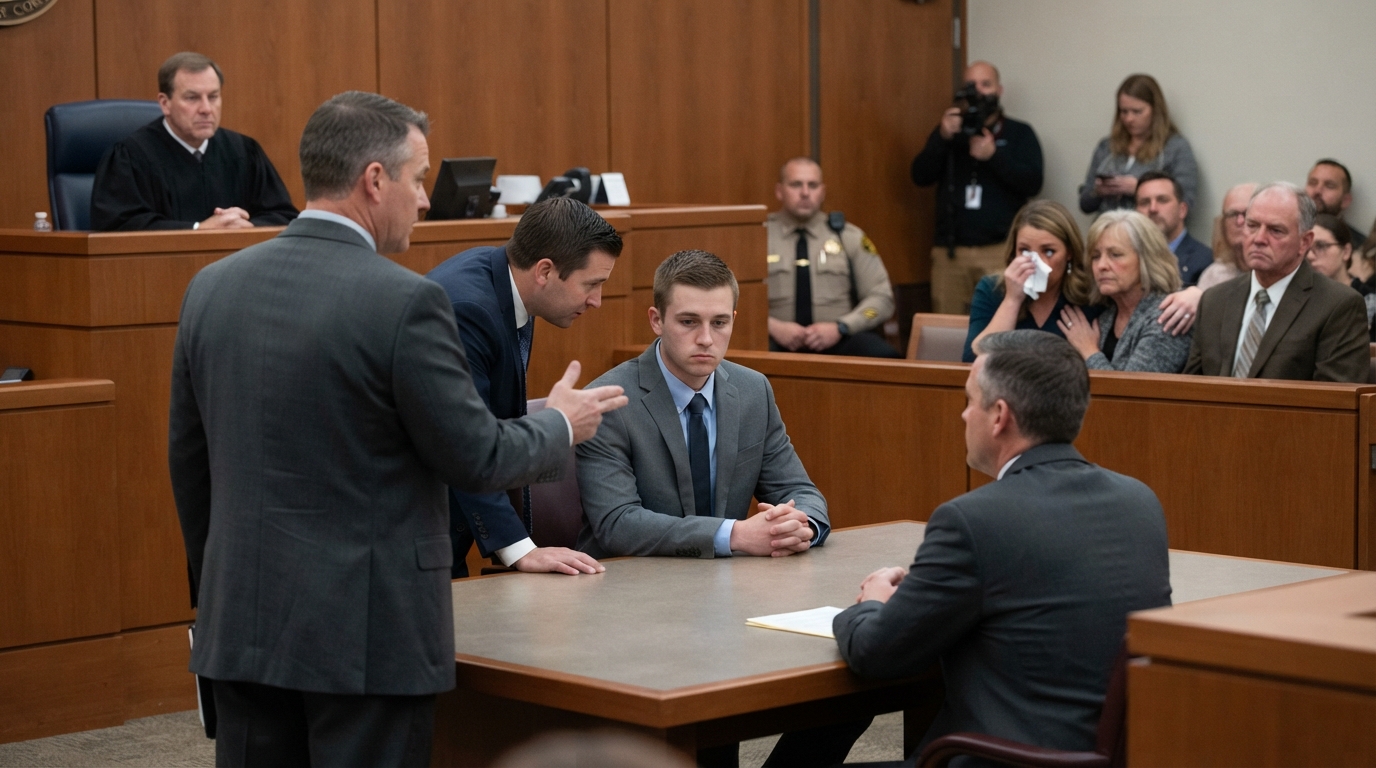
A 23-year-old Utah man has entered a not-guilty plea to the murder of conservative activist Charlie Kirk, as a judge has determined that prosecutors can pursue the death penalty in the upcoming trial.
Tyler Robinson denies the charge of aggravated murder, which is a capital offense in Utah, along with six other charges related to the shooting of Kirk at a campus event on September 10, 2025.
Defense attorneys had sought to preclude the death penalty, but prosecutors contended that aggravating circumstances, such as discharging a firearm into a crowd where children were present, justified a capital trial.
Charlie Kirk, 31, co-founder of Turning Point USA, sustained a fatal gunshot wound to the neck while delivering a speech at Utah Valley University in Orem.
The defendant, dressed in a grey suit and occasionally conferring with his legal counsel, appeared in court in Provo on Tuesday.
Kirk's widow, Erika, who is the mother of their two children, and his parents, Robert and Kathryn, were also present at the hearing.
In a statement released afterward, the Kirk family expressed that the judge's ruling "marks an important step" in their "pursuit of justice."
"Every step in this process carries the weight of all that Charlie's murder has taken from his family, especially his children who will grow up without their father," the statement further added.
Closing arguments followed a five-day preliminary hearing in July, during which prosecutors presented their evidence to establish probable cause for a trial.
This evidence included DNA allegedly linking Robinson to the murder weapon and other items found at the scene; confessions he purportedly made to close acquaintances; and a recorded video statement from his roommate and romantic partner, Lance Twiggs.
"There is a mountain of evidence that proves that he is the shooter," prosecutor Ryan McBride informed the court on Tuesday, highlighting video footage he claimed showed Robinson "dressed to kill" on campus on the day of the shooting.
"We know that the defendant is the shooter… first, because of the video evidence; second, because of the DNA; third, because of his admissions; and fourth, because of circumstantial evidence," McBride stated.
Prosecutors asserted that the accused, a former apprentice electrician, was in a relationship with his roommate and found Kirk's conservative viewpoints, particularly on transgender issues, to be "repugnant" – which they argued constituted the motive.
On Tuesday, prosecutors also detailed "aggravating" factors, accusing the defendant of "gambling with the lives of others" when he allegedly fired towards Kirk, who was surrounded by other individuals.
"He was playing, in effect, a game of ballistic roulette," prosecutor Chad Grunander remarked.
"It's been 356 days since Tyler Robinson assassinated Charlie Kirk," Grunander added. "It's time for him, the defendant, to be bound over for trial and arraigned. Today."
Defense lawyers attempted to cast doubt on the prosecution's evidence.
During the July hearing, they raised questions regarding procedural matters and the qualifications of expert witnesses. Robinson's attorneys have consistently objected to cameras livestreaming court proceedings.
Judge Tony Graf again heard arguments on this matter during a sealed hearing on Tuesday morning before closing arguments commenced, but he ultimately ruled in favor of transparency in a case that has fueled conspiracy theories.
On Tuesday, the defense sought to minimize the aggravating factors outlined by prosecutors, arguing that no bullets struck anyone in the crowd other than Kirk.
The court heard and saw during the July hearing how the accused allegedly scouted the campus repeatedly on the day Kirk was shot, interacting with TPUSA members and eating Chick-fil-A before returning in different attire.
The new outfit included "long pants to obscure the rifle he had concealed down his pants," McBride said on Tuesday.
According to evidence presented by prosecutors during the July hearing, Robinson's DNA was discovered on his grandfather's rifle, which was stashed in a wooded area near campus after the shooting, as well as on a towel it was wrapped in and a screwdriver recovered at the scene.
McBride also informed the court on Tuesday that engravings found on casings from the shooting allegedly matched a Dremel tool recovered at the home the defendant shared with his roommate.
Twiggs' videotaped interview with prosecutors was played during the July hearing. Robinson's roommate testified that the defendant had confessed to the shooting, cried, and expressed regret for his actions.
Robinson, accompanied by his family and a neighbor, surrendered to authorities the day after the murder.
His next court appearance is scheduled for October 23, when a trial date is expected to be set.