

Channel smuggling gangs resort to 'mega-dinghies' as crackdown limits small boat supply
Once-rival criminal groups are being forced to work together because of a shortage of small boats, a BBC investigation has found.
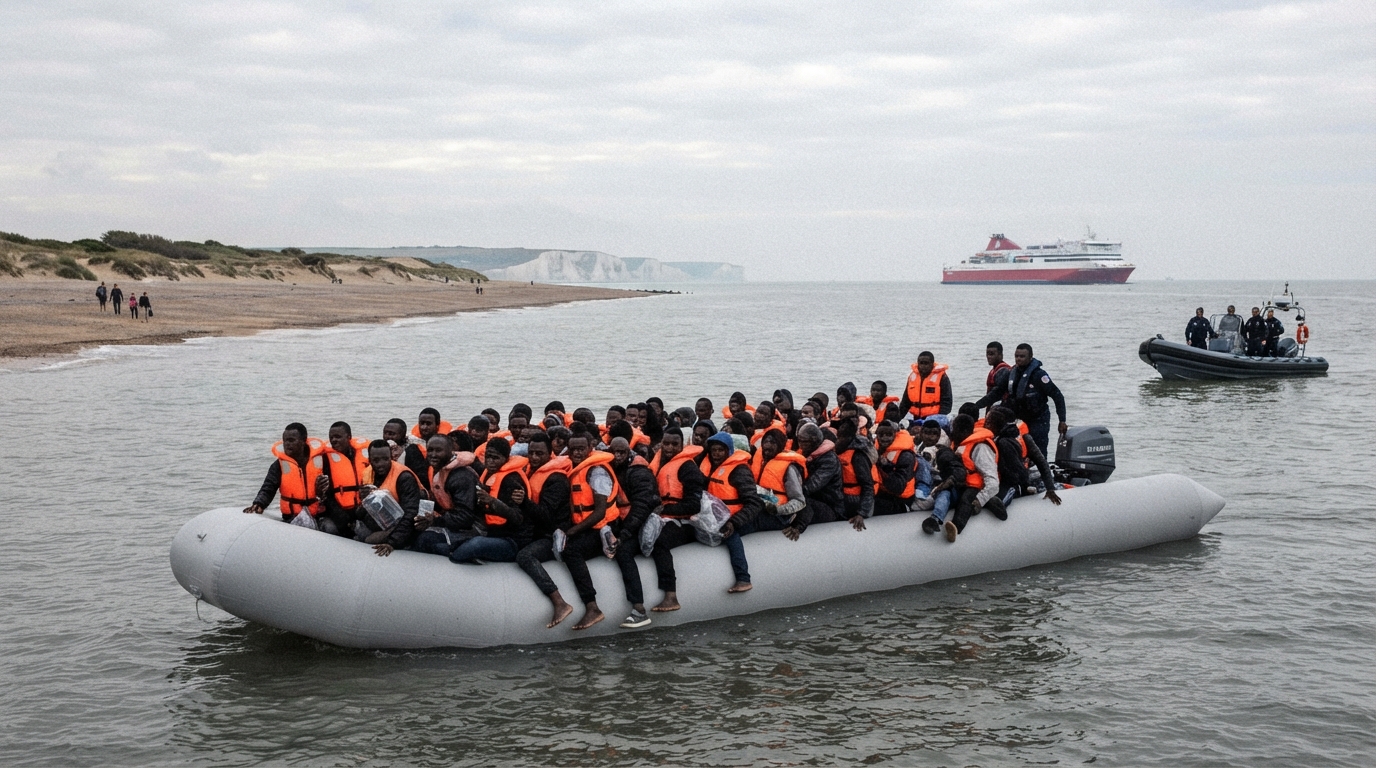
Gangs involved in cross-Channel human smuggling are now employing "mega-dinghies" as a result of intensified crackdowns limiting the availability of smaller vessels, a BBC investigation has revealed.
The BBC observed groups of migrants boarding an inflatable dinghy on Gravelines beach in northern France. Reports suggest that more "mega-dinghies," similar to those recently seen arriving on UK shores, are being prepared.
A 15-meter long small boat carrying a record 230 migrants to the UK recently sparked widespread condemnation from both media and politicians. Ministers faced accusations of "losing control" over illegal Channel crossings, and French police were again criticized for their perceived inaction.
However, this striking image also signifies a new strategy adopted by increasingly frustrated human smugglers on France's northern coast, who attacked the BBC crew with stones, injuring their cameraman.
The investigation found that these gangs are experiencing a shortage of small boats. Consequently, previously rival criminal groups are now collaborating, loading more migrants onto fewer, larger vessels, such as the "mega dinghy."
Both the UK and France are announcing measures to increase the number of police officers on the French coast in an effort to halt these migrant crossings. This latest initiative coincides with Andy Burnham's preparations to host French President Emmanuel Macron at Downing Street for the first time since Burnham became prime minister.
Gang members have informed sources that more such vessels are being prepared, raising concerns among emergency teams on both sides of the Channel due to the increased risk to lives. On August 4, 170 people required rescue after their boat caught fire in the middle of the Channel.
With French officers now claiming to intercept two-thirds of small boats before they reach the coast, fewer crossing opportunities are available. For those hoping to make the journey, this translates to a higher price.
Currently, gangs are quoting up to €2,000 (£1,700) per person, a significant increase from approximately €1,300 just a year ago. Passengers are also now required to pay in cash to ensure commitment.
During an early low tide on Gravelines beach, the BBC witnessed the only small boat launch that day, which defied expectations. At 09:30, about a dozen migrants emerged from the sand dunes, easily identifiable by their distinctive orange life jackets, purchased from a local sports shop.
While a need for speed might be assumed at this point, there was no rushing. The process appeared almost orderly, with instructions being followed. As they waded into the calm shallows of the Channel, their "taxi boat" came into view. This is a small boat that has departed from further along the coastline to avoid detection. Now, they are being forced to set off from even greater distances; this particular boat had left from Belgium.
The group's lack of urgency was due to the boat already being in the water. French police contend they are prevented from intervening at this stage due to fears of people drowning. This has been a long-standing frustration for British authorities, who would prefer their counterparts to adopt a more "case-by-case" approach.
Clutching their phones wrapped in plastic, the group patiently awaited what they hoped would be a voyage to a better life in the UK. Some stated they were from Afghanistan, eager to board. Those who made it on board were visibly elated.
After the last passenger, a young boy, was almost thrown on board, the boat slowly moved out to sea but did not immediately depart. At 09:49, another group of migrants entered the water, waiting to be collected. An hour later, the boat returned, but to a different gathering that had emerged on another part of the beach. A few ran the vast distance across the sand to secure a spot, and most managed to clamber on.
As police officers observed from the shore, the small boat made five such collections over three hours. Boarding became more frantic as the window of opportunity narrowed. By 12:11, the small boat, carrying 82 people, finally moved off into the world's busiest shipping lane, dwarfed by the passenger ferries in the background.
All 82 people successfully reached the UK. Small boats typically radio for help once in British waters, compelling the coastguard to rescue them and bring them ashore.
Between January 1 and September 1, 2026, a total of 16,513 people crossed the English Channel by small boat from France. This represents a 43% decrease compared to the same period the previous year. Since 2020, these crossings have become the most common method for people to be detected entering the UK illegally.
Nearly all those arriving by small boat claim asylum. Under international law, this allows them to remain in the country while their asylum application is processed. Small boat arrivals accounted for 40% of asylum applications between July 2025 and June 2026.
Boats arriving in the UK from September 2, 2025, to September 1, 2026, carried an average of 68 people, more than double the number in 2021. Experts warn that overcrowding in boats increases the risks of crossings. According to the United Nations (UN), at least 84 people died while attempting to cross the Channel in 2024.
When considering the overall scale of small boat crossings, these arrivals represent approximately 5% of total immigration into the UK from January 2025 to December 2025. People from Eritrea constituted 18% of all arrivals from July 2025 to June 2026.
In the latest figures covering January 2025 to December 2025, the Home Office reported that at least 2,335 people who arrived by small boat were identified as potential victims of human trafficking or other forms of modern slavery. Another 4,712 people were detected entering the UK without permission via other methods, including hiding in vehicles, traveling on ferries, or through airports, from July 2025 to June 2026. This was a 17% decrease from the same period the previous year.
Additionally, some individuals arrive legally, for example, with a work or study visa, and then overstay their permitted limit. The total number of people living in the UK illegally after arriving legally is unknown.
What remains in Gravelines is a scene of dejection and exhaustion. A limp toddler was carried past the BBC crew towards a police officer, who revived him with a gentle shake. This unfolded next to four or so men casting their fishing rods into the increasingly choppy waters. It was peak holiday season, and they, along with other dog walkers, barely glanced at the crestfallen migrants wading back to the shore.
Previously, gangs often launched boats in the dead of night. However, with increased police patrols, charity workers indicate that gangs now view the middle of the day as a better opportunity, as it takes taxi boats longer to arrive and allows for better coordination of boarding.
"You feel guilty being there - going to the beach and having a good time, while these families are in such terrible situations," observed a woman with her young daughter, who had been playing with a bucket and spade. "It's hard," she admitted. "We regularly see people on the beach attempting the crossing. It feels like living in two parallel worlds that have nothing to do with each other; it's really strange."
The remaining migrants will await their next opportunity, as per their agreement with the gangs. However, due to more robust policing, that wait is now typically weeks, even months, rather than days. They also require a favorable weather window: the wind ideally needs to be under 5 knots and waves less than 0.8m for a small boat to have a chance of making it across.
To improve their chances of avoiding detection and to be closer to a taxi boat, charity workers report that migrants are also sleeping closer to the beach in the woods or among the dunes, instead of at the larger camps where they can wash or receive food, water, and medication.
Upon arriving at the largest settlement at Loon-Plage, near Dunkirk, the BBC crew soon found themselves in direct confrontation with human smugglers. As intense heat bore down on a tent where people could charge their devices, they initially met two young Egyptian men who were visibly tired and disheartened. They had been living in squalid conditions for months and had made several unsuccessful crossing attempts.
"The police stopped us from leaving and destroyed the boats," explained one, stating his desire to go to the UK to work and obtain legal papers. A young Sudanese woman and an Afghan man also told the BBC they had tried to cross dozens of times. The crew had visited the camp on several occasions over the past year, but this time there was a perceptible unease.
Riot police had cleared out tents in the same week, and the day before, approximately 400 migrants preparing for a taxi boat in the nearby Hardelot forest were forced to return after several fires broke out. It was evident that both migrants and gangs had been repeatedly frustrated, and the sight of the BBC camera in one corner of the camp led to an attack.
After agreeing to stop filming, one smuggler, approximately 5'8" tall (172cm) and wearing a new grey tracksuit, attempted to grab the camera. He then repeatedly threw rocks at the crew from close range, striking the cameraman above the eye. The crew was chased to their car and managed to escape. The cameraman later received several stitches.
The UK has been quick to commend French police for reducing crossing numbers to a six-year low. Officials also cite a deeper, more coordinated level of collaboration between the two countries. However, changes in immigration policy, the movement of people, and weather conditions mean the broader picture is more complicated.
Thousands are still illegally entering the UK every month on small boats. The numbers remain significant, and motivations to make this journey still run deep in this stretch of northern France. For the human smuggling gangs, this still means money and a need to adapt.