

Central Bank: Inflation expected to fall to 5 percent in 2027
In the first half of 2026, the economy grew by 8.5 percent, inflation fell to 6.4 percent, and the Central Bank 2027
Central Bank: Inflation expected to fall to 5 percent in 2027
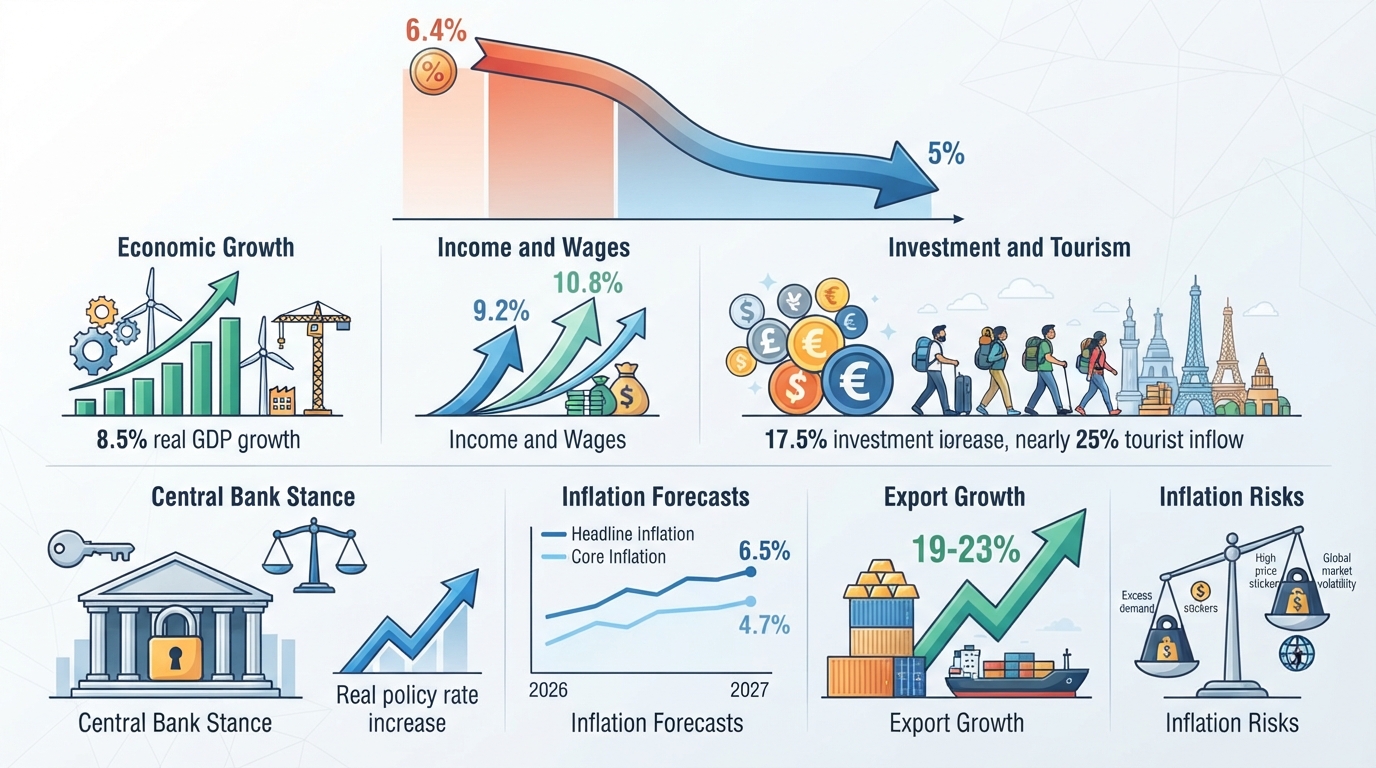
The Central Bank's monetary policy review for the second quarter of 2026 notes that real economic growth reached 8.5 percent in the first half of the year.
Population incomes increased by 9.2 percent, and real wages rose by 10.8 percent. An increase of nearly 25 percent in tourist inflow supported demand. Investments in fixed capital also grew by 17.5 percent in real terms. The impact of major projects in industry, energy, infrastructure, and construction was noted in this regard.
The output gap in the economy remained positive, and aggregate demand was higher than current supply potential. The state budget ended the first half of the year with a surplus of 1.8 trillion soums.
In June, headline inflation decreased compared to the level at the beginning of the year, standing at 6.4 percent. Core inflation remained around 5.7 percent.
The decline in the share of goods and services with price increases above 5 percent stopped. This indicated that core inflationary pressures have not yet eased. Inflation expectations of the population stood at 10.1 percent, and business expectations at 9.9 percent, with both indicators shaping up higher than headline inflation.
At its meeting on July 29, 2026, the Central Bank left the policy rate unchanged at 14 percent. Due to the decline in inflation, the real policy rate increased to 7.1 percent by the end of the quarter.
According to the baseline forecast, inflation will stand at 6.5 percent at the end of 2026. In 2027, it is expected to fall to the 5 percent target and stabilize at this level. Core inflation is projected to be around 6 percent at the end of 2026 and around 4.7 percent in 2027.
At the same time, the economic growth forecast for 2026 has been increased from 7–7.5 percent to 7.5–8 percent. The forecast for non-gold export growth has also been revised upward from 12–16 percent to 19–23 percent.
The Central Bank noted that the balance of risks for inflation is tilted to the upside. Excess demand, high inflation expectations, rising energy and food prices, and the persistence of tight global financial conditions could exert pressure on inflation.