

Canada imposes tariffs of up to 50% on Canadian goods in response to US tariffs
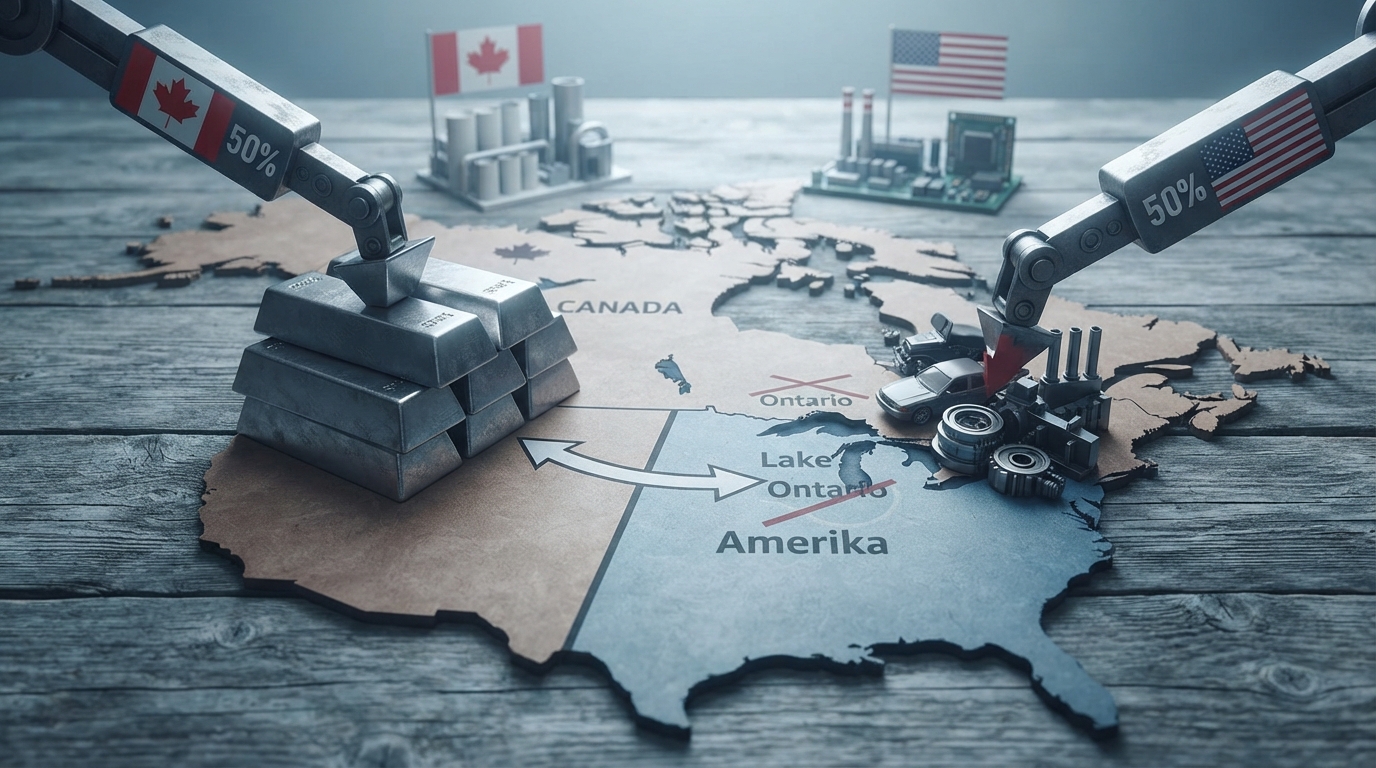
Canada has imposed tariffs of up to 50 percent on U.S. goods in retaliation for Washington's tariffs on its own goods.
Relations between Canada and the United States have been strained since last week's failed trade talks. On August 25, Ottawa announced tariffs in response to Washington's tariffs.
Prime Minister Mark Carney's government also unveiled a financial aid package to support businesses and workers who may be hurt by the dispute.
Canada will impose tariffs of 15, 25 and 50 percent on about 700 U.S. products starting September 8. The measures are designed to match U.S. President Donald Trump's earlier announced 50 percent tariffs on Canada.
The United States is Canada's largest trading partner, while Canada is the United States' second-largest trading partner after Mexico. Such disputes have occurred several times during Trump's two presidencies.
**Canada's statement**
A statement from the Canadian Ministry of Finance said the government had been actively and honestly negotiating with the United States to reach a fair and comprehensive trade deal.
"However, in recent days, the United States has proposed new terms that are not in Canada's best interests. They have asked for too much from Canada and offered too little in return," the ministry said in a statement.
The government said it preferred to walk away from the negotiations rather than accept a "bad deal." The ministry stressed that Canada did not choose this trade dispute, but must respond to create a level playing field for its businesses.
Finance Minister François-Philippe Champagne called the measures "dollar-for-dollar, rate-for-rate" retaliatory tariffs and a multi-billion-dollar aid package that protects workers, farmers, families and businesses.
Canada's retaliatory tariffs will target $27.6 billion in U.S. imports, mostly steel, dairy, appliances, agricultural machinery, pulp and paper, and electronics. That's the same amount the U.S. has announced.
**What caused the dispute?**
Washington and Ottawa had been trying to reach an agreement before Trump's new and higher tariffs took effect in July. Talks broke down just days after the U.S. president said the two sides were close to a deal. After the talks collapsed, Trump threatened to impose 50 percent tariffs on about $20 billion in Canadian goods the next day.
The U.S. and Canada are among the world's largest trading partners, but recent talks have shown that relations are strained.
“We will never accept the attitude that Canada is treated as a subsidiary of the United States at the negotiating table,” said Canadian Prime Minister Mark Carney.
Speaking more forcefully in French, Carney said:
“We understood during the negotiations that the Americans wanted to destroy our key industries, including the auto industry, steel and aluminum. That was one of the main reasons we said ‘no’ to the deal. It was a bad deal.”
**US statement**
Trump posted again about Canada on social media on the morning of August 25. He said that the United States was considering renaming Lake Ontario, one of the five Great Lakes in North America. It is the only lake named after a Canadian territory.
“The United States is seriously considering renaming Lake Ontario to Lake America because we do not plan to trade with the people there,” Trump wrote.
The Trump administration immediately renamed the Gulf of Mexico to the Gulf of America upon returning to the White House in 2025. But the change was largely ignored by most outside the U.S. government. Even tech giant Google still lists it as the Gulf of Mexico first on its maps for users outside the U.S. Earlier this week, Trump threatened to impose a 50 percent tariff on Canadian cars, parts, and steel starting Jan. 1, 2027, and took to social media to rail against his historic ally.
“They are one of the most difficult countries to deal with, both in terms of trade and other issues. They think they are in debt, but we don’t need Canada, they need us!”, said the US president.
Canada is very closely tied to the US, its largest trading partner. The US accounts for 70% of the country’s exports. But this relationship is two-way: according to government data, by 2026, Canada will be the second largest trading partner for the US, after Mexico. No further talks are planned between the parties so far.