

Bottled, filtered or boiled: which water is best for your body?
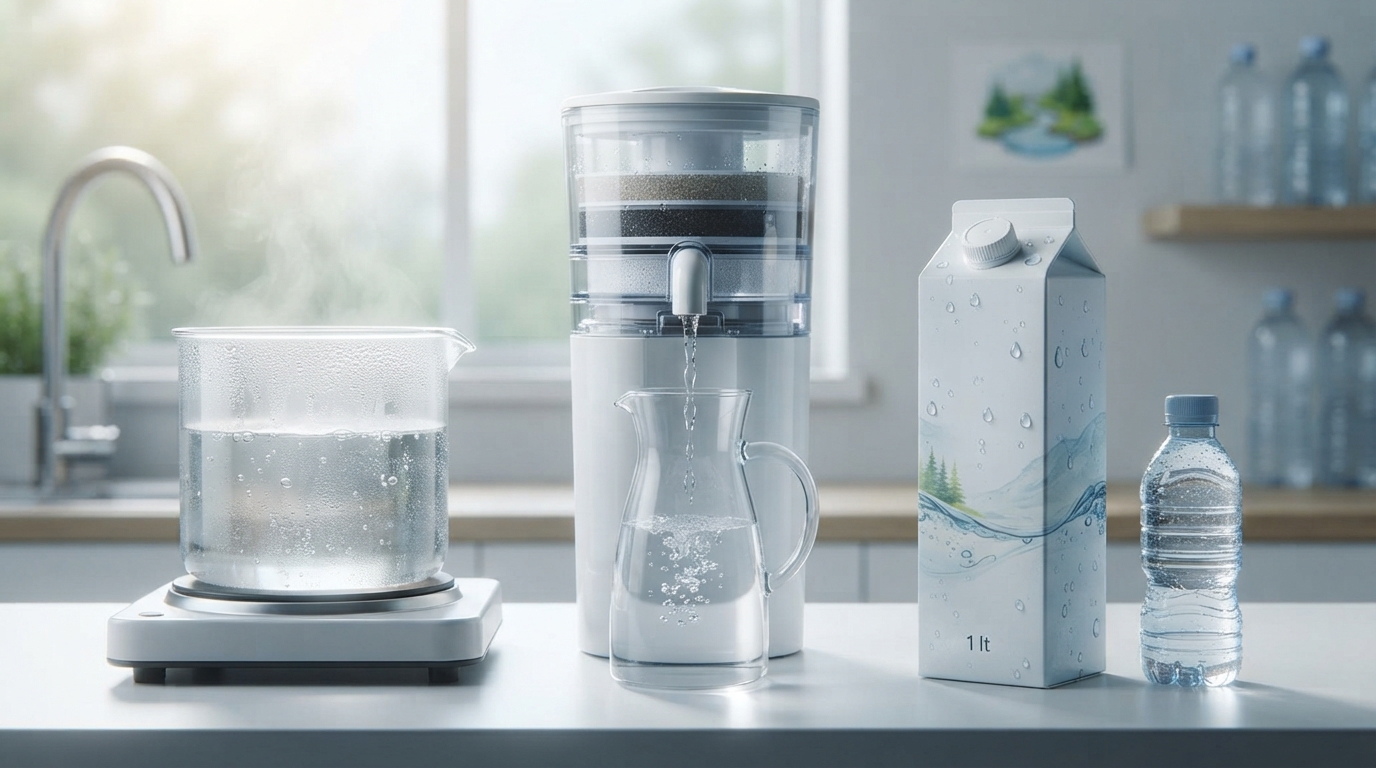
Bottled, filtered or boiled: which is the most beneficial for the body?
Water is essential for life, and human health directly depends on its properties. How can you contribute to longevity and well-being by separating quality water from poor quality?
Tap water comes from various sources, such as lakes, rivers and reservoirs, passes through dozens of kilometers of pipes, and in the process collects various impurities and chemicals. When poured into a glass, it may contain heavy metals and bacteria, so it needs to be thoroughly cleaned. In this article, you will learn about which water is better to choose for daily use and its importance.
**Boiled water: pros and cons**
Bacteria and parasites die in boiled water, but toxins remain. Chlorine also does not evaporate completely: part of it precipitates and combines with other chemicals to form carcinogens that cause inflammation in the body. At the same time, the oxygen content in boiled water is lower than in raw water. Drinking such water for a long time can lead to oxygen deficiency, which leads to poor absorption of vitamins and trace elements, slowing down brain activity, and decreased attention.
**Filtered water: pros and cons**
Experts distinguish three types of filters, each of which has a specific effect on the composition of tap water. For example, reverse osmosis filters completely remove chlorine and impurities, but at the same time deprive water of about 80% of trace elements. Ion exchange filters neutralize scale and soften the texture of water, but dissolve calcium and salts. An alternative option between reverse osmosis and ion exchange systems can be carbon filters. They eliminate toxins, kill bacteria, while preserving all beneficial substances and even enrich water with various minerals. The US Environmental Protection Agency officially recognized this method as the most effective and safe for health.
But granular household filters have one big drawback: the bulk materials inside can get mixed up. In this case, the water flows through small channels, bypassing all the stages of filtration. That is why some people prefer to drink only bottled water.
**Packaged water: pros and cons**
Is all bottled water healthy? Manufacturers select water from different sources: spring, distilled and tap water. According to statistics, 40% of bottled water is untreated tap water, 23% is distilled, which deprives a person of useful salts and minerals. Only 37% of bottled water on store shelves is filled with water from underground sources, but this does not automatically make the water safe for health.
The quality of water is greatly influenced by the methods of its purification and storage. A 2018 study tested 11 of the most popular bottled waters from 9 countries and found that 93 percent of the 259 samples tested contained microplastics. This is partly due to the packaging and the bottling process itself. Other studies have shown that microplastics disrupt the human endocrine system and contribute to inflammation, as toxic chemicals accumulate in the liver, kidneys, and intestines over time.
**How to choose "living" water?**
It is very important for humans to maintain an acid-base balance. If disharmony is allowed, the number of harmful bacteria in the body begins to multiply rapidly, which leads to new diseases. The ideal pH of the liquid ranges from 6.5 to 7.5. This range includes mountain spring water, which is water purified without boiling and without exposure to aggressive filters. You can get it yourself or buy it packaged in a store. When buying, pay attention to the following factors:
* The manufacturer's sources must be located in an environmentally friendly area.
* To reduce the consumption of microplastics, choose an aseptic container instead of plastic packaging. In such packaging, the natural qualities of water are preserved, and it is not afraid of temperature changes during transportation.
* It is desirable that the purification system does not have reverse osmosis. This will help preserve the full range of salts and minerals: magnesium, sodium, calcium, selenium, silicon, potassium, bromine, iodine.
Approach the choice of water consciously, and then you will not only strengthen your health, but also be able to naturally obtain all the minerals, trace elements and salts necessary for the body.