

Berlin's concern over Moscow: how real is the threat?
Germany is in a leading position among the countries supporting and financing Ukraine. According to Berlin's position, Russia will not limit itself to the war in Ukraine and may also use military force against NATO countries in the future. However, analysts' views on this matter are not unanimous.
Berlin's concern over Moscow: how real is the threat?
- How justified are Germany's concerns that Russia might attack NATO?
Anvar Yuldashev, Doctor of Historical Sciences, Candidate of Political Sciences:
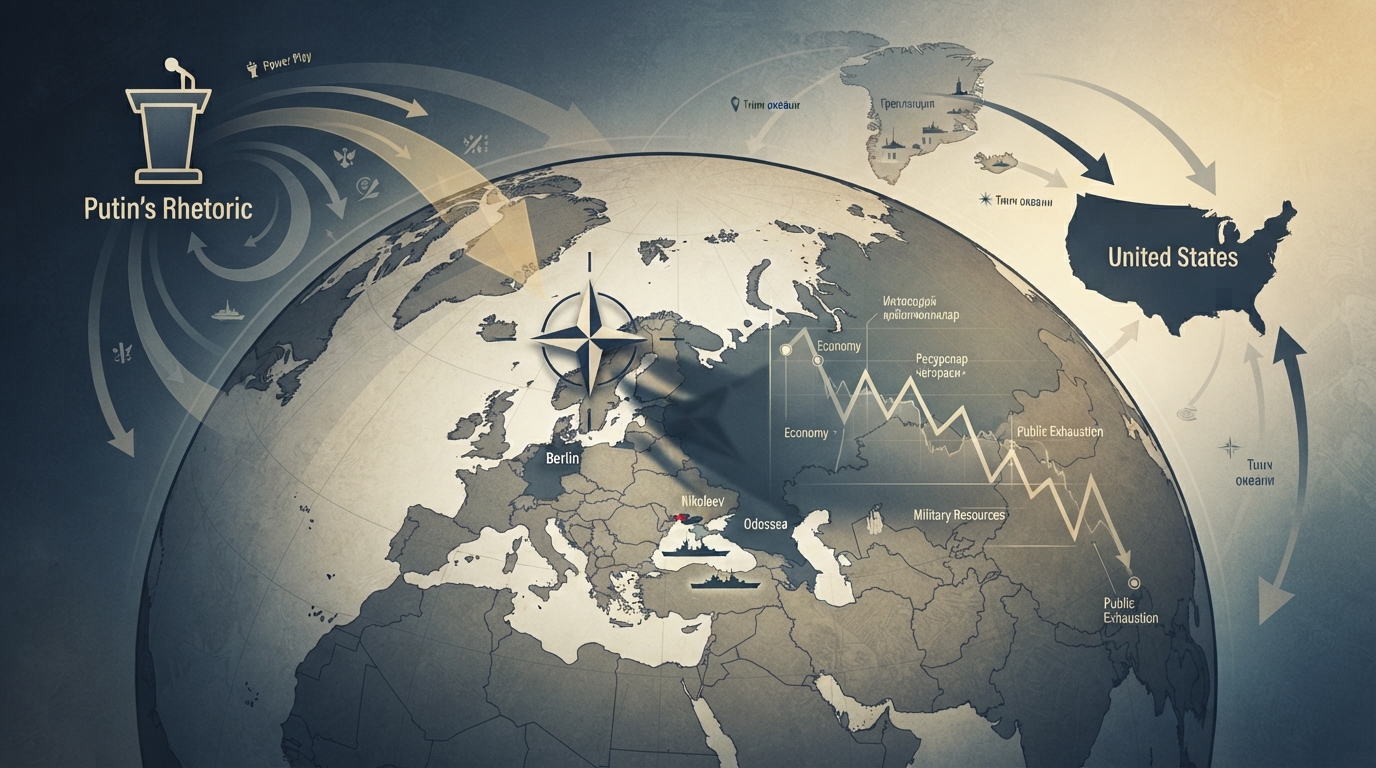
- There are opinions that there is no trust in Russia and that it might attack. I approach this issue somewhat differently. Currently, Russia's economic situation is quite difficult. Economic growth is not what it used to be. Both the population and society are tired of the four-to-five-year war. The economy, and even the military sector, is under great pressure. In such a situation, the probability of Russia attacking NATO countries is low.
Putin's words at the Valdai Forum are more of political rhetoric, aimed at a show of strength and intimidation. That is, it is seen as a means of exerting pressure on the West. Personally, I do not think that Russia will start direct military action against NATO countries right now. However, the concern of European countries can also be understood. The possibility that Russia might attack in the future cannot be completely ruled out. Maybe in five years, maybe in ten years.
But currently, Russia's capabilities to start a new large-scale war against another country are limited. Even if Russia fully captures Donbas, this does not mean that its military goals will end there. In my personal opinion, over time, the issue of Odesa and Mykolaiv may also come onto the agenda. The Black Sea is strategically very important for Russia. For this reason, there is a possibility of Moscow striving to expand its influence in the region. But currently, I believe Russia does not have sufficient military and economic capabilities to achieve such large-scale goals.
Kamoliddin Rabbimov, political scientist:
Currently, Russia does not have sufficient resources for such a war. But Putin's strategic goal is not limited to military matters alone. In my opinion, his main goal is to change the balance of power in the world and exploit the weakening of the unipolar international system. Putin might have hoped that once Donald Trump returned to the US presidency, he would officially recognize that a multipolar world is forming.
But Trump's policy, on the contrary, can be seen as aimed at maintaining US global influence and further strengthening it in certain directions. The events related to Venezuela, military actions against Iran, and the Greenland issue can also be viewed from this perspective. The reinterpretation of the 1951 agreement on Greenland and the strengthening of the US military presence on the island show that Washington is striving to strengthen its strategic position in the Arctic. In practice, Greenland is becoming highly dependent on the US strategically and militarily. A similar process is being observed in the Pacific Ocean.