

Bereaved families could face 'unjust' tax bill after civil service pension delays
The chairman of Parliament's Public Accounts Committee says families should not be taxed through no fault of their own.
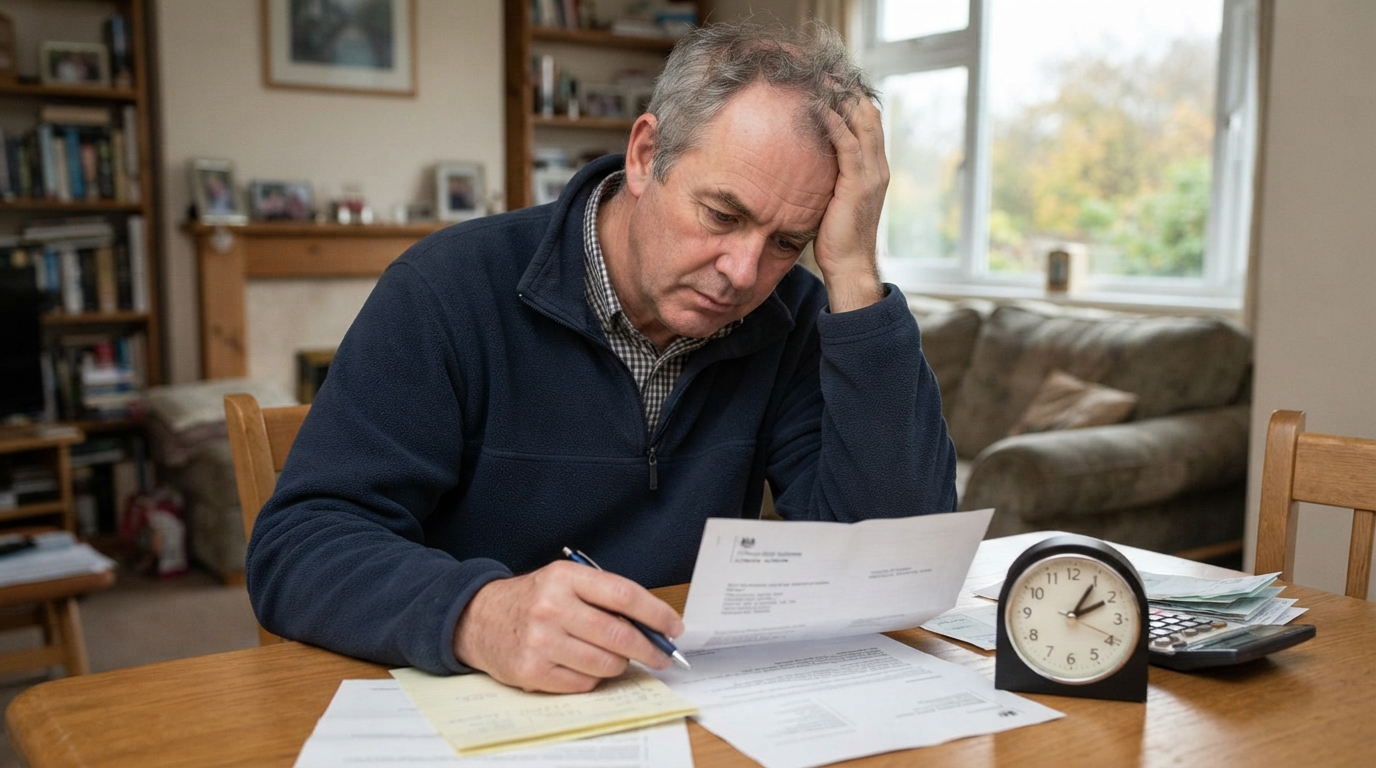
Bereaved families could face an “unjust” tax bill after delays in civil service pension payments, the government has been warned.
Under HMRC rules, certain lump sum pension payments must be made within two years of the pension scheme being told of a death in order to stay tax-free.
Conservative MP Sir Geoffrey Clifton-Brown, who chairs Parliament’s Public Accounts Committee, said it was “unconscionable” that some families could be hit with a “death tax” through no fault of their own.
The Cabinet Office said that if delays led to a tax charge, there were existing routes to seek compensation, including through the Pensions Ombudsman.
But the ombudsman is currently advising that ordinary complaints are likely to be dealt with within 18 months, while more complicated cases will take longer.
The Civil Service Pension scheme looks after the pensions of 1.7 million public sector workers in the UK.
Outsourcing company Capita took over administration of the scheme from MyCSP in December 2025, saying it had inherited a backlog of more than 86,000 cases.
Although there was a two-year transition period to prepare for the handover, problems have continued and by February the backlog had risen to 120,000 cases.
Retired civil servants and bereaved families have been left waiting months for pension payments, with some struggling to pay their bills.
There are 1,643 outstanding bereavement or death-in-service cases that are more than 100 days old.
Of those, only 301 are expected to be paid within 15 days.
The PCS union, which represents civil servants, said that while not all of these cases would ultimately be affected by the two-year tax rule, there were “serious questions” about how long they would remain unresolved.
If someone dies before the age of 75, a pension lump sum death benefit is tax-free only if it is paid within two years of the pension scheme first becoming aware of the death, and if its value is below the deceased’s Lump Sum and Death Benefit Allowance.
The payment would otherwise be taxed at the beneficiary’s income tax rate.
Sir Geoffrey has written to Cabinet Office Minister Louise Haigh urging the government to confirm that bereaved families affected will not face this “unjust financial penalty”.
His letter followed BBC Radio 4’s Money Box Live highlighting the possible tax liability.
Sir Geoffrey said “the chaos currently engulfing the Civil Service Pension Scheme means that the likelihood of death benefit payments being made within two years is slim”.
He warned that “a significant number” of family members “will be watching the clock quickly tick down to a year, as the maladministration of the scheme enters its tenth month”.
He added: “This is an additional stress they should not have to bear.”
Rob Wassell, 58, has been waiting nearly two years for the lump sum from his brother’s civil service pension after his death.
On 22 October, it will be two years since the pension scheme was notified of his death, so if he does not receive the payment in just a few days’ time, it could be taxed.
Rob, who contacted the BBC’s Money Box programme about his case, said he had been phoning Capita with growing “desperation” as the situation dragged on.
“It’s a bitter pill to swallow to have to pay tax for something which was not my fault,” he said.
“It creates unnecessary worry and anguish through the process, which is already in itself difficult.”
Rob said he needed the money to cover the estate costs he had to pay for his brother and to fill a £20,000 hole in his savings.
However, he said it was “heartbreaking” to hear of other cases where people needed the money simply to survive.
Rob added that the prospect of facing “another battle” to recover the tax through compensation made it feel like “you just want to give up”.
Fran Heathcote, head of the PCS union, said it would be “a profound injustice” if families faced an extra financial penalty because of Capita’s failures.
“If that does happen, the government should be ashamed that families are being made to pay the price for failures that are entirely outside their control,” she said.
A Cabinet Office spokesperson, which has overall responsibility for the Civil Service Pension Scheme, said: “The service levels following the move to Capita have been completely unacceptable and we are committed to ensuring no member is left financially worse off.
“We are continuing to hold Capita to account, including holding back nearly £10m in payments, and are doing everything in our power to ensure that individuals do not experience delays.
“If delays cause a tax charge, existing avenues for complaints can provide financial redress or compensation to cover losses.”
The company has previously apologised for the impact of service problems on pension scheme members and said it is working to resolve outstanding cases.