

Before you crank up the thermostat, try these tips to keep your house warmer for longer
Make draught excluders from socks, leave your oven door open after cooking and opt for lots of thin layers of clothing to stay warm.
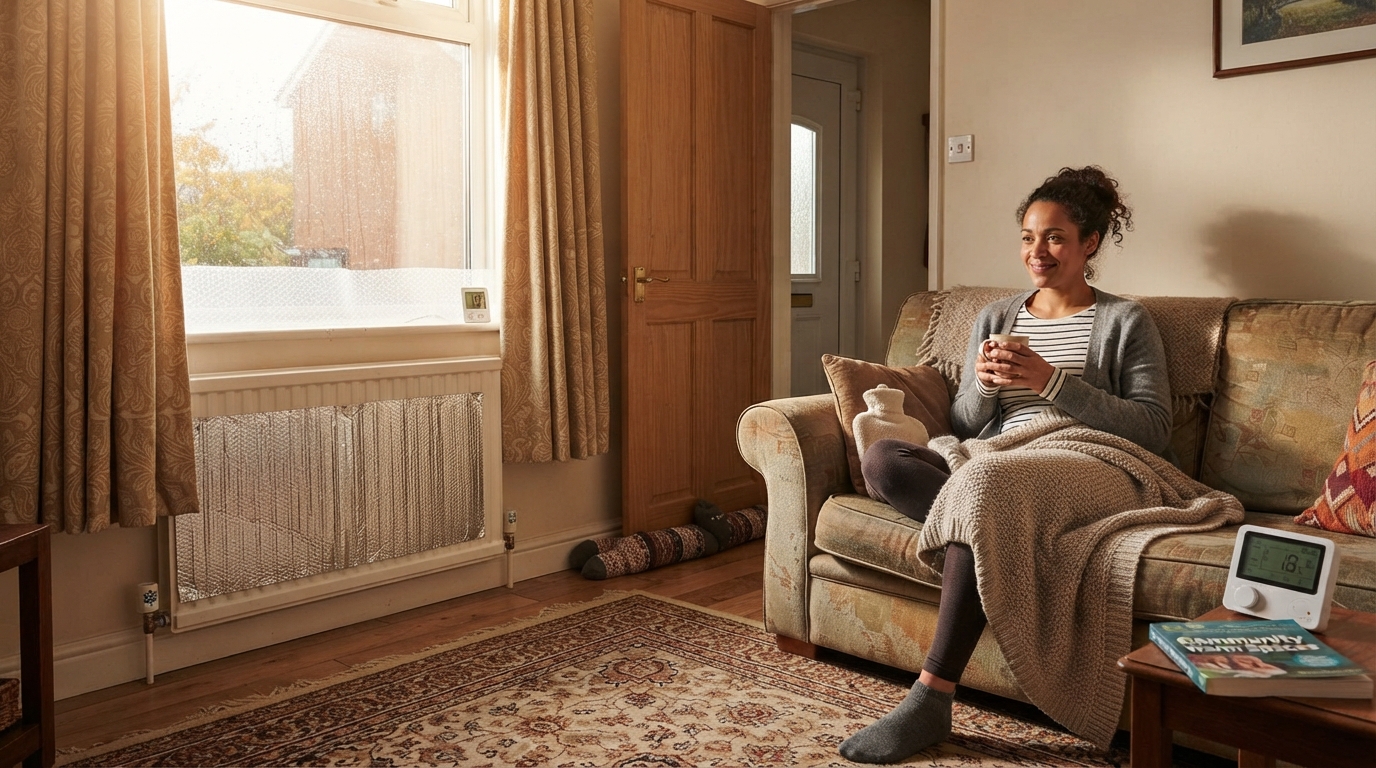
Before you turn the thermostat up, try these ideas to keep your home warmer for longer
Cora Harrison says she saves money by switching the heating on only in the rooms her family is using
As the UK prepares for a cold weekend, with strong winds and heavy rain affecting parts of the country, many people are searching for ways to add warmth to their homes without turning the heating up just yet. After all, it is autumn.
But with energy prices climbing and heating homes becoming more costly, taking steps now could bring benefits later on.
Experts do caution, however, that elderly or vulnerable people should not put their health at risk.
To help people get ready for the colder months, BBC News asked families and experts to share their advice for keeping homes warm and affordable.
When temperatures drop, many people reach for hot water bottles and blankets - but there are other ways to warm yourself.
The British Heart Foundation advises wearing several thin layers instead of one thick one to trap heat.
Natalie, 29, says she has swapped some of the clothes she wears around the house for supermarket thermal leggings and tops, and says "it's made such a difference".
Amber Waring, 27, from Devon, says she eats hot meals such as stews and pasta bakes, and dances around the kitchen with her toddler while they cook to help stay warm.
With the clocks going back this weekend, the evenings will start drawing in.
So if you have a thicker duvet, now is the time to get it out. Some supermarkets sell winter duvets for under £20 - look for 10.5 tog or higher.
But a well-placed blanket can also help. When it gets cold, Rebecca, 44, from Hertfordshire, sleeps with a blanket under her mattress, which she says prevents draughts. "This was passed to me by my nan, she swore by it," she says. Others prefer putting a blanket on top of the mattress but beneath the bedsheet.
You can also warm your bed before getting in with a hot water bottle, but be sure to check the expiry date.
Using an electric blanket - either to warm your bed before you get in or to wrap around yourself on the sofa - is "one of the cheapest ways" to stay warm, says Emily Seymour, energy editor at consumer organisation Which?.
Keep doors shut to hold heat in the room you are using. For extra insulation, you can hang curtains or blankets over doors.
Make the most of daylight. "If it's sunny outside, open the curtains so the sun heats the room, then shut them when the sun sets to keep the heat in," says Rebecca.
Sunlight can help keep rooms comfortable for longer before the heating needs to go on
"If you're using a hot appliance, let the heat into the room," says Lianne Macfarlane, 40, from Cheshire. She suggests leaving the oven door open after using it to help warm the kitchen, although this is not recommended if you have small children who could hurt themselves.
Along with curtains, other soft furnishings such as rugs can help keep a room warm, Seymour says.
If you have a fireplace, lighting a fire to warm the room you are in can be cheaper than switching on central heating for the whole house. Elin Davis, 30, from South Wales, says her log burner is more economical than turning the heating on - though she adds that "logs can cost quite a bit these days".
Heat can escape through gaps around doors, so put draught excluders around door frames. You do not need to buy them - towels can be used, or socks stuffed into a pair of tights.
On windy days, Seymour recommends checking for other draughts around the house and either sealing them yourself or calling in a professional. This can include foam strips, sealant and specialist chimney draught excluders if you do not use your fireplace. She adds that things like extractor fans and purpose-built ventilation should not be blocked.
If your windows are single-glazed, Sophie Burr of the charity National Energy Action suggests considering secondary glazing or buying thermal curtains to help retain heat. For a cheaper option, some people recommend putting bubble wrap on windows.
Even if it is tempting, do not keep windows shut all the time. Seymour says some ventilation is important to prevent damp.
If you want cheap insulation, especially if your window panes are single-glazed, putting bubble wrap on them may help
"I wouldn't recommend not having your heating on at all," says Seymour, pointing to both the health problems this can cause and the risk of pipes freezing.
But there are ways to use heating more wisely. These include checking whether your energy supplier offers lower prices at off-peak times, bleeding radiators so they work more efficiently, and increasing the heating in small steps until you reach the right temperature. If furniture is in front of a radiator, move it so it does not block the heat.
You can also buy radiator foil or make your own with kitchen foil to reflect heat back into the room instead of losing it through the walls, Burr says. She notes that about 35% of heat from radiators is lost through walls.
Cora Harrison, 34, from Wakefield, says she only turns on radiators in the rooms her family is using and keeps the heating on low when they are on holiday to avoid mould or burst pipes. Some radiators have a snowflake symbol on the valve that turns on the frost protection setting, meaning that if the room becomes very cold, the radiator warms slightly to stop the pipes from bursting.
Another way to potentially cut energy bills is to lower the flow temperature of your combi boiler. If you book a boiler service, an engineer can do this for you.
You can also look online or contact the council to find free warm spaces such as libraries and community centres in your area. Some of these places also offer free hot drinks.
Household energy prices are due to rise sharply in January, with a typical bill expected to increase by £276 a year, according to a forecast from consultancy Cornwall Insight last month. The predicted 16% rise would be the biggest in four years.
Rising bills are "particularly concerning for people with kids, people with health conditions and the elderly," says Emily Jeremy, project manager at Manchester South Central Foodbank.
An estimated 9.4% of households in England lived in fuel poverty in 2025, according to the latest government figures
Rodney Winchester, 65, from Thetford, who spoke to BBC News through the charity Christians Against Poverty, says he is "extremely worried" about rising energy prices. Because of health conditions, he says he has to keep the heating on all winter but fears he will not be able to afford it.
"It's so scary," Rodney says, adding that he has been cutting back on food spending and keeps getting ill in cold weather.
If you are struggling with bills, the debt charity StepChange recommends checking whether you qualify for extra support, such as the Warm Home Discount and Winter Fuel Payment. It also advises contacting your energy supplier, which may be able to arrange an affordable repayment plan or talk through support schemes.