

Before a single shot is fired: NATO presented the "Theory of Victory"
NATO's Supreme Allied Commander Europe, Alexus Grynkewich, presented a three-stage defense concept against a potential attack. According to the approach called the "theory of victory," the alliance's defense must begin before the opponent fires the first shot — starting with the detection of signs of preparation for an attack.
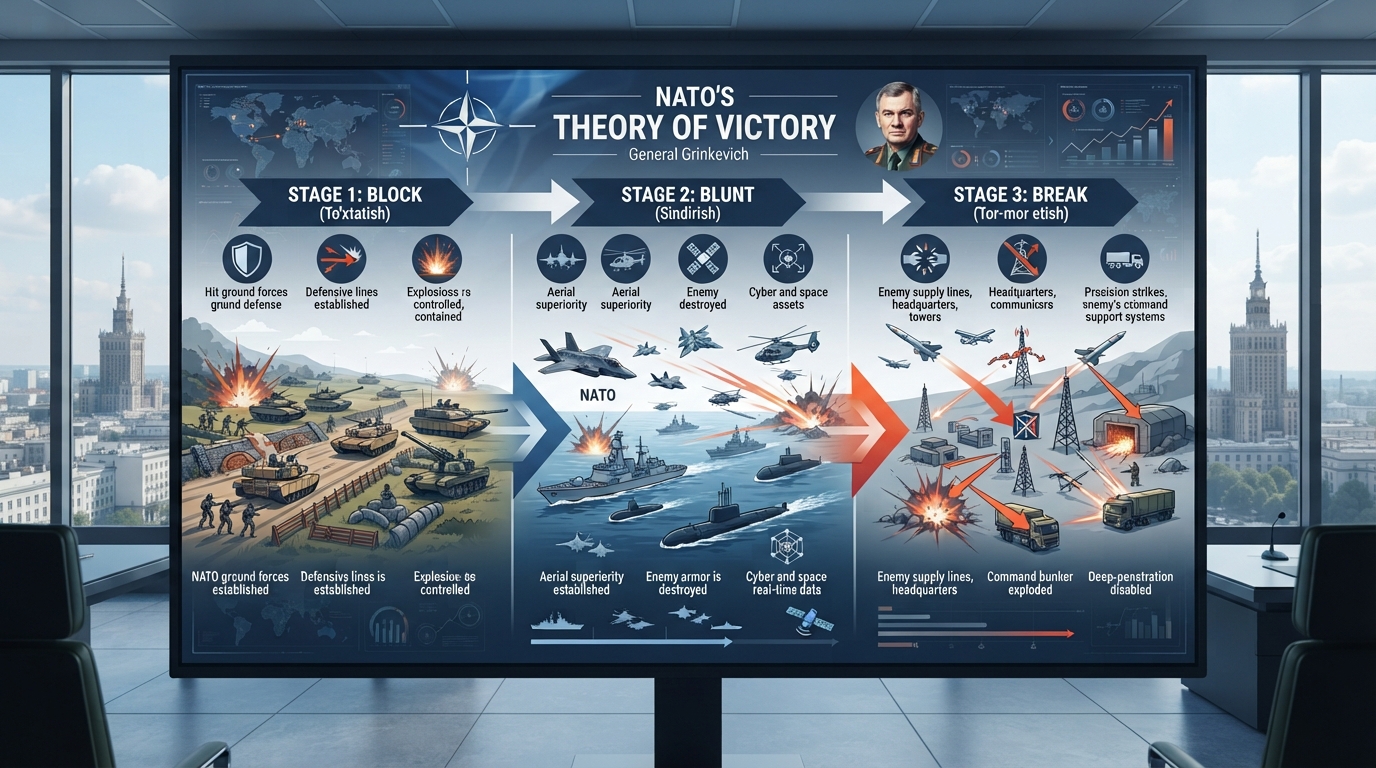
Before a single shot is fired: NATO presents "Theory of Victory"
According to DW, Grinkevich presented this concept on October 12 at a security conference in Warsaw.
In it, actions against a potential aggressor are divided into three phases: stopping the attack — Block, breaking the momentum of the attack to prevent advancement — Blunt, and if necessary, destroying the attacking troops and the military system that supplies and manages them — Break.
Grinkevich explained that signs of preparation for an attack must be detected in advance through intelligence data, surveillance systems, and analysis. This will allow for the assessment of a potential adversary's intentions and the timely deployment of NATO forces. The goal is to prevent the alliance from being caught off guard by a surprise attack.
If an attack occurs, the main task in the initial phase will be assigned to land forces on the forward defense lines. They must stop the attack, restrict the movement of enemy units, and eliminate them.
At the same time, air and naval forces, supported by space and cyber assets, are expected to secure air and maritime superiority as quickly as possible.
If the attacks continue, the plan is to stop the adversary's further advance through coordinated actions across various directions, high-tech sensors, and autonomous weapons systems, thereby shifting the initiative to NATO.
If the adversary continues the attack or brings in reinforcements even after this, the transition will be made to the phase of neutralizing its military system. This entails disrupting supply routes, destroying command and control systems, and depriving attacking units of their combat capabilities.
Grinkevich emphasized that NATO's goal is not to inflict a strategic defeat on an adversary state, but rather to militarily defeat the forces attacking alliance countries.
In his approximately 15-minute speech, the Supreme Commander did not explicitly mention Russia by name even once. However, DW noted that the concept was developed primarily taking into account a potential threat from Moscow.
"I do not view conflict as inevitable or imminent. That is not the case," Grinkevich said.