

Bakhtiyor Mustafaev: A united Central Asia is becoming a more reliable partner for Europe
On October 27, 2026, a round table was held in the city of Tashkent on the topic "Regionalization processes: experience of Central Asia and Europe, prospects for interregional cooperation and interconnectedness." The event was organized by the Institute for Strategic and Regional Studies under the President of the Republic of Uzbekistan, the ISRS, and Global Neighbours. The event brought together representatives of expert and research structures from Central Asia and Europe. The meeting took place within the framework of the forum [...]
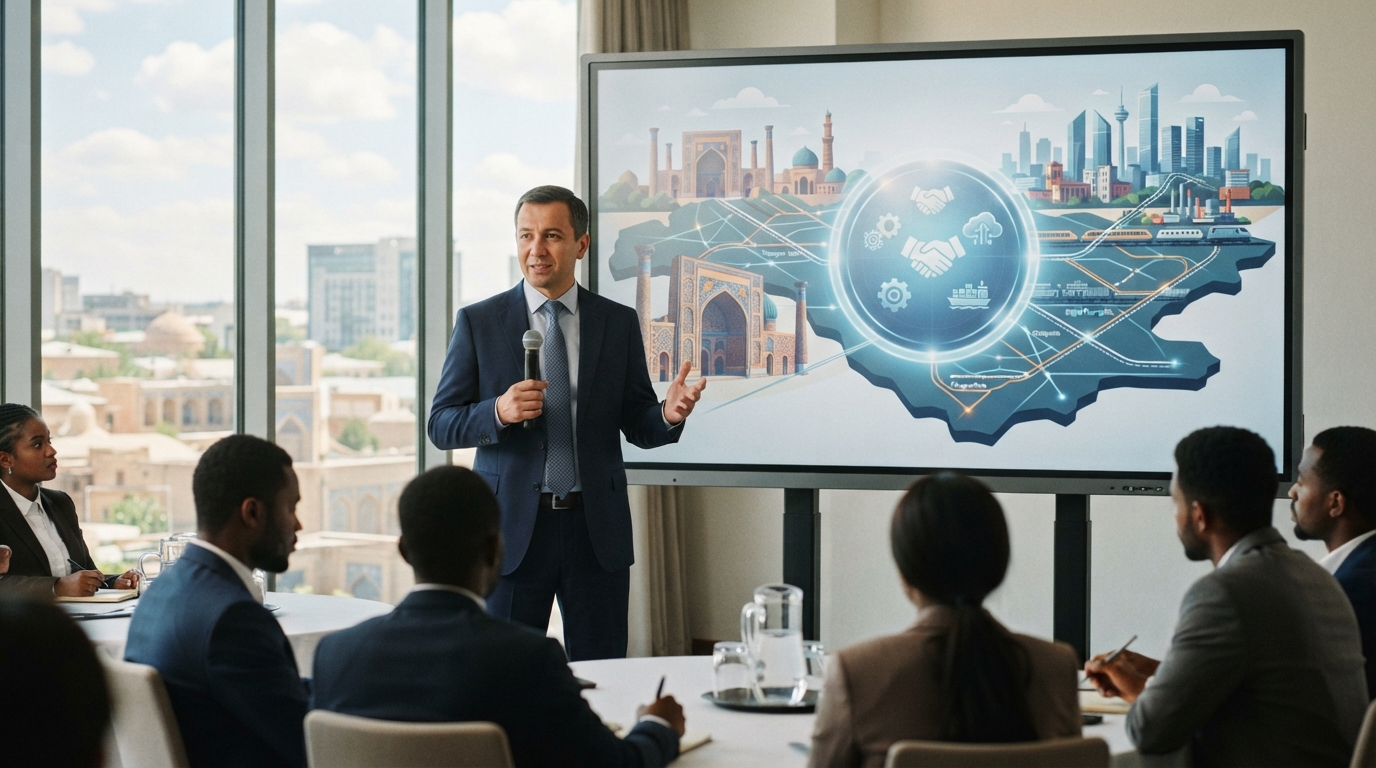
Bakhtiyor Mustafaev: A Cohesive Central Asia is Becoming a More Reliable Partner for Europe
On October 27, 2026, a round table titled "Regionalization Processes: The Experience of Central Asia and Europe, Prospects for Interregional Cooperation and Interconnectivity" was held in Tashkent. It was organized by the Institute for Strategic and Regional Studies under the President of the Republic of Uzbekistan, ISRS, and Global Neighbours.
The event was attended by representatives of expert and research circles from Central Asia and Europe. The meeting took place within the framework of the "Tracks to the Future" forum, whose route runs along the historical Great Silk Road and emphasizes the importance of transport links between Europe and Asia.
The center specializes in international dialogue and diplomacy.
The discussions focused on issues of regional integration, the adaptation of European experience to Central Asian conditions, the development of transport corridors, energy cooperation, attracting investment, and strengthening digital interconnectivity.
Opening the round table, Deputy Director of the ISRS Bakhtiyor Mustafaev noted that the fragmentation of the global economy, the weakening of multilateral institutions, and the restructuring of supply chains enhance the importance of regional cooperation. It is precisely this format of partnership that allows states to increasingly find practical answers to common challenges.
The expert also pointed out positive changes in Central Asia that have occurred at the initiative of President Shavkat Mirziyoyev. A regular dialogue between the heads of state has been established, long-standing border issues have been settled, new border checkpoints have been opened, and mutual trade and investment have grown. The Concept for the Development of Regional Cooperation "Central Asia – 2040" contributes to strengthening the legal framework of interaction.
At the same time, as B. Mustafaev emphasized, regional cooperation is based on equality, mutual respect, and consideration of the interests of each country, as Central Asia does not set the goal of creating supranational structures.
The priority remains strengthening the agency of the region and its strategic autonomy while maintaining openness to external partners.
A special place among them is occupied by the European Union. The first "Central Asia – EU" summit in Samarkand in April 2025 laid the foundation for a strategic partnership. The European side announced a 12 billion euro investment package under the Global Gateway initiative. Additional opportunities are opened by Uzbekistan's Enhanced Partnership and Cooperation Agreement with the EU.
In this regard, B. Mustafaev outlined two key questions for further discussion.
First, according to the ISRS representative, it is necessary to determine which elements of European experience in regional cooperation can be adapted to the conditions of Central Asia. At the same time, it is important to take into account the specifics of the region while preserving the principles of sovereignty, equality, and the consistent strengthening of mutual trust.
Second, as the Deputy Director of the ISRS believes, interconnectivity should be turned into a real driver of interregional cooperation. This refers to the development of the Trans-Caspian Transport Corridor, energy projects, educational programs, digital infrastructure, and interaction in the field of critical raw materials with the creation of added value directly in Central Asia.