

"B" is gone, what has fallen?
Why Kazakhstan and Uzbekistan are in no hurry to join BRICS and what role Central Asia can play in the future of the association — opinion
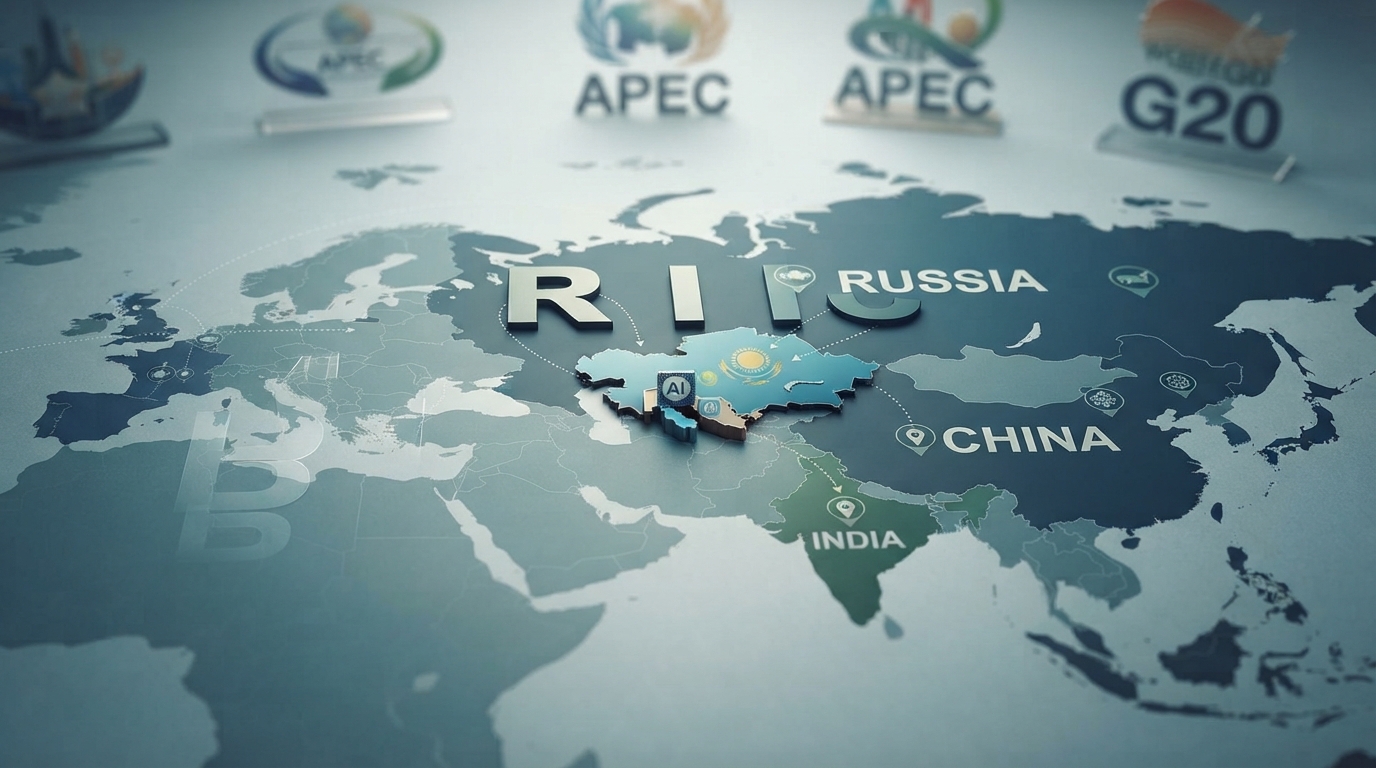
"B" is Gone, What Has Fallen?
Delhi hosted the summit of BRICS—an association that, unlike the SCO, has not yet acquired either a clear structure or a convincing philosophy of existence.
The call to be friends against someone does not stand the test of time. The history of international relations has shown more than once that such constructions are short-lived. Some global ideas lost their former influence over time, while other military-political alliances, including CENTO, SEATO, and ASPAC, ceased to exist.
Today, unfortunately, a so-called geopolitical void remains in BRICS, separating Russia, China, and India. Between these powers lie the key countries of Central Asia—primarily Kazakhstan and Uzbekistan. Without them, the BRICS space can hardly be considered cohesive. Here, one is involuntarily reminded of distant Brazil, which gave the association its first letter—B. However, at the summit in Delhi, this country was not represented by its president. It turns out the letter B is gone…
I would like to separately note the position of Kazakhstan and Uzbekistan. For now, these countries are pragmatically in no hurry regarding the issue of their full membership in BRICS, weighing the pros and cons of participating in this not yet fully formed structure, which currently has a pronounced American character.
Unlike the three main engines of BRICS—Russia, China, and India—the two Central Asian countries do not yet need to prove anything to the US or Europe. While in the first years of independence Kazakhstan and Uzbekistan themselves were interested in building a full-fledged dialogue with the West, today the US and Europe are increasingly interested in developing relations with Central Asia. That is just how things have turned out.
Understanding this, the Uzbek side decided to take advantage of the situation and follow the Kazakh path. Why not develop cooperation in the field of artificial intelligence simultaneously with both the US and China?
It should also be taken into account that the presidents of Kazakhstan, Kassym-Jomart Tokayev, and Uzbekistan, Shavkat Mirziyoyev, have been invited to the upcoming G20 summit in Miami.
Unlike the heads of state who are the main actors in the modern system of international relations, the leaders of the Central Asian countries will probably not have to participate in making potentially unpopular decisions about the future of the world order. Its outlines may be discussed at the APEC summit or in other formats.
Thus, the reader can conclude that everything is still ahead. Especially since the US-China summit will take place in September. In all likelihood, by the end of the year, a time trouble (zeitnot) will arise in world politics, which, one hopes, will not lead to a zugzwang…