

Aztec document goes on display in Mexico after 186 years abroad
France's national library is lending the manuscript recounting the history of the Aztecs to Mexico.
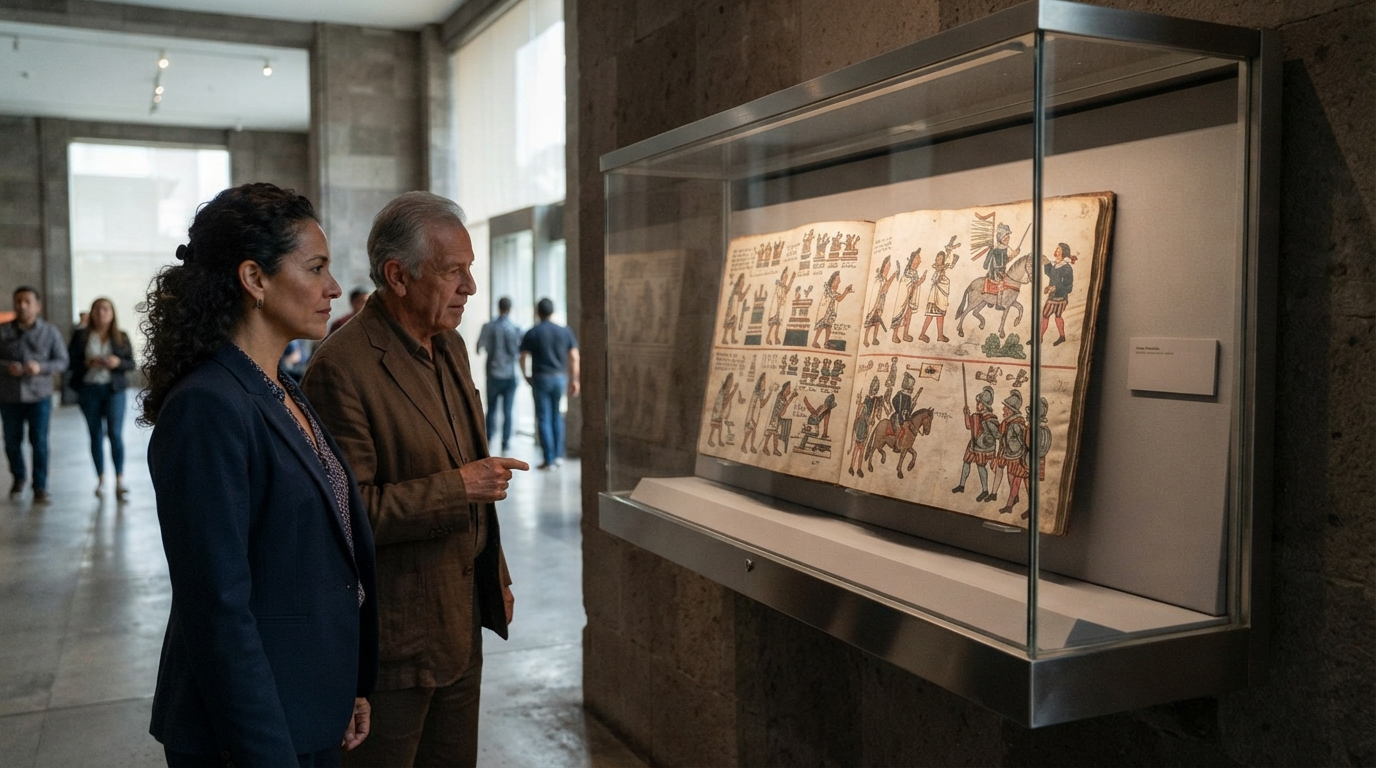
Aztec document goes on display in Mexico after 186 years abroad
Codex Azcatitlán tells the story of the Aztecs, including their battle to defend Tenochtitlán from the Spanish conquistadors
A centuries-old manuscript that recounts the history of the Aztec civilisation and its collapse after the arrival of the Spanish conquistadors through pictograms is being shown in Mexico for the first time in 186 years.
The document, known as Codex Azcatitlán, has been kept at France’s Bibliothèque Nationale since 1898, though it had already spent decades outside Mexico before then.
It is believed to have been created in the 16th Century, a few years after the conquistadors arrived in what is now Mexico, and is widely regarded as one of the most valuable and revealing accounts of Aztec history.
France has loaned Codex Azcatitlán to Mexico to commemorate 200 years of Franco-Mexican relations.
The arrival of Spanish conquistador Hernán Cortés in what is now Mexico is among the scenes shown in the Codex Azcatitlán
In exchange, Mexico has agreed to loan another priceless document, the Codex Boturini, to France for display there.
The pictograms in the Codex Boturini tell the story of the migration of the Aztecs, also known as Mexica, from their ancestral homeland to the shores of Lake Texcoco, where they founded Tenochtitlán.
The temporary swap of the two codices was agreed by Mexican President Claudia Sheinbaum and her French counterpart, Emmanuel Macron, during a visit by Macron to Mexico last year.
Mexico has long campaigned for the return of historical artefacts removed from the country in previous centuries.
According to Mexico’s ministry of foreign relations, more than 2,000 objects were successfully repatriated last year.
The Codex Azcatitlán will be on display at the National Museum of Anthropology in Mexico City from Thursday.