

Audi company has converted the A2 model into an electric vehicle
The Audi A2 e-tron has become the most efficient car in the history of the German brand, with extremely low energy consumption and a record-breaking aerodynamic drag coefficient.
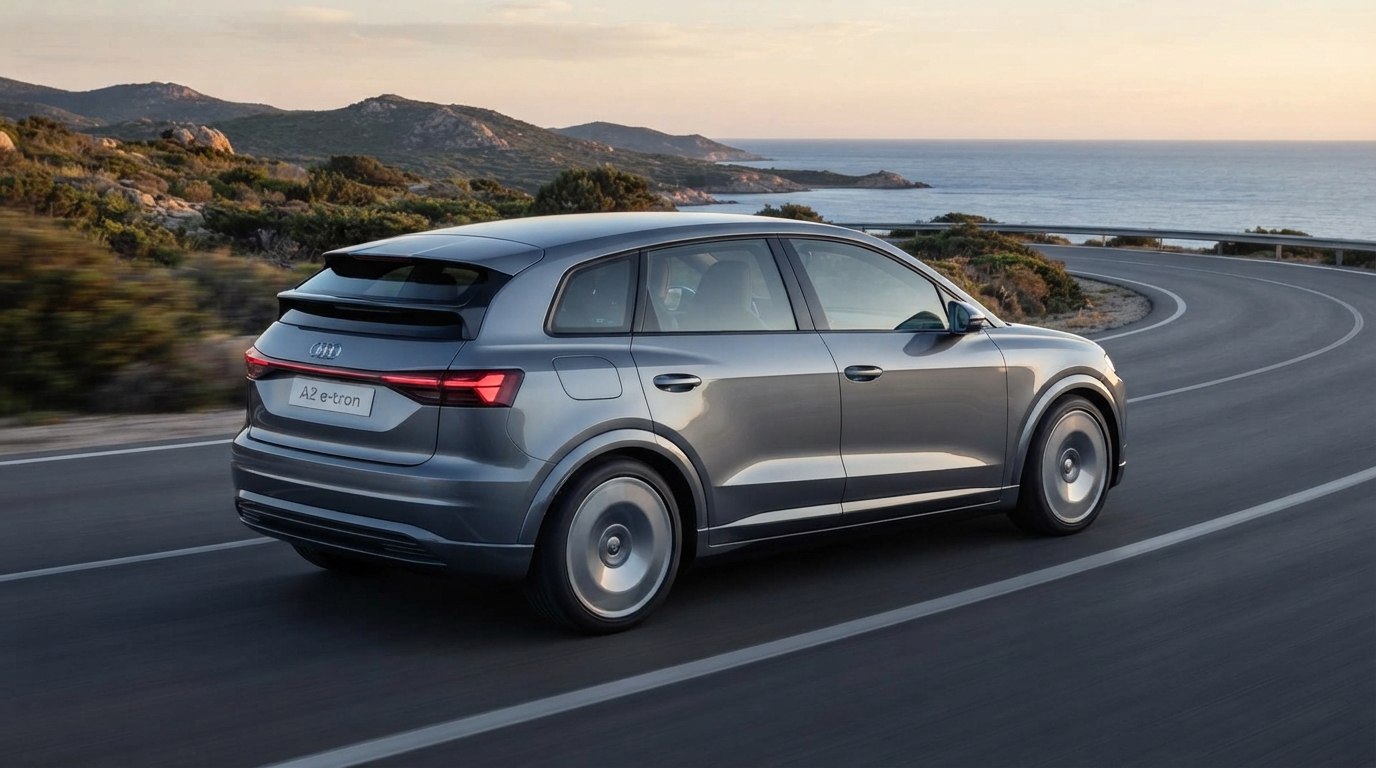
Audi has converted the A2 model into an electric vehicle
The new model has retained the features characteristic of the previous car — the angular body and the two-part rear window.
The Audi A2 was produced from 2000 to 2007. It was a front-wheel-drive hatchback equipped with low-power petrol and diesel engines with a displacement of 1.2 to 1.4 liters.
Audi claims that the A2 e–tron is the most efficient production car in the brand's history. In the optimal configuration, its energy consumption is 12.8 kWh per 100 km, and the maximum driving range according to the WLTP cycle reaches 645 km.
Engineers achieved this not just by installing a very large battery. The car's aerodynamic drag coefficient is 0.24. This result was achieved with the help of a closed underbody, an active air intake shutter, aerodynamic wheel rims, and elements that reduce turbulence in the wheel arches.
Even the door handles contribute to the fight for efficiency. They are pivoting mechanisms at the base of the pillars, which, when pulled gently, open the door via an electric drive without a mechanical linkage. Audi has a backup power source in case the electrical system fails.
The A2 e–tron is rear-wheel drive only; it does not have the Quattro system. Three battery options and four power levels are available:
Cars with the large battery support DC fast charging — with a capacity of up to 183 kW, charging from 10% to 80% in 29 minutes. On smaller batteries, the power is limited to 100 kW, but due to the lower capacity, they charge in 24 minutes.