

Apple unsure when more foldable iPhones will be available after selling out
Apple’s foldable iPhone Duo was a hit with people willing to spend $2,000 on a new mobile.
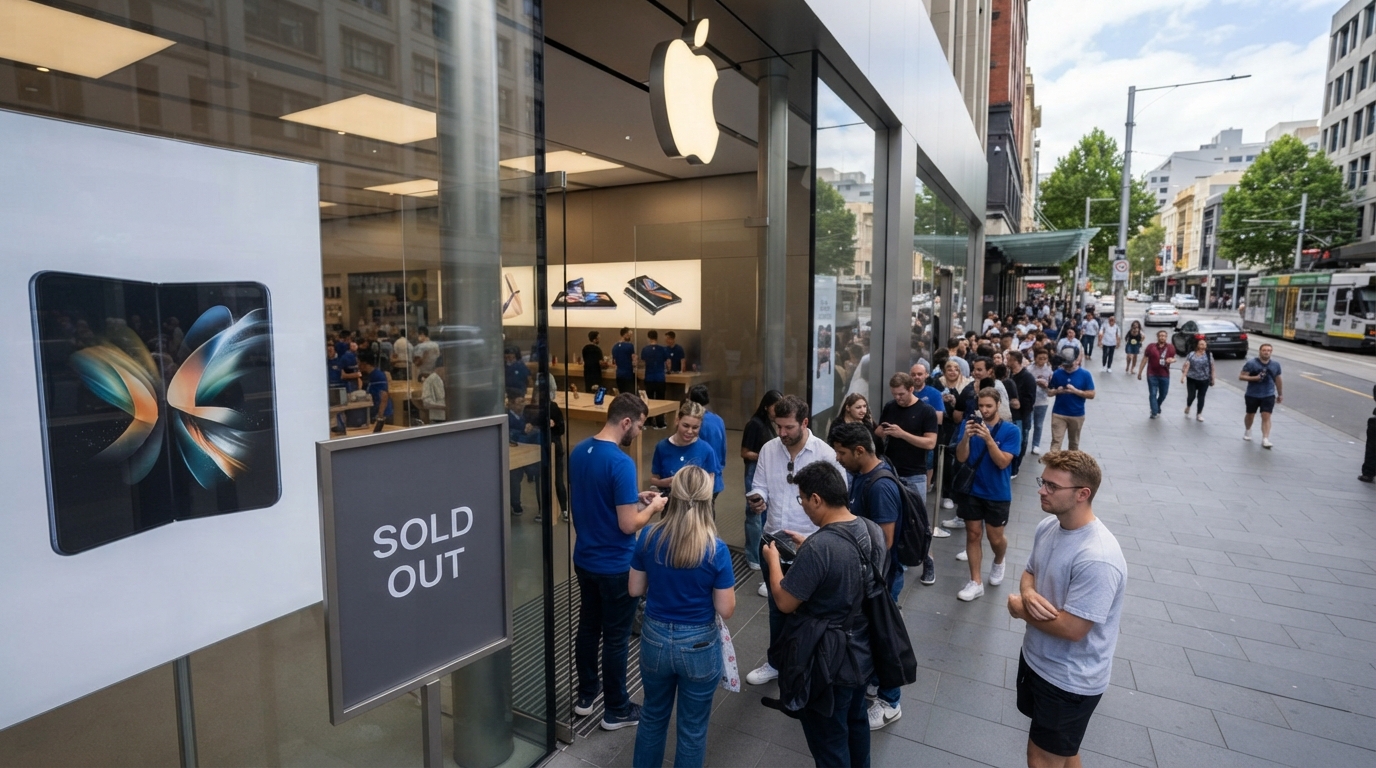
Apple uncertain when more foldable iPhones will be available after selling out
Apple’s new chief says the company is trying to make its new foldable iPhones available to more customers after the $1,999 handset sold out rapidly following its launch just over a week ago.
John Ternus, who in September assumed the role of Apple’s chief executive from Tim Cook, said on Monday that he was “thrilled” by the early response to the iPhone Duo.
Although the expensive phone, which costs £1,999 in the UK, sold out straight away, some purchasers have reported cracked screens.
Demand for the phones remains strong, and Sabhi Kahn, Apple’s new chief operating officer, said the tech giant does not know when more Duos will be available.
“At this time, it’s really hard to predict when supply and demand will be in balance,” Kahn said on a call with financial analysts discussing Apple’s latest financial results.
Apple executives did not raise any iPhone Duo problems during the call. However, last week the company said it would replace any phones affected by an issue that caused a “small number” of the new devices to crack along the inside fold.
Even so, Apple said on Monday that over the past year it sold more iPhones worldwide than ever before.
In the three months to 26 September, a period that did not include sales of the iPhone Duo, which went on sale toward the end of October, Apple reported a 17% rise in iPhone sales to $57bn.
Throughout the year, Apple has said iPhone sales have been climbing sharply, despite warnings that key components for the device, as well as Mac computers and iPads, were so constrained that they were dragging on sales.
Mac sales also increased during the quarter by 27%, reaching $10.7bn, another record for Apple.
Overall company sales rose 15% for the year to $479bn.
However, sales of both the iPad and Apple’s wearable products, including its headphones and Watch, declined by 10% and 7%, respectively.
Kahn said during the call that most Apple devices are still facing supply constraints, partly because of difficulty obtaining enough microprocessors with “advanced nodes.”
These components are essentially chip technology that enables Apple’s devices to run faster, most of which Apple has produced through TSMC, based in Taiwan.
Khan said those supply constraints are expected to continue into next year, especially affecting iPads and Macs. The problem has been worsened by what the company has repeatedly called “unexpected demand” for its products.
Ternus also said Apple is still experiencing “unprecedented” cost increases for memory, or the capacity of Apple devices to store data such as apps, photos, and text messages.
Much of that memory storage runs through data centres, which have seen a major surge in demand for space as artificial intelligence (AI) chatbots and platforms, including those from OpenAI and Anthropic, have grown in popularity.
As demand for memory has increased, storage prices have risen for tech companies like Apple.
Earlier this year, Cook described the sharp rise in data centre costs Apple was facing as a “thousand year flood.”
That has prompted the company to raise prices on essentially all of its hardware products by around 20%.