

Another $5.8 billion will be needed to complete the construction of the Rogun HPP — S&P
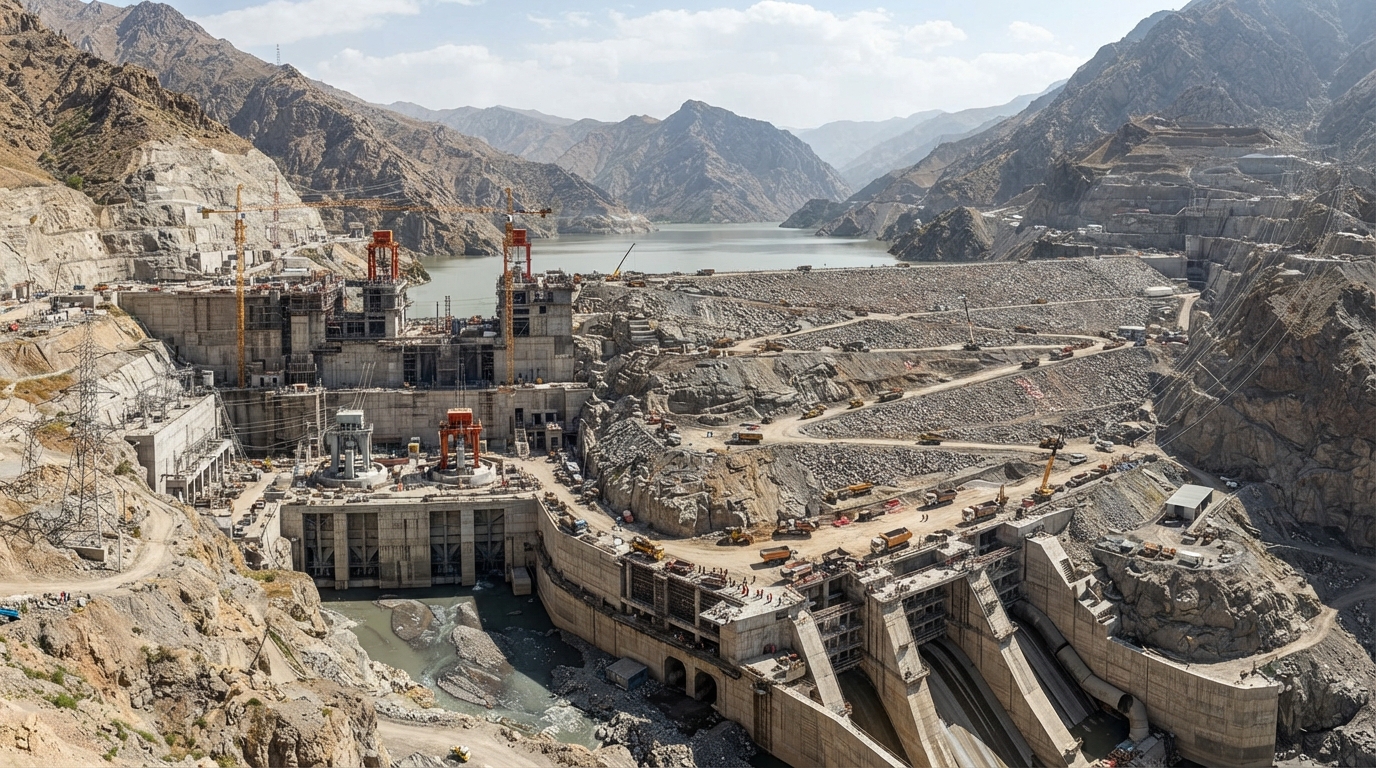
**According to S&P, $5.8 billion will be needed to complete the construction of the Rogun hydroelectric power station**
A new report from S&P Global Ratings notes that Tajikistan will need about $5.8 billion to fully complete the Rogun hydroelectric power station (HPP).
According to the agency's forecasts, the project will be fully completed by 2035. International financing, the state budget and the HPP's own revenues are being considered as sources to cover the remaining costs.
This new forecast is lower than previously published by S&P. Previously, in February 2026, the agency estimated the remaining costs at about $6 billion, and in August 2025, at $6.4 billion. At the same time, Tajik Finance Minister Fayziddin Kahhorzoda noted that the final amount can only be determined after the construction is completed.
The costs will be affected by inflation, changes in the prices of materials and equipment, complex geological conditions, and additional safety requirements. In particular, international experts are discussing the need to build an additional protective dam.
The third unit is planned to be commissioned in the third quarter of 2027. Currently, two units are operating at the Rogun HPP, which were commissioned in 2018 and 2019. In 2025, they generated more than 1.6 billion kWh of electricity, and in the first half of 2026 - 675 million kWh.
Upon completion, the Rogun HPP will have a total capacity of 3,780 MW and an annual electricity generation capacity of about 14.4 billion kWh.
**Rogun HPP: Tajikistan's "project of the century"**
Located 110 kilometers from Dushanbe, on the Vakhsh River, the Rogun HPP is one of the largest structures in the region. Its construction began in 1976, but was suspended after the collapse of the USSR.
Later, Tajikistan continued the construction of the HPP, attracting its own funds, as well as financial assistance from international funds and organizations. Currently, two of the six units are in operation. Environmentalists are concerned that the use of the Rogun reservoir will prolong the degradation of the unique ecosystems in the lower reaches of the Amu Darya for another 60-100 years.