

Ancient coffins pointed to why a powerful state in China weakened
An analysis of the wooden boards from five ancient coffins in China showed that a prolonged drought and cooling may have played an important role in the weakening of the Northern Song dynasty. Researchers believe that climate change reduced crop yields, intensifying economic difficulties and social discontent.
Ancient Coffins Offer Clues as to Why a Powerful State in China Weakened
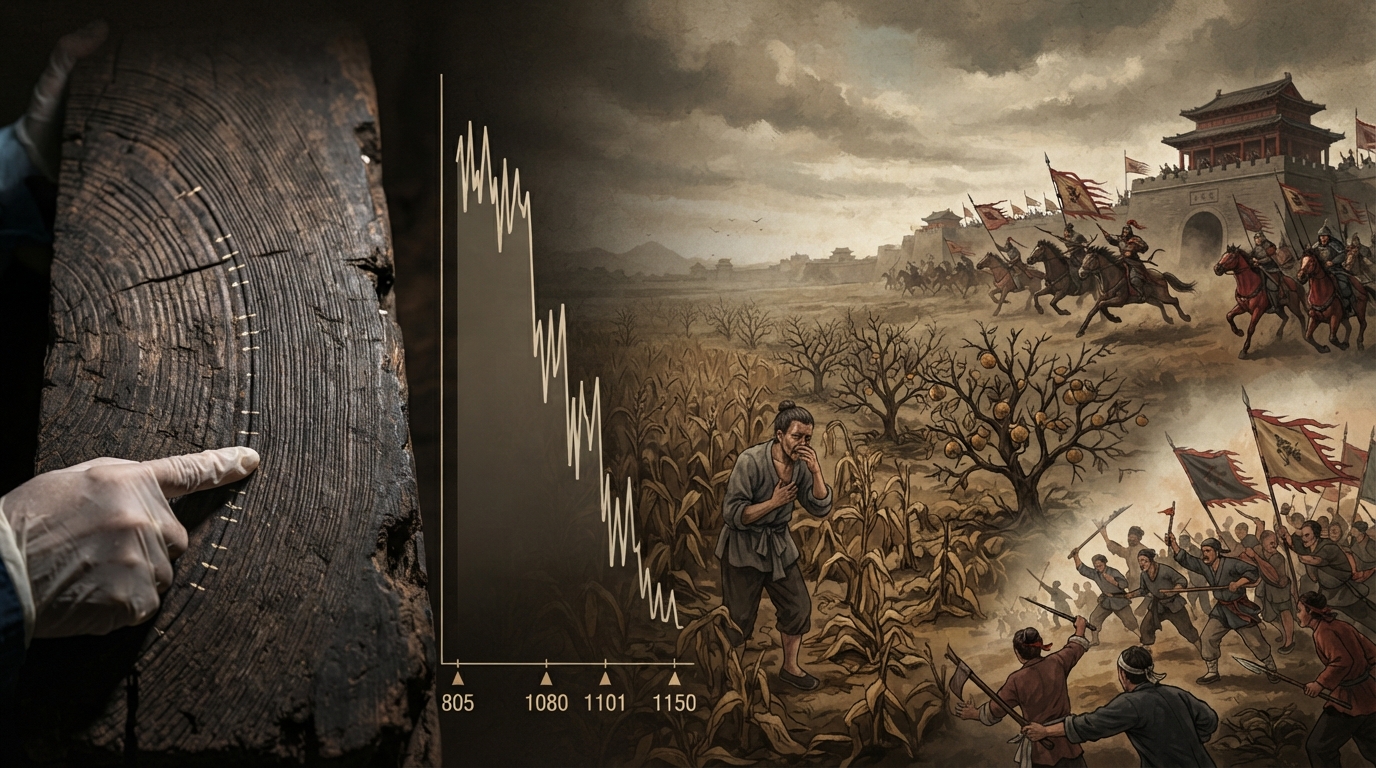
Scientists analyzed tree rings from coffin boards found in southern China in an attempt to reconstruct moisture conditions from 805 to 1150.
The Northern Song dynasty, which existed from 960 to 1127, was one of the most economically advanced states of its time. Irrigation technologies, improved tools, and new rice varieties contributed to agricultural growth. Crafts, metallurgy, maritime trade, and paper money circulation also flourished.
However, in 1127, the Jurchens captured the Song capital and took the emperor captive. Although the dynasty's rule continued in southern China, the northern part of the country was lost.
The authors of the new study investigated the factors that weakened the state prior to this defeat. They analyzed oxygen isotope ratios in the rings from different years found on the coffin boards.
The amount of oxygen-18 in the tree wood provides information about moisture conditions. Comparing these indicators showed that starting from the 1080s, precipitation in southern China decreased significantly and for a prolonged period.
Researchers also linked this process to a drop in temperatures. Cooling of the South China Sea was mentioned as one of the probable causes. This may have reduced the amount of water evaporating from the sea and moisture reaching the land.
According to the analysis, the drought worsened after 1101. This period was characterized by the most unfavorable moisture conditions in the studied range of 805–1150. However, the methods used did not allow for determining the exact extent of the changes.
Historical sources also note that during this period, crop yields declined, cultivated areas shrank, and citrus trees died en masse in southern China at the beginning of the 12th century. Meanwhile, rice prices rose sharply.
In need of funds for military conflicts in the north, the state attempted to maintain tax revenues despite the weakening economy. As a result, the tax burden on the population grew heavier, leading to rising discontent.
In 1120, the Fang La rebellion broke out, with dissatisfied peasants being its main participants. Chinese historical sources state that two million people died during the rebellion and its suppression. These events inflicted huge expenses on the state and weakened the army.