

An ear tag for a cow: Uzbekistan sets sights on digital livestock farming, project estimated at $20 million
The country intends to implement a digital identification and animal tracking system based on South Korean technologies. The project involves an investment of $20 million and the launch of a one-year pilot phase. Azizbek Urunov, Chairman of the Food Safety Committee, held talks with Choi Seung-hyok, CEO of the South Korean company INPRO Inc. The parties discussed the implementation of digital technologies in livestock farming, the improvement of the system […]
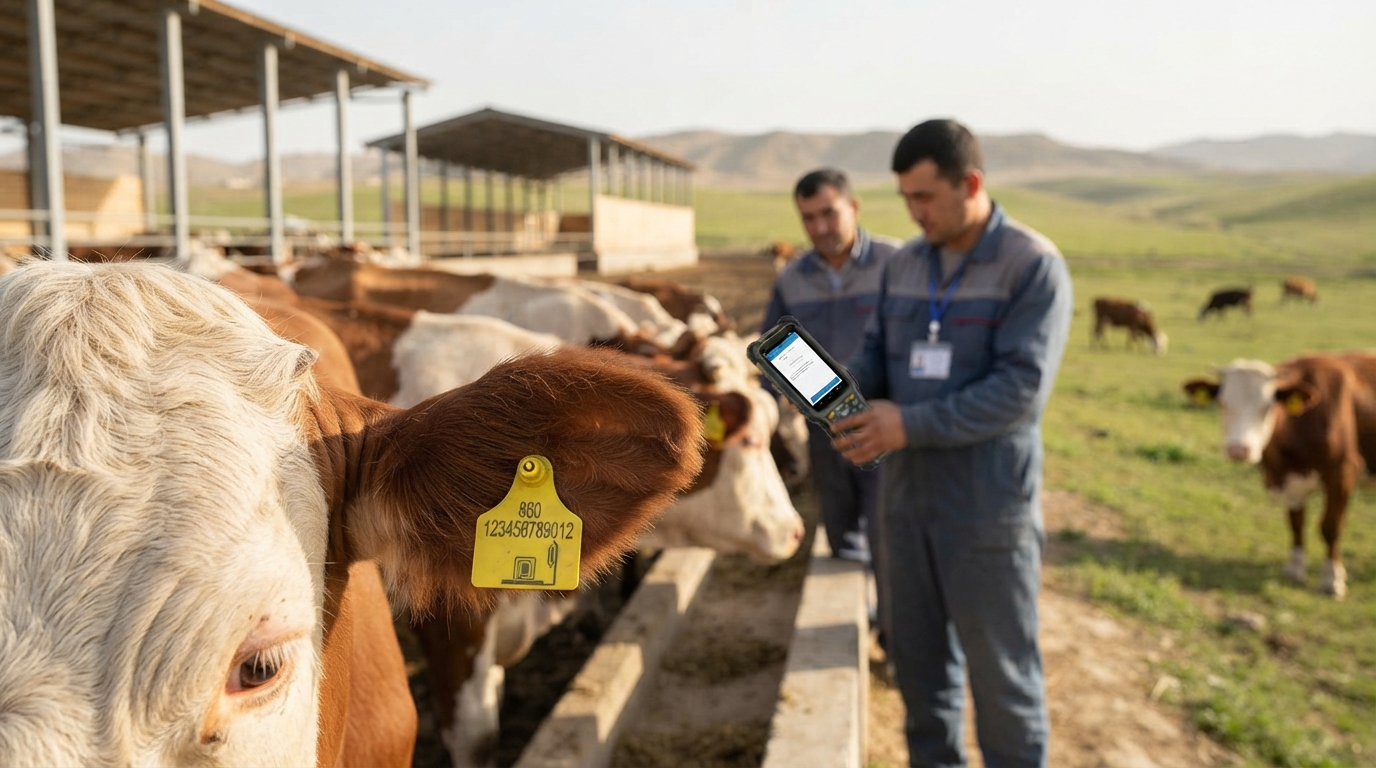
An ear tag for a cow: Uzbekistan relies on digital livestock farming, with the project valued at $20 million
The country plans to introduce a digital identification and animal tracking system based on South Korean technologies. The project involves investments of $20 million and the launch of a one-year pilot phase.
Azizbek Urunov, Chairman of the Food Safety Committee, held talks with Choi Seung-hyok, CEO of the South Korean company INPRO Inc. During the meeting, the parties discussed the introduction of digital technologies in livestock farming, the improvement of the animal identification and tracking system, as well as the development of livestock genetics.
Representatives of the South Korean company presented the digital platform DLGS (Digital Livestock Global System). It is based on RFID ear tags that comply with international ISO/ICAR standards and cloud technologies.
The platform allows real-time tracking of information about each animal: from birth and health status to vaccination and movement. According to the developers, the implementation of the system will help ensure compliance with legal requirements on mandatory animal identification and registration, as well as strengthen control over the epizootic situation.
Following the meeting, the parties signed a Memorandum of Understanding. The document provides for attracting $20 million in investments into digital livestock farming and genetics projects in Uzbekistan, as well as the implementation of a pilot project for a period of one year.
The cooperation also involves the participation of local enterprises, research institutions, and farms, conducting joint scientific and experimental work, as well as advanced training for specialists.
After the completion of the pilot phase, the parties will evaluate its results and consider options for further expanding cooperation.