

Alberta heads to polls to decide whether to hold vote on separation from Canada
Polling suggests most Albertans favour remaining part of the country, although the debate alone has proven divisive.
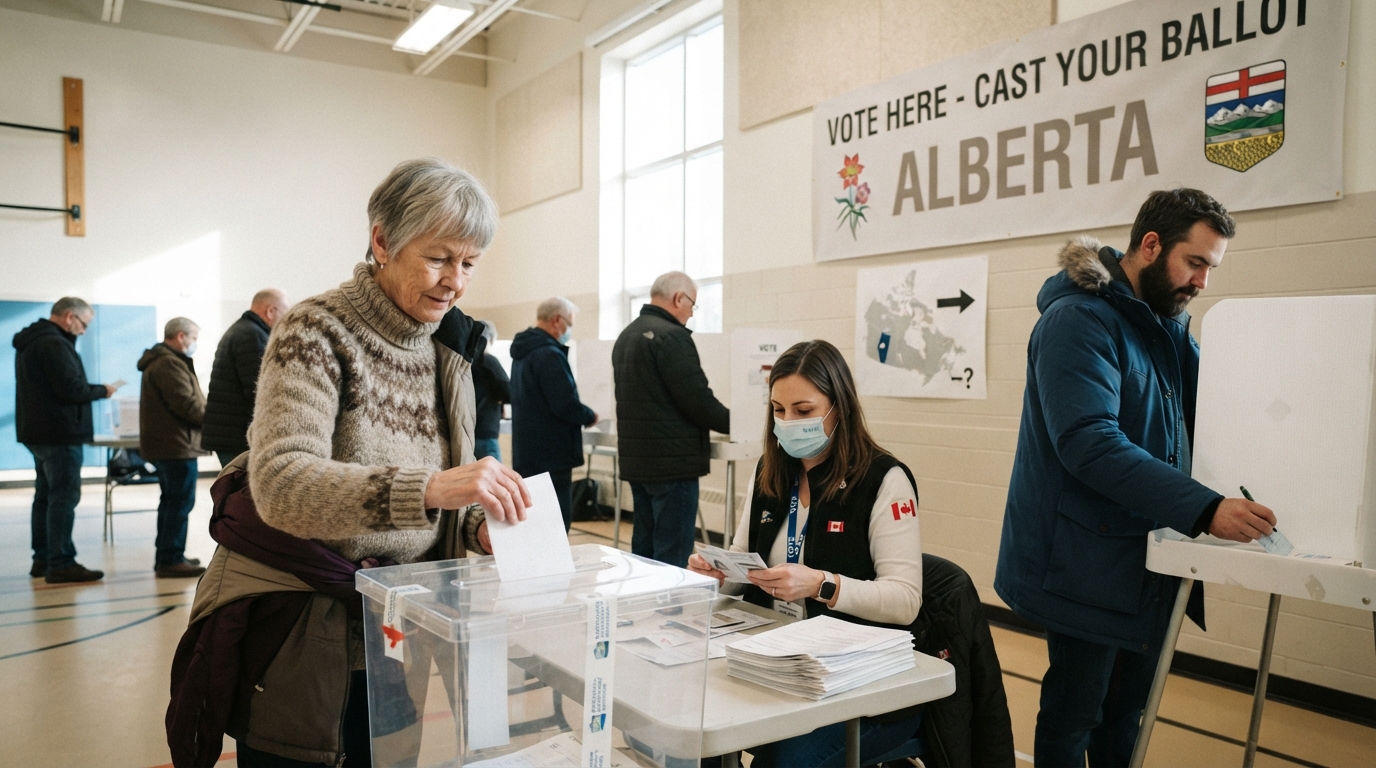
Alberta goes to the polls to decide on a future vote on separation from Canada
On Monday, people in Alberta are voting on whether to hold a referendum at a later date on separating from Canada.
The ballot was called earlier this year by the province’s leader, Danielle Smith, after a grassroots campaign gathered about 300,000 signatures on a petition calling for a binding referendum on separation.
Many supporters of separation say the oil-rich province’s economic expansion has been held back by environmental policies from Canada’s federal government in Ottawa.
But those who want Alberta to stay in Canada — including Prime Minister Mark Carney — have urged the country to present a united front in the face of outside pressure.
Polls have indicated that most Albertans would vote to remain in Canada, although the debate ahead of the vote has already been deeply divisive.
Another group collected signatures for its own petition opposing separation, which was signed by more than 400,000 people. The province has a population of about five million.
If Albertans vote on Monday to proceed with a binding referendum, Smith has said that could take place as early as 2027.
Smith’s move to permit Monday’s vote came despite a court blocking the pro-separation petition, ruling that it had failed to consult Indigenous First Nations whose land would be affected if the province left Canada.
After the judge’s ruling, First Nations groups described Smith’s decision to let the voting process continue as “undemocratic” and “authoritarian”.
Smith, who leads the United Conservative Party of Alberta (UCP), has defended her choice to put the matter before voters. She herself opposes separation, but says the process gives residents of the province a chance to have their say.
The main question on the ballot will read: “Should Alberta remain a province of Canada or should the Government of Alberta commence the legal process required under the Canadian Constitution to hold a binding provincial referendum on whether or not Alberta should separate from Canada?”
The separatist campaign is led by Mitch Sylvestre, a gun shop owner from Bonnyville, and Jeffrey Rath, a lawyer in Calgary. Both belong to the Alberta Prosperity Project, which says the province’s economic growth has been constrained by years of Liberal rule in Ottawa.
They argue that successive Liberal governments over the past 10 years have prioritized environmental policies over helping Alberta expand its oil and gas industry. They say Alberta would retain more of its wealth if it separated from Canada.
Chris Scott, founder of the pro-separatist group Let’s Talk Alberta, told BBC News on the eve of the vote that the campaign had already met some of its aims, whatever the outcome on Monday. “The key is the conversation has started and it needs to continue,” he said. “What’s started can’t be stopped now,” he added.
Opponents of separation say an independent Alberta would be left with responsibility for billions of dollars in debt. They warn that the uncertainty — which they compare to the UK’s 2016 Brexit vote to leave the European Union — would push thousands of jobs and investment out of the province.
Carney has urged voters to deliver a clear rejection of separation. Speaking at a rally on Thursday, he said the stakes were high.
“The world has become more dangerous and divided. Some outside our borders are working to break us so they can own us,” Carney said, repeating warnings he has made before about Canada’s ongoing trade war with the United States.
In addition to the separation question, Albertans will vote on nine other issues, several of them focused on whether the province should have greater control over its immigration system.
Hundreds of thousands of people had already voted early by post before Monday, and early figures pointed to strong turnout.
Provincial election officials will count the ballots by hand and have 48 hours to finish the job, beginning no earlier than 20:00 local time on Monday (02:00 GMT on Tuesday).
The separation question will be counted in full first. Officials have said the results should be available in the early hours of Tuesday.