

AI 'SpongeBob' parody of problems in Egypt draws scrutiny of authorities
A take on the hit US TV series has become an unlikely tool for Egyptians to complain about life amid strict surveillance.
AI 'SpongeBob' parody of problems in Egypt draws scrutiny of authorities
Posts complained about issues like the cost of living and surveillance
An AI-created take on the popular US cartoon figure SpongeBob SquarePants has unexpectedly emerged as the centerpiece of a contentious online trend among Egyptians voicing criticism of living conditions, despite tight restrictions on political dissent.
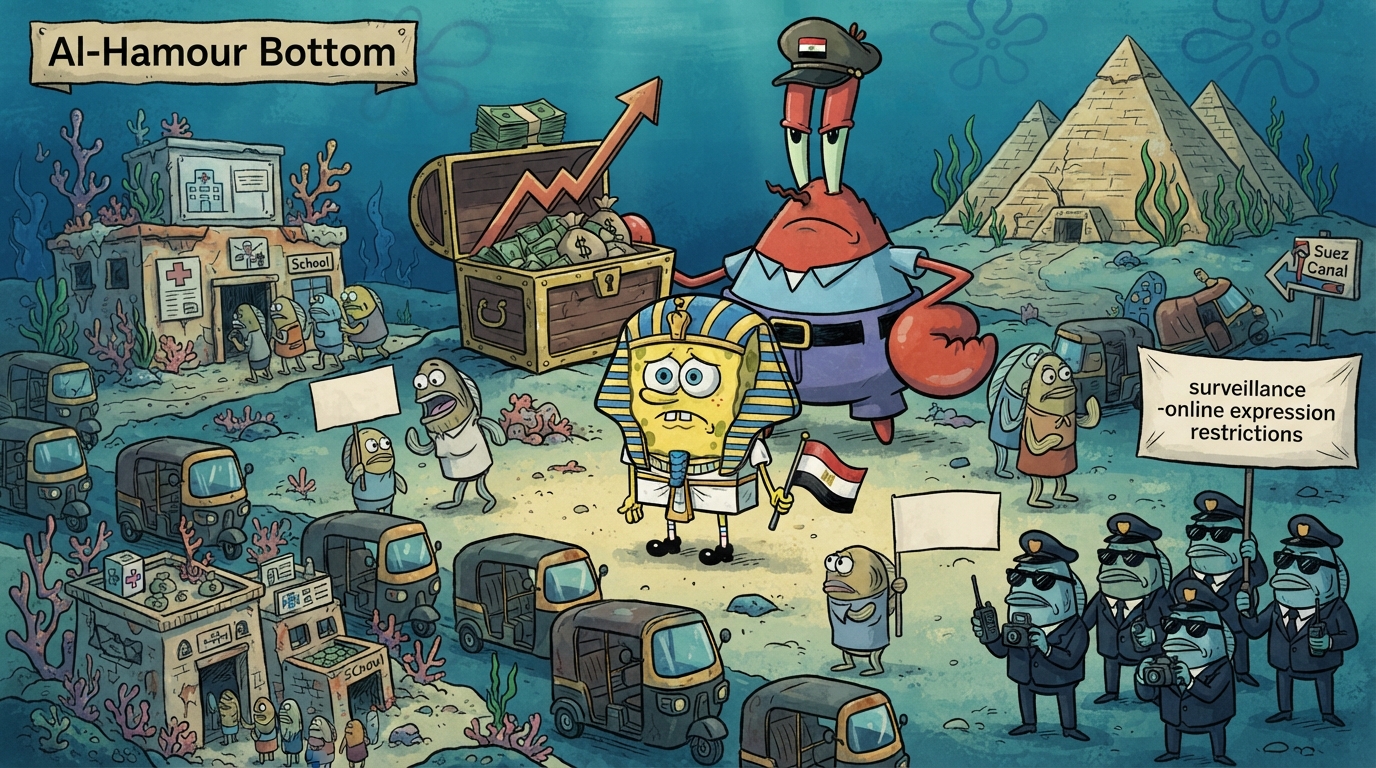
The satirical posts started last month with a Facebook group called "Complaints of the Residents of al-Hamour Bottom" - the Arabic name used for SpongeBob's underwater home, Bikini Bottom.
Before long, images appeared portraying Egypt's President, Abdul Fattah al-Sisi, as the money-grabbing Mr Krabs, a seabed packed with tuk-tuks (automated rickshaws), and schoolgirl fish being sexually harassed by sleazy, male fish.
Other posts drew remarks about allegedly corrupt ministers, soaring rent, and the deteriorating state of health and education.
The altered images from the SpongeBob show, originally made by Nickelodeon, were produced by users of the site.
Within a few weeks, the Facebook group had gained 1.8m followers. One sharp cartoon showed ministry of interior staff underwater, saying: "Be careful", before the group was suspended, amid reports of official scrutiny.
A teenage girl who said she was the group's administrator posted a video clip saying that she and her fellow creators should not be blamed for political posts that some members had shared in spin-off groups.
Pro-government media and TV presenters accused the banned Islamist Muslim Brotherhood of taking advantage of the viral craze. Egypt's military removed the Brotherhood-backed President Mohammed Morsi in 2013, after mass protests against his one-year rule.
"The trend of al-Hamour Bottom belongs to the Brotherhood," said well-known talk show host Tamer Abdel Monaim in a programme devoted to the subject. "Its aim is to sow confusion."
Although many posts with the most sensitive political remarks have now been taken down, some of the most widely shared content has kept circulating broadly on social media. Many Egyptian celebrities, social media influencers and brands embraced the theme, posting AI-generated memes of al-Hamour Bottom.
"The laughter surrounding Bikini Bottom is not necessarily a sign of happiness," Egyptian radio presenter Rabab Kamal told her thousands of Facebook followers. "People are laughing because circumstances have become so absurd that laughter feels like the only possible response."
With more than 110m people, Egypt is the Arab world's most populous country. Since the 2011 Arab Spring, it has endured years of social and economic turmoil. Ordinary Egyptians still face high inflation from earlier currency devaluations that have hurt their standard of living.
Regional instability has affected Suez Canal revenues, tourism and remittances from Egyptians working in the Gulf. Fuel prices have increased and this summer, the government raised some electricity tariffs by 12%.
At the same time, tolerance for public dissent in Egypt has grown even lower since the military, led by Sisi, returned to power. The government fears instability and threats to its rule.
The surreal comedy of SpongeBob and his underwater friends - especially popular with Millennials and Generation Z - became an unlikely way to get around this.
"The Egyptian government has long been cracking down on online expression. Thousands of people in Egypt languish for years in pretrial detention simply for expressing views online that are not sanctioned by the state," says Mahmoud Shalaby, a regional researcher at Amnesty International.
"This repression is not limited to political opponents. It extends to a wide range of people, including religious minorities, people who do not adhere to a religion, people perceived to be LGBTI, and female social media creators who are often prosecuted under vague morality laws."
Although Sisi says he is committed to freedom of expression and that Egyptians are free to express any views, few believe it. Late last month, the president appeared to indirectly refer to the SpongeBob craze when he mentioned "social media chaos" and how continuing public debates failed to understand the scale of national challenges.
Egyptian state security encourages reporting suspicious or anti-government behaviour.
It may therefore not be surprising that a lawyer has already reportedly filed a legal complaint against "the administrators, operators, financiers and contributors behind the creation of online content, pages and social media accounts associated with al-Hamour Bottom".
The Cairo 24 news site says he has called for an investigation into "satirically depicting economic conditions and decisions in a manner that could disturb public security and social order".
The growing pressure means SpongeBob may soon have to put aside his new pharaonic outfit and abandon the pyramids and his Egyptian home.