

After renewed US-Iran strikes - how could the conflict end?
Three experts give their BBC their thoughts on whether an imminent end to the conflict is likely.
After fresh US-Iran strikes, how might the conflict come to an end?
Iran has been hit hard by the war, yet its leaders are still defiant.
An imminent deal to end the conflict between the US and Iran now looks unlikely again, as the two sides trade strikes and uncompromising language.
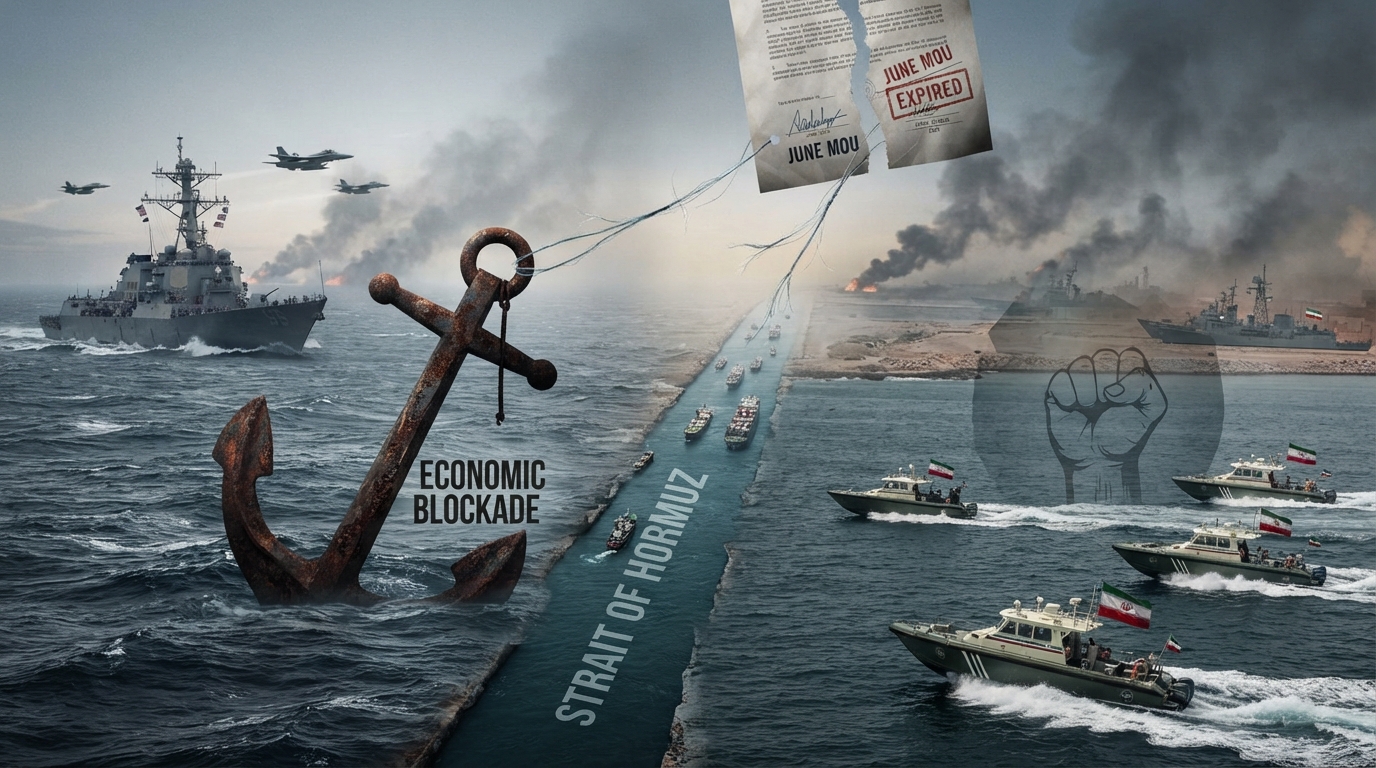
The attacks came days after the US said it was entering a new phase: a sweeping economic blockade on Iran and on countries that trade with it.
The US goal was to pressure Iran into negotiations and stop its attacks on shipping in the Strait of Hormuz. That vital commercial shipping route has effectively been shut since the US and Israel launched the conflict in February.
A Memorandum of Understanding (MoU) signed by the two sides in June, intended to lead to a permanent ceasefire and a deal within 60 days, has now expired.
As the conflict moves into its seventh month, we asked three experts for their views on how it may unfold.
The issue is that we still do not know for certain what the US strategic objectives are in Iran. The White House is continually reassessing what it is prepared to tolerate politically.
It had been assumed that the military element would be enough to deliver a swift victory, and that has not produced the hoped-for result.
What we are seeing are different levers - both military and economic - that the US is trying to pull at.
At the moment, the administration seems content with some form of statis. I think they are satisfied with keeping the blockade in place and allowing occasional strikes against Iran's ability to disrupt shipping in the strait.
US officials are hopeful the new sanctions will be enough to force the Iranian regime to the negotiating table from a weaker position.
US forces appear to have managed to allow enough traffic through the Strait of Hormuz in recent days to avoid an oil-price shock or a global economic collapse. But that was not the US objective when the war began.
My sense is that Iran is likely to demand a high price for any resolution, and that is likely to remain politically untenable for the Trump administration.
I do not think the latest strikes really change Iranian calculations about the war. I think Tehran is preparing for a tighter squeeze on its economy, and for the stop-start attacks we have seen over the past couple of months to continue. Their aim will be to respond proportionately so as not to trigger a wider conflict.
Economically, this is obviously likely to damage the Iranian economy, which has already been affected by the war and has underlying structural problems anyway, as we know from the December and January demonstrations in Iran.
But I do not get the sense from the Iranian side that the economic squeeze will change Iran's calculations any time soon, including on negotiations.
That does not mean Iran is not seeking an off ramp, but I think what we are seeing is that it is waiting for the US to return to the MoU, or at least make some kind of concession. Tehran does not want to give in to US pressure or change its own approach in response to sanctions or further attacks.
The latest surge in military action is not going to bring about Iran's capitulation - it is simply the latest twist. Economic pressure is also unlikely to succeed because China, Russia and many other countries that trade with Iran are not going to back unilateral US sanctions.
Iran can keep disrupting the Strait of Hormuz - it has a thumb on the jugular of the global economy.
What is the White House's exit strategy?
Well, the US has already found it. If Trump were able to put sustained effort into negotiating the deal set out in June's MoU, that is the off-ramp.
Not only would a deal give the US a kind of victory because it would weaken the hardliners in the Islamic Republic, but it would also reassure everyone that Iran is not going to obtain a nuclear weapon.
There is a silver bullet in the MoU: the lifting of all US sanctions on Iran.
What lifting those sanctions would do over time is weaken Iran's powerful Islamic Revolutionary Guard Corp (IRGC). Economic engagement between the outside world and Iran in a new way would gradually force radical political and social change - so you end up with an Islamic regime, but of a very different nature.
Of course, that would not be straightforward to achieve, because of extensive IRGC penetration of the Iranian economy. But it should work, if given enough time and if the US and its partners exercised strategic patience, which, sadly, is in short supply at this point.
For now, I think we are going to continue with a messy, inconclusive situation that is bad for everyone.