

A waste-to-energy plant is being built in the Tashkent region
In the Akhangaran district, construction of the main building of a $240 million plant has been completed; it will be able to process 912 thousand tons of waste per year.
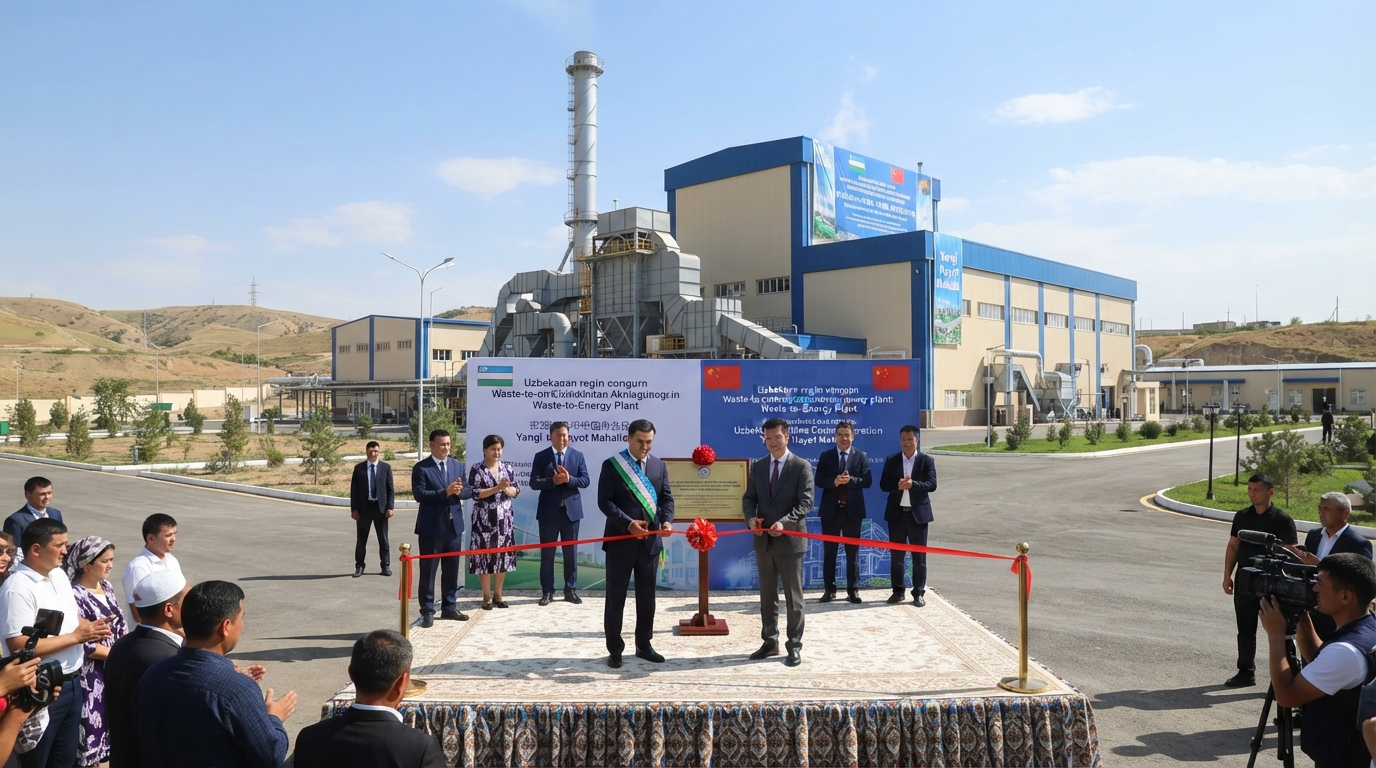
A waste-to-energy plant is being built in Toshkent Region
In the Ohangaron District of Toshkent Region, construction of the main building of a solid municipal waste recycling plant generating electricity has been completed. In addition, the first stage of the investment project has been finished at the site.
A formal ceremony on this occasion took place on the territory of the enterprise in the "Yangi Hayot" mahalla. It was attended by the Khokim of Ohangaron District, Bakhrom Norkobilov, as well as representatives of the company and relevant organizations.
Speaking at the event, the head of the district stressed the project's significance for the development of the region's energy sector, economy, and environmental infrastructure. The recycling of municipal waste will make it possible to use it as an energy source, expand electricity production capacity, and reduce the burden on the environment.
Representatives of the enterprise spoke about the progress of construction, the design capacity, the technologies applied, and further stages of implementation.
The project is being implemented with the participation of the Chinese company China CAMC Engineering in accordance with Resolution No. PP-116 of the President of Uzbekistan dated March 24, 2025. The total volume of investments is $240 million. Financing is provided through foreign direct investment.
The design capacity of the plant provides for the thermal processing of 912 thousand tons of solid municipal waste per year. The plant is expected to generate up to 390 million kWh of electricity annually.
In the subsequent stages, the installation of technological equipment, assembly work, and the preparation of production systems for launch are planned.
Upon completion of the project, the enterprise is expected to become part of the region's waste management and alternative energy infrastructure.
At the same time, the specified volumes of processing and electricity generation are design targets.