

A registry of foreign workers is being prepared in Russia: what will change for migrants?
Russia plans to introduce a organized recruitment system for foreign workers with an electronic registry, new employment requirements, and additional costs. The first phase of the experiment may begin after March 1, 2027. How will the expected changes affect citizens of foreign countries, as well as migrants already working in Russia?
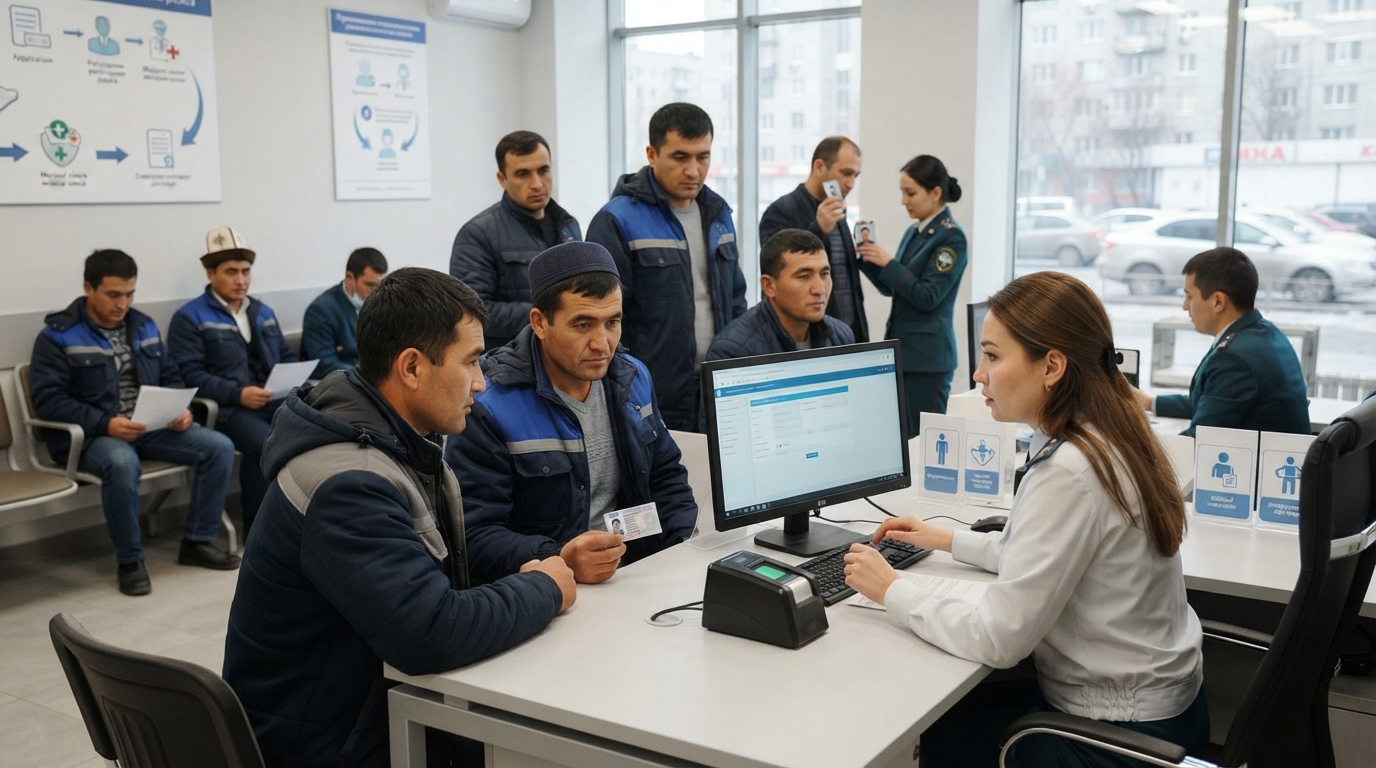
A register of foreign workers is being prepared in Russia: what will change for migrants?
In Russia, there are plans to introduce an organized recruitment system (orgnabor) for foreign workers.
The first stage of the experiment is expected to begin after March 1, 2027, and the second after January 1, 2029. For now, this is a draft project, so the final deadlines and rules will depend on the law to be adopted.
According to the new system, foreigners will arrive to work for a specific employer who has specified in advance the required number of employees, their positions, and hiring conditions. Instead of the current permits, it is planned to use electronic registers of employers and employees.
The experiment is set to cover the whole of Russia, except for the city of Moscow and the Moscow region. Certain categories of foreigners, including citizens of Belarus and highly qualified specialists, are expected to be exempt from the new procedure.
Citizens of Kyrgyzstan and Kazakhstan can currently work in Russia without a patent or work permit, like citizens of other member states of the Eurasian Economic Union (EAEU). The draft itself does not cancel these rights. However, whether or not their registration in the new register will be required needs to be regulated by the final text of the law. One of the previous versions of the amendments provided for exempting EAEU citizens from the state duty for inclusion in the employee register.
To participate in the organized recruitment, an employer will need to register in the register of the Ministry of Internal Affairs of Russia and submit an application through the "Passport and Visa Service" under the ministry. It must specify the number of employees, the workplace, and hiring conditions. The employment contract is planned to be concluded for one year, and its conditions, including the work schedule, must match the application. The possibility of changing wages and social guarantees is also provided for.
Employers may be obligated to pay the costs of genomic registration of employees and, if necessary, cover the state's expenses for their deportation. If a company hires more than 15 foreigners, it will be required to provide them with housing for the duration of the employment contract. For individuals, it is proposed to establish a restriction not to exceed five hired migrants.
Foreign workers will need to register in the system, obtain an identification card valid for three years, and undergo a medical examination. During the processing of documents, it is planned to accommodate them in so-called "migration hotels." At the same time, the three-year validity period of the card does not mean that the employment contract will also be concluded for three years.