

A rare venomous primate not seen for nearly 90 years was found in Indonesia
This species of primate is among the few mammals capable of producing venom. They live exclusively on Indonesia's Bangka Island, which has an area of approximately 12 thousand square kilometers.
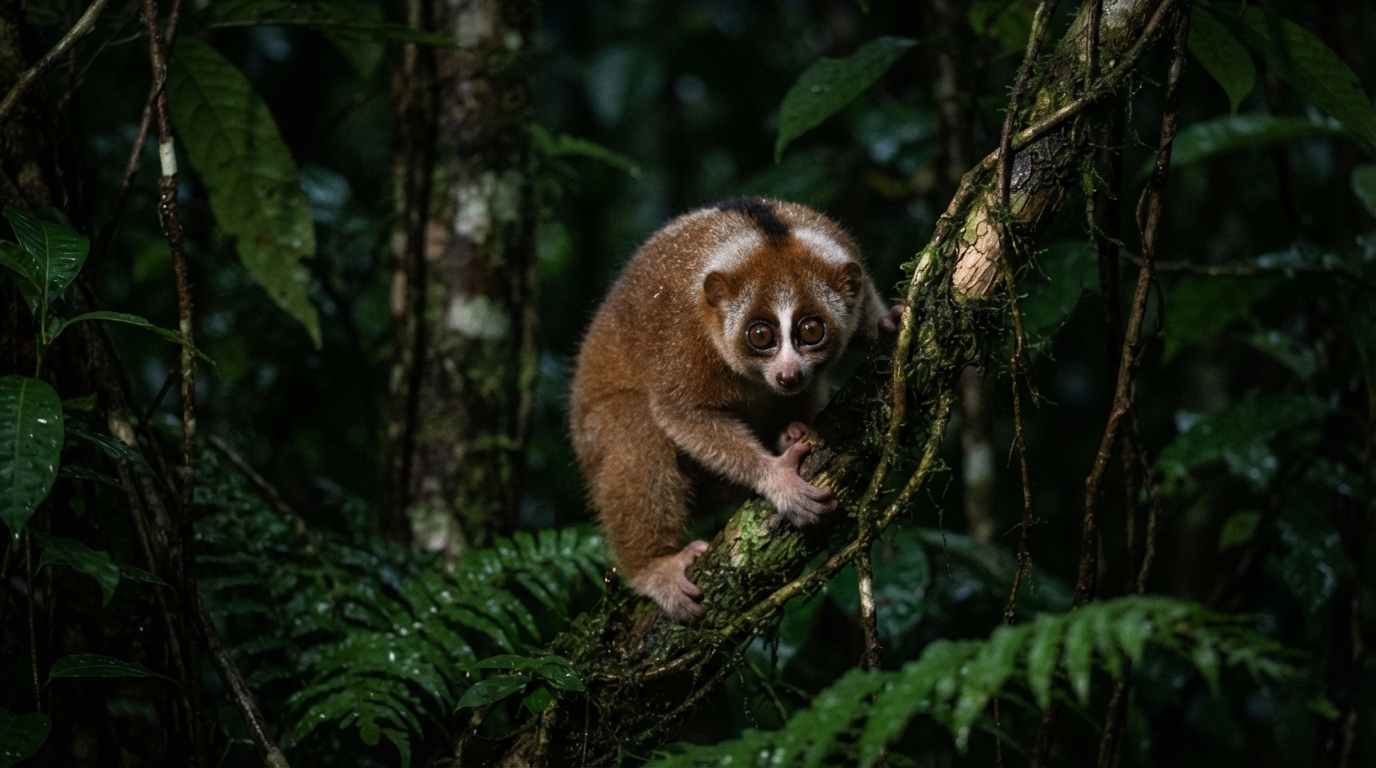
A rare venomous primate not seen for nearly 90 years was found in Indonesia
In Indonesia's Bangka Island, more than 90 pieces of evidence confirming the existence of a rare primate — the Bangka Island slow loris — which had not been seen in the wild for nearly 90 years, have been identified. This animal had not been officially recorded in its natural environment by researchers since 1937.
The Bangka Island slow loris is a small, large-eyed primate that is active at night. It has glands on its wrists that secrete a special protective fluid.
When sensing danger, the animal licks this fluid, mixing it with its saliva. After this, its bite becomes venomous. Such a bite can cause a severe allergic reaction in humans, and even life-threatening anaphylactic shock. The Bangka loris is among the few mammals capable of producing venom.
Despite finding new evidence, scientists are concerned about the future of this species. The Bangka Island slow loris lives exclusively on Indonesia's Bangka Island, which has an area of approximately 12 thousand square kilometers. Nearly one million people reside on the island.
Due to mineral mining, deforestation, and the expansion of human settlements, the natural habitat of these animals is increasingly shrinking.
Experts emphasize the need to protect the habitats of this rare primate and to continue studying the species' population in order to preserve it.