

A radar is being built in Kaliningrad to monitor Europe
The radar station is capable of detecting objects at a distance of 3 thousand km. It may affect the effectiveness of NATO countries' drone usage.
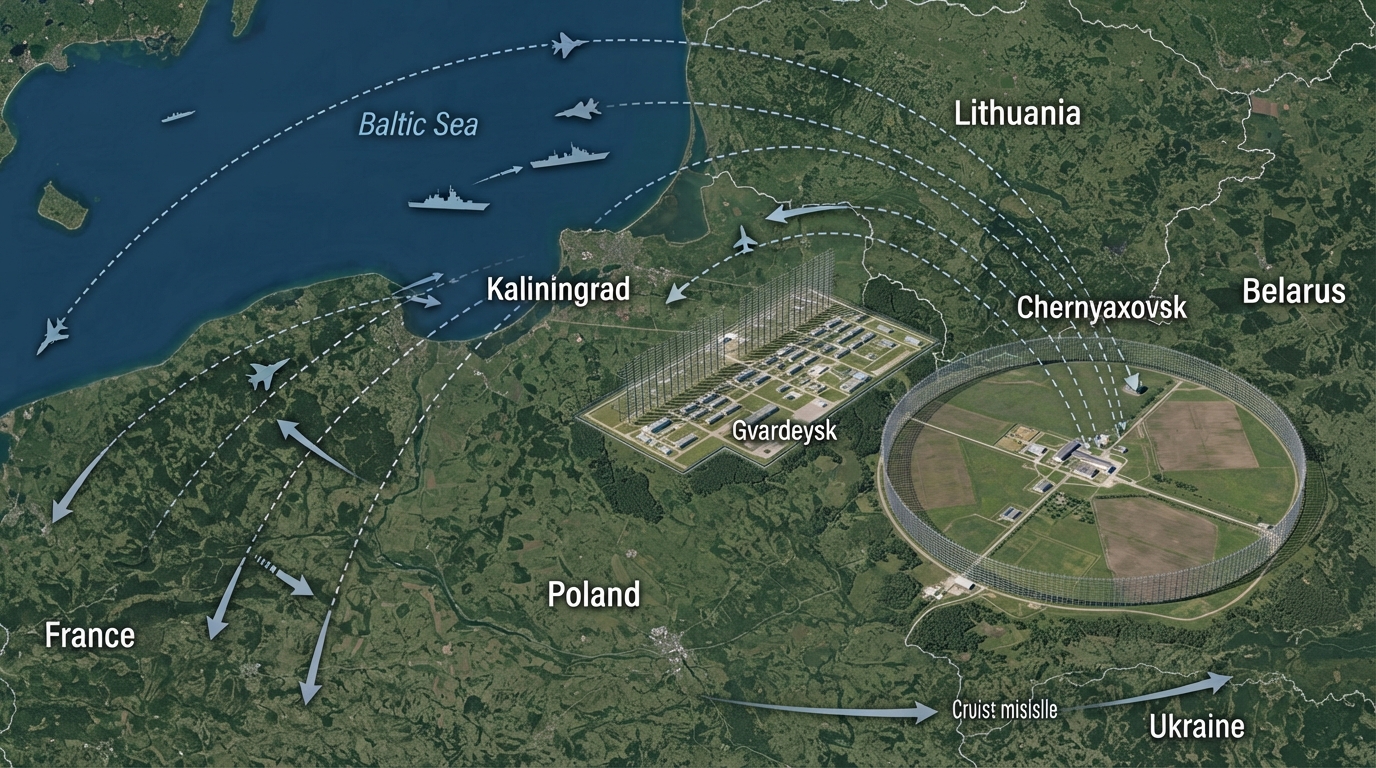
A radar to monitor Europe is being built in Kaliningrad
In Russia's Kaliningrad region, the construction of a massive radar station that will allow the military to detect aircraft, missiles, and ships at distances of up to 3,000 km is nearing completion.
The radar's coverage area may include a large part of Europe, including Great Britain, France, Germany, and Ukraine. The complex is being built in the Gvardeysky district, 37 kilometers from the border with Poland.
Satellite images show three rows of antennas, each exceeding 500 meters in length. The territory is enclosed by a double row of fences. According to the Polish publication Defence24, construction began in March 2023. This may refer to a radar station similar to the 29B6 "Konteyner" complex. It operates in the shortwave band. Signals bounce off the ionosphere, allowing for the detection of distant objects.
The Russian military claims that "Konteyner" is capable of simultaneously tracking up to 10,000 air targets, including F-35 aircraft. According to Reserve Colonel of the Lithuanian Armed Forces Vaidotas Malinionis, the new radar could give Russian command additional time to make decisions in the event of a conflict with NATO.
Information obtained through the station could also potentially be used in planning offensive operations. According to Malinionis, due to its large size, the radar is easy to target. Latvian military analyst Evija Djatkoviča believes that the radar will also help the Russian military detect low-flying objects, including drones. In her opinion, this could reduce the effectiveness of drone use by NATO countries.
Another large circular radar with a diameter of over 1,600 meters is being built in the Chernyakhovsky district of the Kaliningrad region, Defence24 reports.
Its construction also began in March 2023. Both facilities may be interconnected. However, the purpose of the second complex remains unknown. In total, there are more than 20 electronic intelligence and warfare facilities in the region.
Russia could deploy up to a hundred nuclear warheads in the Kaliningrad region, says Malinionis. High-ranking Polish and Lithuanian sources stated that some of them have already been deployed in this region.