

A once-in-a-decade shot: A jaguar was captured on film in the jungle of Guatemala
A male jaguar was captured by a camera trap in a natural forest corridor connecting Guatemala and Honduras. According to conservationists, capturing such footage in this area happens about once in a decade. The photos show that despite increasing human impact, jaguars are still using this corridor.
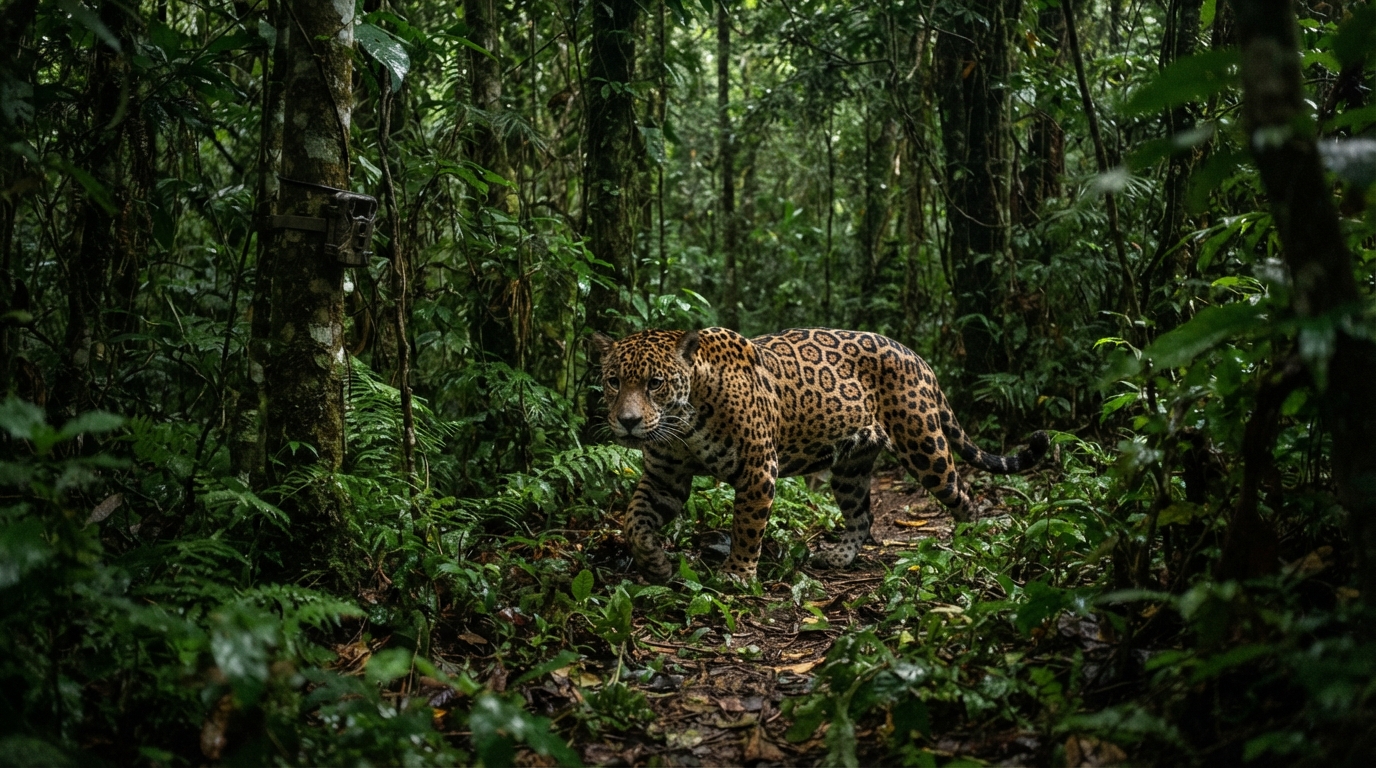
A shot seen once in a decade: jaguar captured on camera in a Guatemalan forest
The camera traps were set up by Panthera, an organization dedicated to the conservation of wild cats, and CONAP, Guatemala's National Council of Protected Areas.
Alison Devlin, Director of Panthera’s Jaguar Program, and Franklin Castañeda, head of the organization's branch in Honduras, told People that such photos are taken very rarely. According to them, these shots are important proof that despite numerous threats, jaguars continue to live in the region.
The natural corridor along the border of Guatemala and Honduras connects jaguar populations in Belize, Guatemala, and Mexico with groups in central and eastern Honduras.
This connectivity reduces the risk of animal group isolation and inbreeding. Forest fragmentation, in turn, can restrict their movement and make isolated populations even more vulnerable.
According to estimates in the material, approximately 89 percent of the world's jaguars live in the Amazon Basin. The large population there has a major impact on the overall status of the species. Meanwhile, small, isolated groups in regions like Guatemala and Honduras face even more serious threats.
In Guatemala, the distribution of jaguars was previously mainly associated with the Petén forests. New observations show that these animals are also present in the Sierra de las Minas mountains in the east of the country and in the Izabal natural corridor located along the Caribbean coast.
For conservationists, the significance of these rare shots is not limited to merely photographing a secretive predator. They also demonstrate the need to preserve continuous forest areas where jaguars can move.