

New wild cat species discovered - with only one known living member
A spotted wildcat long mistaken for relatives has been identified as a new species in Bolivia.
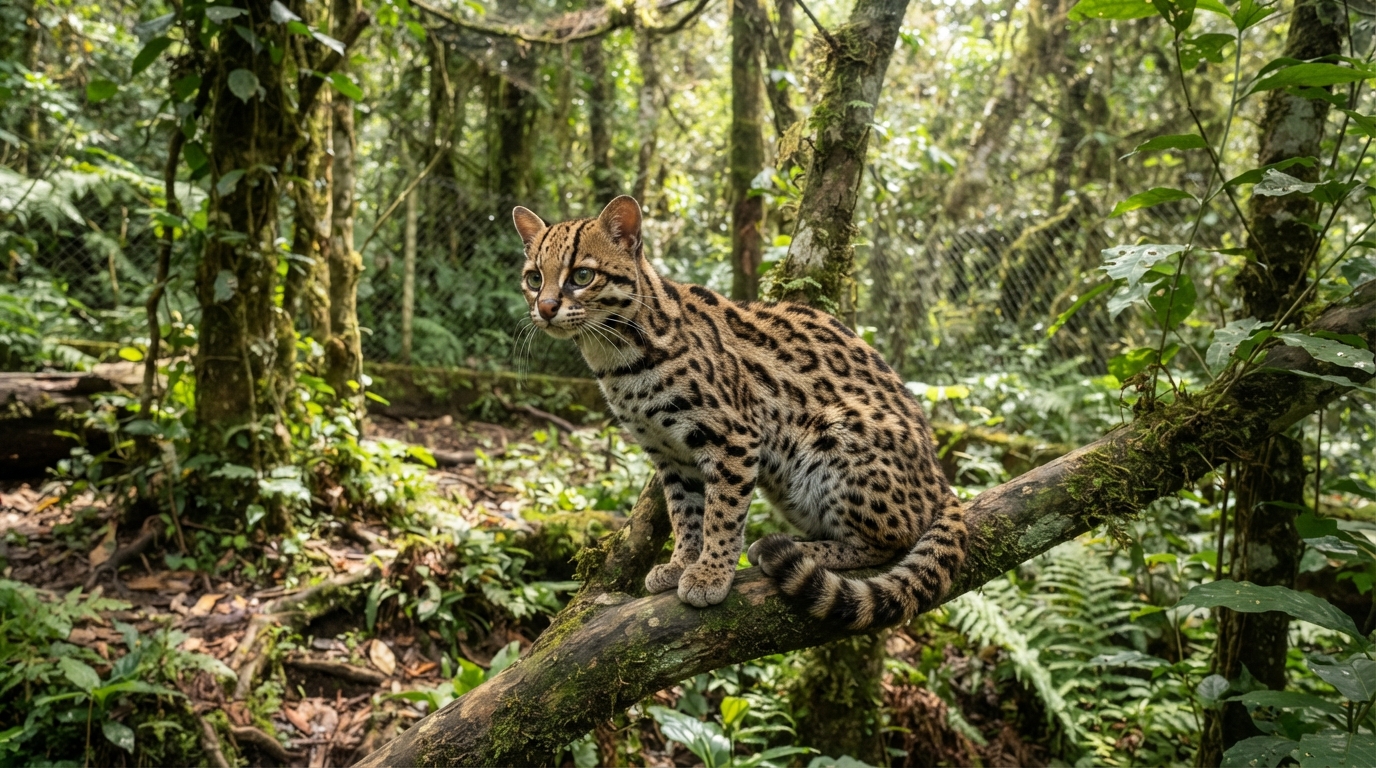
**New wild cat species discovered - with only one known living member**
The only known living member of the species is in a wildlife sanctuary in Bolivia
A spotted cat from Bolivia’s forests has been confirmed as a new species.
The small feline, roughly the size of a domestic moggy, had gone unnoticed because it was mistaken for other wild cats with similar spots and stripes.
However, DNA research has shown that the cat belongs to a species of its own, underscoring how much still remains unknown about some of the world’s most elusive mammals.
Scientists hope the finding will bring more attention to the conservation of tiger cats, a group of small wild cats found in South and Central America that gets far less public attention than larger relatives such as lions, leopards and tigers.
The cat has been nicknamed Tigrino
Tiger cats are small, spotted wild cats found across Central and South America, from Costa Rica to Bolivia and Argentina.
They look strikingly alike, and even experts can find them hard to distinguish.
"It's an amazing result that we have a new species for the world, which is the
Leopardus tilcayo
," said Paola Nogales-Ascarrunz of Universidad Mayor de San Andres in La Paz, Bolivia.
"It's amazing that there are still new species waiting to be discovered: we don't have to go to a volcano, an island, or deep into the sea."
The oncilla, or northern tiger cat, looks remarkably similar
Only one confirmed member of the species is known - a cat living in a rescue sanctuary in Bolivia - but scientists believe others exist.
It was this 10-year-old cat, nicknamed 'Tigrino', that led scientists to the discovery.
Bolivian scientist Dr Nogales-Ascarrunz was volunteering at the sanctuary when she noticed the cat seemed unusual.
It had been found in the forest by a local resident, who first believed it was a domestic kitten. But as it got older, it became clear that it did not act like a house cat.
Dr Nogales-Ascarrunz had heard of other sightings of small wild cats in the dense forests of the country’s Yungas region, but scientists had not investigated them.
To solve the mystery, she teamed up with other researchers from around the world to examine the family history of tiger cats, using DNA from living animals and museum specimens.
"There's so few records or pictures, no individual in a museum, so it was hiding because nobody was looking," said Eduardo Eizirik, a conservation geneticist at the Pontifical Catholic University of Rio Grande do Sul in Brazil.
The study, published in
, revealed more surprises, suggesting there are five rather than three tiger cat species, including the newly described Tilcaya cat (
Leopardus tilcayo
) of Bolivia.
Bolivia has dense forest that supports thousands of rare plant and animals
However, identifying the species is only the first step.
Co-researcher Dr Caroline Sartor, of the Wildlife Conservation Research Unit at the University of Oxford, said the discovery mattered for conservation because a species cannot be protected if we do not know what it is or where it lives.
"These are animals similar in size to a domestic cat, so you might think we would know them all by now, but this discovery shows how much biodiversity is still to be uncovered in some of the less-studied regions of the world," she said.
Tiger cat species are regarded as vulnerable to extinction because of deforestation, habitat loss and illegal hunting, although the new species is missing from previous assessments.
The new discovery suggests the world's cat family - all domestic and wild cats, big and small - will expand from 41 known species to 44 or 45
The discovery could also have broader implications for the world’s cat family.
Both wild and domestic cats belong to the biological family Felidae, which includes every living cat species from tiny house pets to massive tigers.
There are officially 41 species recognised but the new discovery, and the finding that there may be several species of tiger cat, brings the number to 44 or more.
Andrew Kitchener, an expert in mammals at National Museums, Scotland, who was not involved with the research, says the small spotted South American cats known as tiger cats have been a "taxonomic nightmare".
"These cats are confusing because they look so similar and there are few specimens in museums, so even now we are still learning how to tell them apart as genetics reveal more species," he said.