

A new system of parliamentary oversight for reducing poverty and unemployment is being introduced in Khorezm.
A new model of parliamentary and public oversight is being developed in the Khorezm region. It focuses not only on identifying problems but also on their practical solutions and evaluating the final results.
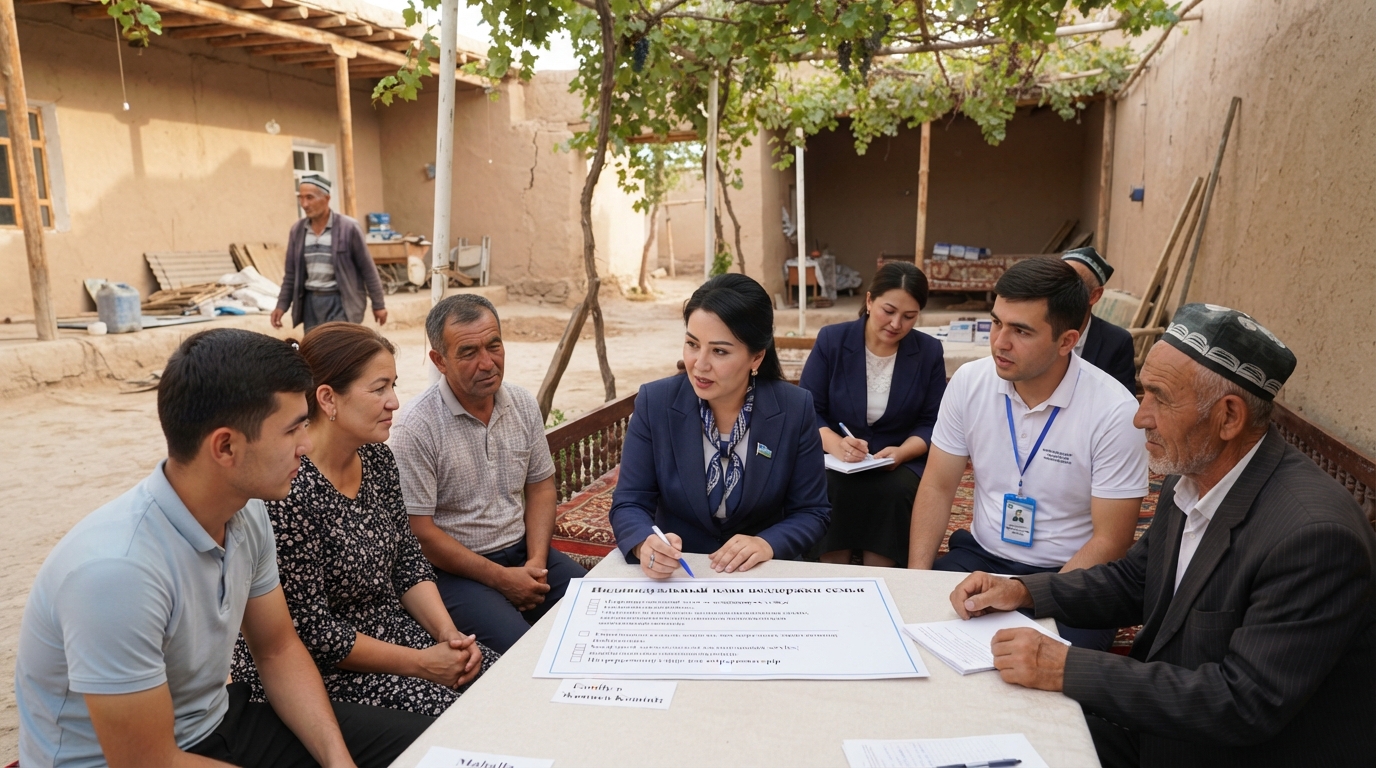
An innovative parliamentary oversight system aimed at effectively reducing poverty and unemployment is being implemented in the Khorezm region of Uzbekistan. This model involves not only identifying problems but also actively engaging parliamentarians in their resolution and evaluating the results achieved.
**New Approach to Oversight**
The system is designed to strengthen targeted support for families in difficult situations and ensure the achievement of poverty and unemployment reduction targets. A working group led by Tanzila Narbaeva, Chairperson of the Senate of the Oliy Majlis, studied the organization of this work in the Khorezm region. A meeting was held in Urgench with the participation of parliamentarians, chairpersons and heads of secretariats of local Kengashes of People's Deputies, and representatives of mahalla organizations.
Representatives of the Association of Mahallas of Uzbekistan, the Nuroniy Foundation, the Family and Women's Committee, the Agency for Youth Affairs, the Inson Social Services Center, and trade unions participated in the discussion.
From Control to Specific Results
The need for a new system stems from the ambitious goals set for the Khorezm region. During the President's visit to the region, specific goals were identified: lifting 81,000 people out of poverty, providing employment for 39,000 unemployed, and completely eradicating poverty and unemployment in the region by the end of the year.
To achieve these goals, the Senate developed a mechanism that provides for the direct participation of local Kengashes (parliaments) in working with mahallas (neighborhood councils). The key difference of the new approach lies in changing the very logic of parliamentary oversight. Its task is not limited to verifying the implementation of instructions or hearing reports. Members must be involved in the entire process—from identifying a specific problem to finding a solution, monitoring its implementation, and evaluating the final results. This format brings parliamentary oversight closer to the population and makes it more targeted.
**Personal Responsibility of Each Deputy**
According to the new system, each deputy, together with the "mahalla seven" and representatives of public organizations, will monitor the implementation of assigned tasks in the mahallas of their electoral district. This work will be based on a specific plan that must address the following issues:
* Reducing unemployment;
* Lifting families out of poverty;
* Providing social services;
* Implementing investment projects;
* Developing the social infrastructure of the mahalla;
* Addressing identified problems.
Thus, parliamentary work becomes more focused: each district is assigned a specific set of tasks and expected results. Particular attention will be paid to families included in the social registry. Work with them must be carried out individually, taking into account the family's specific situation, needs, and opportunities for creating a sustainable source of income.
**Mahalla – the key level of policy implementation**
The new system reflects a broader trend – shifting the resolution of social and economic issues directly to the mahalla level. It is here that the causes of unemployment and poverty are most clearly visible: lack of a steady income, a lack of professional skills, limited access to finance, and a lack of infrastructure or social services.
Therefore, universal support measures do not always produce the same results. Targeted efforts help determine what a specific family needs: employment, training, entrepreneurship support, social services, medical or educational support. In this context, the deputy becomes a link between the population, executive authorities, and public organizations.
**Involvement of Public Organizations**
Implementing the new approach requires the broad participation of organizations already working with the population at the local level. Representatives of the Mahalla Association, the Nuroniy Foundation, the Family and Women's Committee, the Youth Affairs Agency, the Inson Social Services Center, and trade unions will be involved in working with deputies. This should ensure more comprehensive support for families and avoid a situation where different agencies are simultaneously addressing the same issues without a unified coordination mechanism. Essentially, we are talking about creating a unified system of family support, in which social support, employment, entrepreneurship, and infrastructure development are considered as interrelated areas.
**Weekly Monitoring and Monthly Evaluation**
To ensure continuous oversight, a multi-level monitoring mechanism is in place. Work will be reviewed weekly by standing committees of local Kengashes, and critically discussed monthly at Kengashes sessions. Reports and information from responsible officials will be heard, and their performance will be assessed based on the results achieved. This approach allows for a transition from a formal reporting period to continuous monitoring. If a set objective is not being met, the problem should be identified early, rather than after the expiration of a set period.
**The Main Criterion: A Family's Sustainable Escape from Poverty**
The concept of outcome is of particular importance in the new system. The mere provision of a social service, the allocation of a loan, or the placement of a person in a job does not necessarily mean a complete solution to the problem. A more important indicator is the family's ability to subsequently independently provide the necessary level of income and avoid falling back into poverty. Therefore, parliamentary oversight must consider not only the number of implemented measures but also their long-term impact. This principle can make the fight against poverty more sustainable: instead of temporarily addressing the consequences, it creates conditions for changing the family's economic situation.
**Pilot "Severe" Mahallas**
The implementation of the new system will begin primarily with mahallas classified as "severe." This will allow the effectiveness of the new mechanism to be tested in areas where unemployment and poverty are most pronounced. At a meeting with parliamentarians and representatives of the public, the system was discussed in detail, and practical tasks for its implementation were identified. 348 parliamentarians and 509 districts of the region will be involved in the implementation of the new mechanism.
**New Format of Parliamentary Work**
For the Khorezm Region, the new system is not simply an additional oversight tool, but an attempt to change the very format of interaction between parliamentarians and the public. Its key principle can be formulated as a sequence: identify the problem, find a solution, ensure its implementation, and monitor the results. If this mechanism is effective in practice, parliamentary representatives will be able to play a more significant role in addressing employment and poverty issues at the local level. The outcome will depend not only on the active participation of parliamentarians but also on the coordinated efforts of local authorities, mahallas, social services, and public organizations.
Ultimately, the effectiveness of the new system will be determined not by the number of meetings held and reports heard, but by how many families achieve a stable income, how many people emerge from unemployment, and how qualitatively living conditions improve in specific mahallas. The shift from formal oversight to outcome-based oversight may become the core of the new parliamentary model in Khorezm Oblast.