

A device that will prevent 800,000 tons of carbon dioxide per year from being released into the atmosphere has been launched in Europe
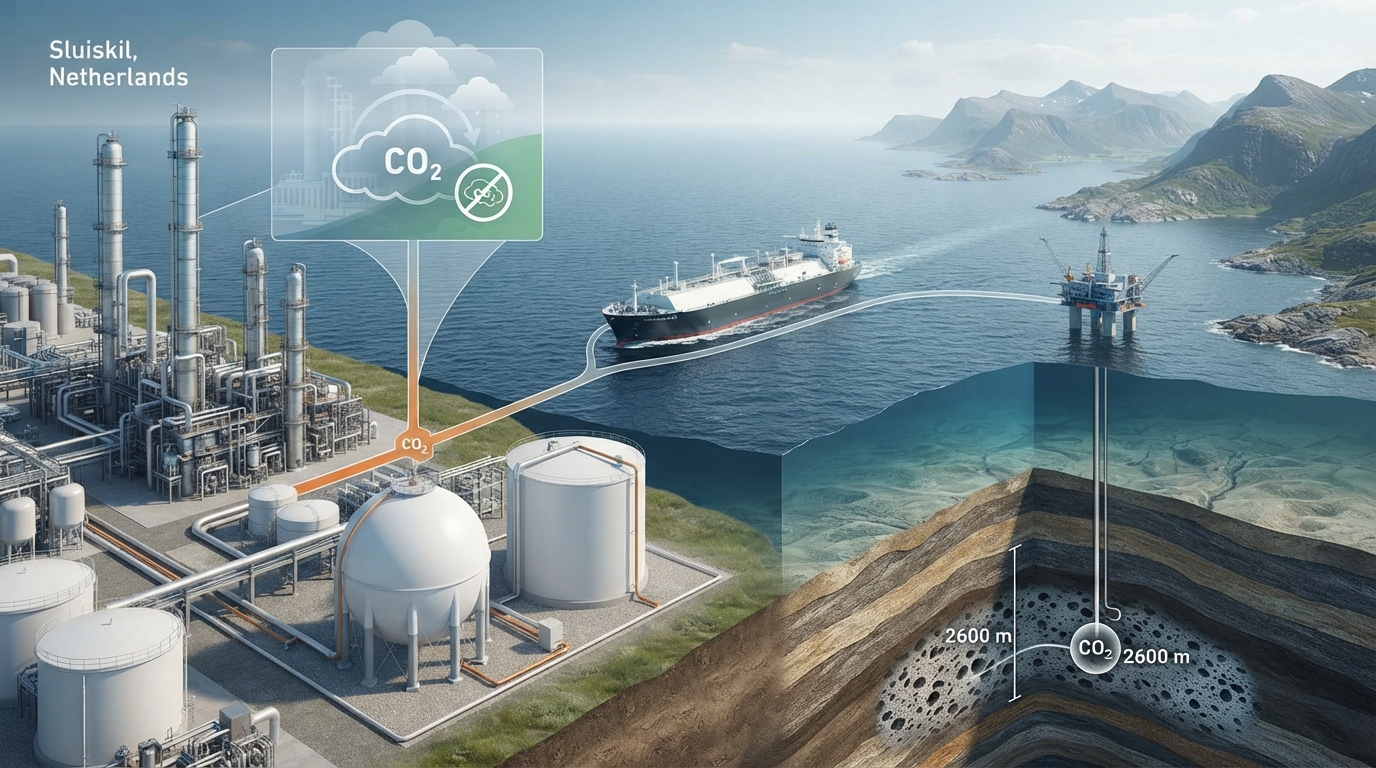
A device that will stop 800,000 tons of carbon dioxide per year from entering the atmosphere has been launched in Europe
The Norwegian chemical company Yara has launched Europe's largest industrial carbon capture facility at its ammonia plant in Sluiskil, Netherlands. This facility is capable of capturing 800,000 tons of CO₂ (carbon dioxide) per year. This is equivalent to approximately 0.5 percent of the annual greenhouse gas emissions in the Netherlands.
The carbon dioxide released directly during the ammonia production process at the enterprise is liquefied and temporarily stored in large white reservoirs on the plant's territory. Then, the CO₂ is transported by sea to Norway. This work is handled by Yara's partner, Northern Lights. The company has the capacity to receive 1.5 million tons of CO₂ per year and is currently working on increasing this figure to 5 million tons.
The carbon dioxide is sent to an underground reservoir at a depth of 2,600 meters beneath the seabed near the coast of Norway. The facility is expected to store a total of nearly 12 million tons of CO₂ underground over 15 years.
For comparison, in 2025, the amount of CO₂ released into the atmosphere globally from burning fossil fuels alone exceeded 42 billion tons. Therefore, the contribution of a single plant on a global scale is not very large.
In addition, there are even larger carbon capture facilities in the world. For example, the Huaneng Longdong complex in China captures 1.5 million tons of CO₂ per year. This is nearly twice as much as Yara's project in the Netherlands.
Carbon capture and underground storage technology is mainly used in the chemical and metallurgical industries, as the release of CO₂ in such plants is inevitable.
For this reason, projects like Northern Lights are important not just for a single company, but for the entire industry. The reservoirs located beneath the seabed near the Norwegian coast are designed to receive CO₂ from several industrial enterprises in Europe. From there, the CO₂ is sent through an underwater pipeline approximately 100 kilometers long into a geological formation beneath the seabed.