

70% of online shoppers in Uzbekistan have purchased secondhand goods at least once
The majority of Uzbekistan residents who shop online already have experience purchasing goods from private sellers.
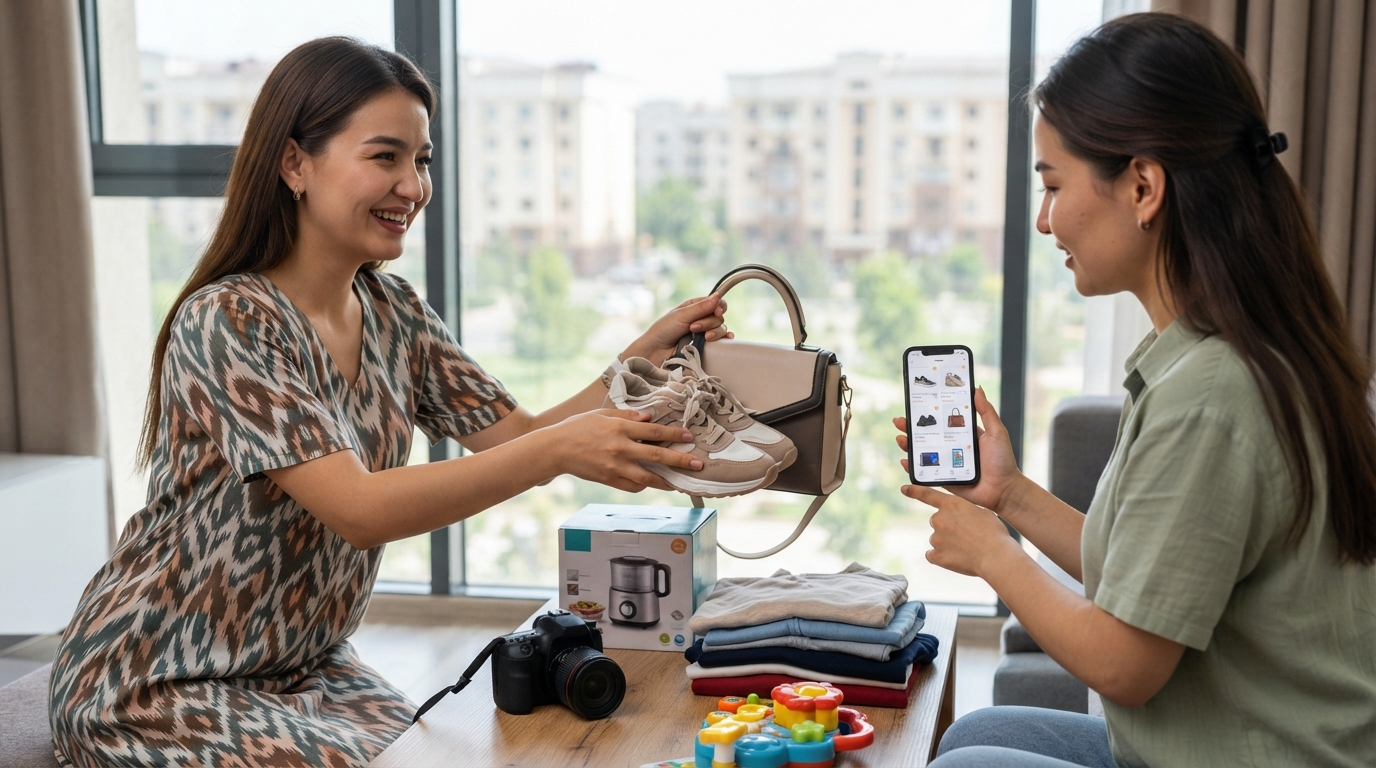
70% of online shoppers in Uzbekistan have purchased secondhand goods at least once
The majority of Uzbekistan residents who shop online have already experienced purchasing items from private sellers.
According to a study by the resale platform Listee and the analytical agency ORO, 70% of online shoppers have bought secondhand goods at least once. The most popular categories were clothing, footwear, bags, and electronics.
The study also showed that the country's residents are most often willing to consider purchasing electronics and home goods from private sellers. 56% of respondents in each case reported that they are willing or rather willing to buy items in these categories secondhand.
The figure for home appliances is only slightly lower — 55% of respondents are willing to buy them. Products for repair and construction, as well as clothing, footwear, and bags, are considered for such purchases by 54% of respondents each. Furniture and children's products are ready to be purchased by 50% of the study participants each.
Large home appliances (47%), auto parts, cosmetics, and accessories (43% each) turned out to be less in demand.
The survey results show that purchases from private sellers have already become part of the consumer experience for a significant portion of Uzbekistan's internet audience. Most often, respondents bought clothing, footwear, and bags, as well as electronics — 27% for each category.
Among other popular categories are products for repair and construction (17%), children's goods and toys (16%), large home appliances (15%), small home appliances (14%), and furniture (13%).
The highest activity was recorded among residents aged 25–34. In this group, 80% have made purchases from private sellers at least once. At the same time, electronics became the most popular category: it was purchased by 39% of respondents of this age.
Younger buyers are also more willing to buy various goods on the secondary market. In particular, products for repair and construction are considered by 66% of respondents in this age group, clothing, footwear, and bags — by 65%, furniture — by 62%, and large home appliances — by 61%.
At the same time, people aged 45–60 are more cautious about such purchases. Among them, 38% have never bought goods from private sellers. Willingness to buy secondhand furniture was expressed by 40% of representatives of this age category, clothing, footwear, and bags — by 45%, cosmetics and accessories — by 30%.
Despite the growing interest in secondhand purchases, trust and security remain important criteria when choosing an online platform.
According to the study, personal data protection is important for 87% of buyers, the absence of scammers — for 86%, and the possibility of a refund in case of fraud by the seller — for 83%.
"Residents of Uzbekistan are already prepared to buy items secondhand. But for this direction to develop, the buyer must feel protected. This is also confirmed by the survey results: when choosing an online service, reliable protection of personal data is important for 87% of buyers, the absence of fraudsters — for 86%, and the ability to get a refund in case of seller fraud — for 83%. The task of platforms is to ensure that buying secondhand feels just as calm as buying a new product," noted Vitaly Tumanov, CEO of Listee.
Unlike buyer activity, online sales among private individuals have not yet become as widespread. Over the past six months, 8% of Uzbekistan residents independently sold goods via the internet.
Another 9% of respondents stated that they are willing to try their hand at online trading within the next year.
The most common category among private sellers was clothing, footwear, and bags — indicated by 46% of study participants who have experience in online sales. This is followed by cosmetics and accessories (28%), electronics and home goods (22% each).
If we look not at the number of sellers, but at the structure of sold goods, the leaders are cosmetics, which accounted for 26% of all online sales over the past six months, and clothing — 24%.
Among those who already sell goods online or are considering this possibility, women account for 59%. Most often, they choose clothing and cosmetics for sale.
The study results show the formation of a steady interest in the pre-owned goods market in Uzbekistan. At the same time, purchasing activity noticeably outpaces the population's willingness to independently engage in online sales.
The further development of this segment will largely depend on the level of trust in digital platforms, the quality of buyer and seller protection mechanisms, and the convenience of online services.
Thus, the secondary goods market is gradually becoming an additional direction for the development of e-commerce in Uzbekistan, opening up opportunities both for more rational consumption and for the development of private online trading.