

6 warning signs that can help you detect a heart attack early
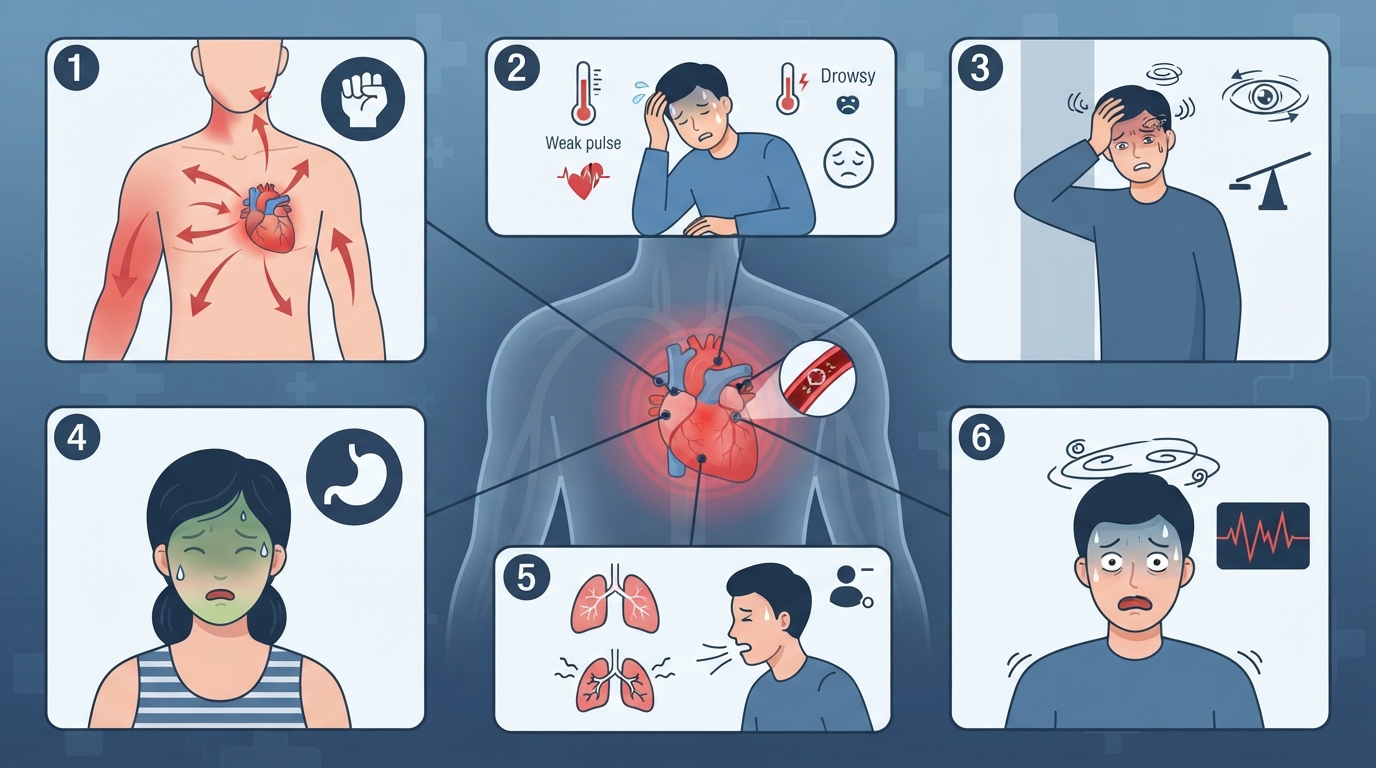
6 warning signs that will help you detect a heart attack early
A heart attack often begins not with typical symptoms, but with symptoms that are similar to other diseases or are unexpected. In such cases, a person often ignores warning signals and loses valuable time.
A quarter of all deaths in the UK are associated with cardiovascular diseases. Therefore, it is important to know the early signs of an impending heart attack in order to recognize the danger in time and take measures as soon as possible. This knowledge can help save someone's life.
**About a heart attack**
First, let's look at the mechanism of a heart attack. It occurs when the blood flow to the heart through an artery is significantly or completely blocked. Even a short time is enough for part of the heart muscle to stop working. For example, a complete blockage of an artery for 15-30 minutes is enough for a myocardial infarction to develop. Therefore, it is important to act quickly.
The symptoms of an impending heart attack differ between men and women and often manifest as pain in different parts of the body. For example, women, the elderly, and especially diabetic patients may experience chest pain. Symptoms may also resemble the flu rather than a heart attack.
**1. Pain in the chest, arms, back, neck, temples**
The patient begins to feel pressure, tightness, or shortness of breath in the center of the chest. The pain may radiate to the back, abdomen, shoulders, arms, neck, back of the head, and even the jaw. In a heart attack, the pain in the upper back feels like a squeezing or pressure, and the left arm is more likely to be numb than the right arm.
**2. Fatigue (feeling like you’re going to get sick)**
It’s been reported that about a month before a heart attack, more than half of patients feel very tired and weak. Sweating, shortness of breath, body aches, and other symptoms common to infectious diseases appear. Many people experience symptoms similar to a sore throat or the flu.
**3. Dizziness**
A feeling of dizziness or unsteadiness can also be a symptom of a heart attack. This is due to poor blood circulation. When the blood thickens, the heart and brain experience a lack of oxygen, and dizziness occurs.
**4. Nausea**
This symptom is twice as common in women as in men.
**5. Shortness of breath**
Shortness of breath is a serious reason to seek emergency medical attention. Sudden lack of oxygen, even when not engaged in physical activity, requires vigilance.
**6. Deterioration of mental state**
Before a heart attack, a feeling of panic and excessive anxiety also appears. If you or someone around you shows one or more of the above symptoms, you should seek emergency medical help. If the patient refuses to go to the hospital or call a doctor, you need to be decisive and act quickly.