

Your burger costs more this summer, but farmers say they're not cashing in
The prices of beef, bread buns and bagged salad have risen sharply over the past year, figures show.
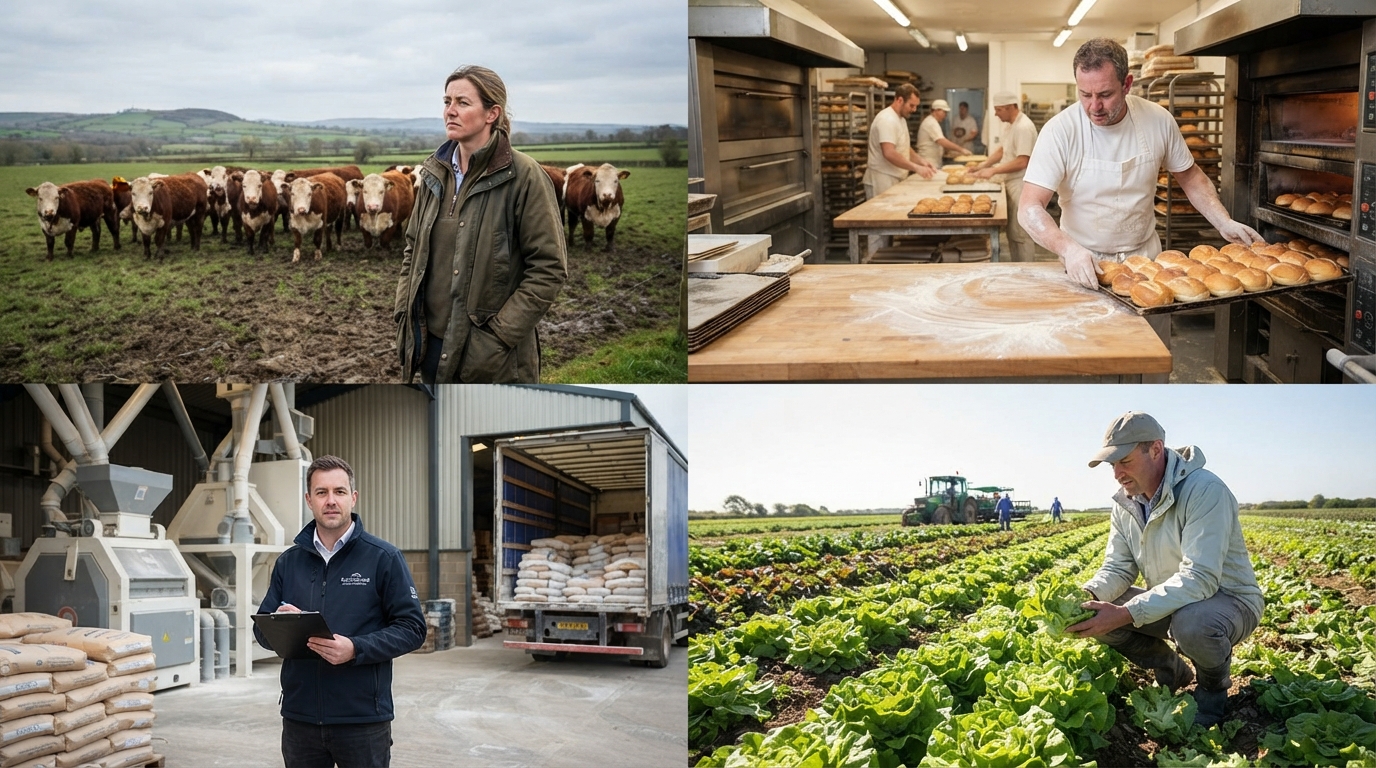
While the aroma of grilling meat traditionally signals summer, this year, a backyard barbecue might be a luxury due to soaring costs, a phenomenon dubbed "burgerflation." Consumer Price Index (CPI) data reveals a sharp increase in the prices of beef, bread buns, and bagged salad since last summer. However, farmers and food producers say they aren't seeing increased profits.
**Heather Oldfield, Cattle Farmer, Boston, Lincolnshire**
Lincolnshire, known as the "breadbasket of England" for its crops and rich livestock farming tradition, is home to Heather Oldfield's cattle farm. Her family, who raises 200 animals for Morrison's butchery to produce various meat products, including burgers, aims to "feed people." Despite shoppers paying 9% more for beef in May compared to a year prior (CPI), Oldfield and other farmers received 8% less for their beef on average in April compared to the previous 12 months, according to the Agricultural Price Index (API).
"There's a lot of uncertainty," Oldfield states. As a mother of two daughters who aspire to be farmers, she emphasizes the need to cover costs to ensure the farm's survival. "How do we shore the business up into a place that's right for them to come into without saddling them with a lot of debt?" she questions.
A Defra spokesperson affirmed the government's commitment to "backing our hard-working farmers, investing a record £11.8bn – more than any previous government." Yet, Oldfield feels the strain, working full-time for a plant breeder because the farm's income isn't enough to pay both her and her husband's wages.
**Phil Clayton, Baker, York, North Yorkshire**
"I know I'm not going to be a millionaire running a bakery," says Phil Clayton, who operates a bustling bakery with his wife, Tina. Despite starting at 1 am, he asserts it's "absolutely not true" that the bakery is profiting more from price increases. While families paid 2% more for bread rolls in May compared to a year earlier (CPI), farmers received 0.3% less for wheat, the primary ingredient, in April (API).
The 2% increase for customers is less than the overall 3% rise across the CPI index. Clayton doesn't regret raising his prices by 10p to 20p, stating, "My responsibility is to make sure all of this lot get paid," referring to his 30-person team. He explains that the extra money from shoppers covers increased rent, wages, National Insurance, delivery fuel, and the rising cost of flour, much of which comes from local farms.
**Robert Archer, Mill Manager, Kirkbymoorside, North Yorkshire**
Robert Archer, who manages a mill that purchases over 400 tonnes of locally grown organic wheat annually, cites "a big hit" from haulage costs, forcing him to increase the price of his organic flour. "If we stayed at the same price we would be losing money and then we couldn't run the business," he explains. The mill's flour, enough to feed 20,000 people, is supplied to customers like Phil Clayton's bakery.
Nelly Trevelyan, the mill's owner, notes that maintaining organic practices helps minimize percentage price rises by avoiding "nitrogen fertiliser cost increases [and] we don't use pesticides, so we haven't got those increases." However, she observes that many consumers opt for what they perceive as "cheap food" from the more intensive "industrial farming system."
**Mathew Brankley, Farmer, Snaith, East Yorkshire**
Mathew Brankley, whose salad crops stock major supermarket shelves, believes food in the UK remains "relatively cheap." He points out that a simple lettuce can cost $2.99 in parts of Europe and the US, while retailing for 80p to £1 in the UK. Although vegetable growers received 12.6% more for their produce in April compared to 12 months prior (API), shoppers paid 8% more in May (CPI).
Brankley insists he is no better off, explaining that any additional money for his crops is "eaten up" by rising fuel and fertilizer costs. "There's a lot of people that are taking a cut from what the customer pays in the supermarket before any of it gets back to the farmer," he states. Despite the challenges, Brankley enjoys his work and wouldn't consider another profession.
A Defra spokesperson highlighted government efforts, including cutting red diesel to its lowest rate in over 20 years and seeking views on suspending fertilizer tariffs to assist farmers.