

Why nine million were removed from a landmark Indian cash scheme for women
India's largest cash-transfer scheme for women in Maharashtra state is facing scrutiny over alleged lapses.
**Nine Million Women Removed from Major Indian Cash Scheme Amid Scrutiny**
A prominent Indian cash-transfer program for women, which provides eligible recipients with 1,500 rupees ($17; £13) monthly, has recently seen the removal of nine million beneficiaries. This development comes as the scheme faces intense examination regarding its implementation and financial management.
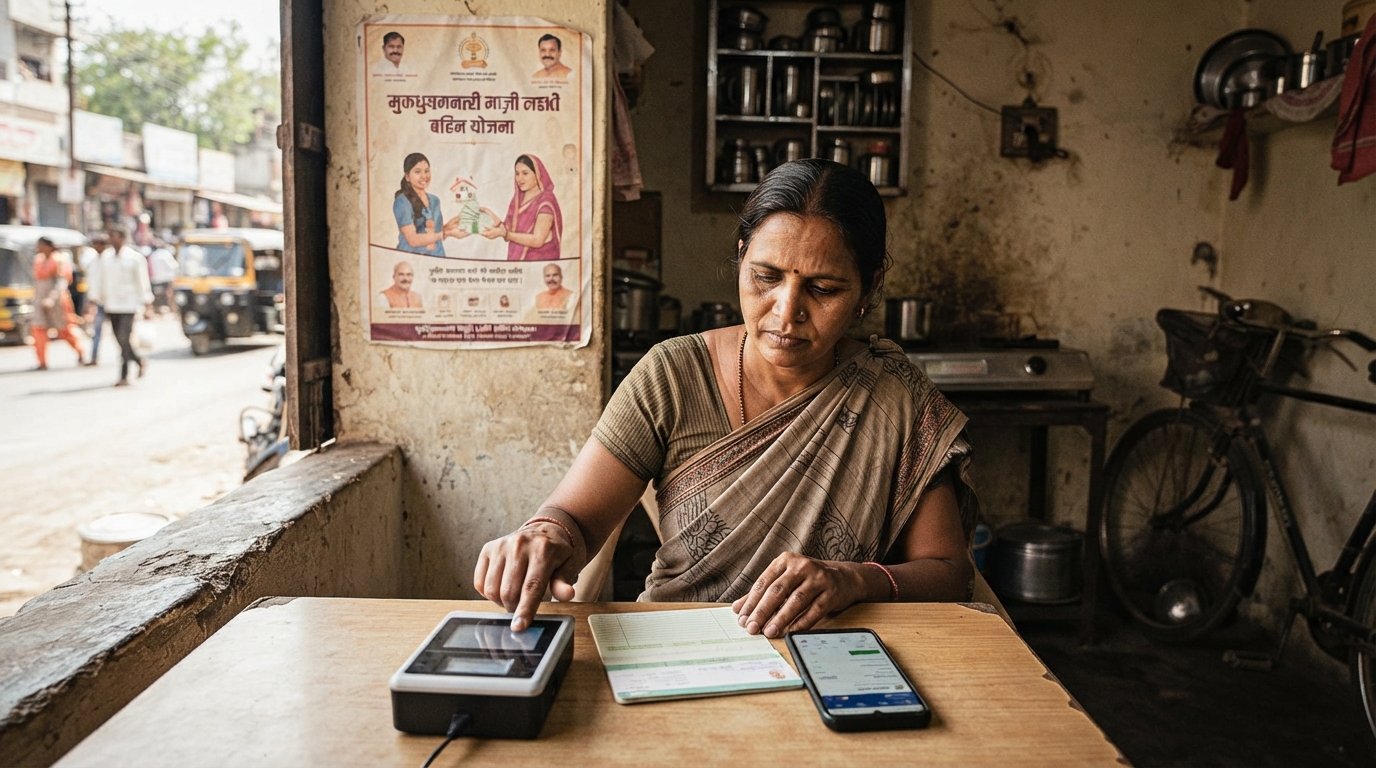
Nirmala Bawaskar, a widow working as a housemaid in Maharashtra's Sambhajinagar district, exemplifies the impact of the Mukhyamantri Majhi Ladki Bahin Yojana. Until two years ago, Bawaskar lacked a personal bank account and had limited control over her household's finances. Enrolling in the scheme, launched months before Maharashtra's closely contested 2024 election, provided her with her first bank account and a source of personal income.
"Though it is a small amount, it really helped us, especially with medical expenses," Bawaskar stated. "I was so motivated by it that I even learned how to write."
Bawaskar is among over 26 million women initially enrolled in the program. However, the scheme is now under fire following an audit and a government verification drive.
Last month, India's national auditor reported that Maharashtra's Women and Child Development Department exceeded its authorized budget for the Ladki Bahin scheme by 35.41 billion rupees, spending a total of 332.37 billion rupees in its inaugural financial year.
Concurrently, a government verification initiative led to the removal of over nine million beneficiaries. The majority were disqualified for failing to complete mandatory identity checks, while others were found to be ineligible based on the scheme's criteria.
The Maharashtra government has yet to issue a public response to the audit findings. The office of Aditi Tatkare, the Women and Child Development Minister, informed the BBC that the verification drive and efforts to recover ineligible payments are ongoing, but did not address the auditor's specific criticisms.
When the Ladki Bahin scheme was introduced in June 2024, the Maharashtra government stated its aim was to enhance women's financial independence and assist families with daily expenses. The program targeted eligible women aged 21 to 65 from lower-income households, excluding income-tax payers, government employees, and those already receiving similar welfare benefits.
The scheme's timing held significant political weight. Announced after the ruling Mahayuti alliance—comprising Prime Minister Narendra Modi's Bharatiya Janata Party and two regional allies—experienced setbacks in India's 2024 general election, Ladki Bahin became a central issue in the state election five months later. The government presented it as an acknowledgment of women's unpaid labor, while the opposition, despite promising similar cash transfers, labeled it as vote-buying.
Upon the Mahayuti alliance's return to power with a larger-than-expected majority, leaders attributed their victory partly to the Ladki Bahin scheme. A post-election survey by Lokniti-CSDS indicated the scheme's positive influence on Mahayuti's performance, with 50% of surveyed women voting for the ruling alliance compared to 33% for the opposition. Among Ladki Bahin beneficiaries, Mahayuti's support increased to 54%.
However, researchers cautioned against overstating its impact. CSDS researcher Rajeshwari Deshpande noted that women were only three percentage points more likely than men to support Mahayuti, suggesting it was premature to conclude they had formed a distinct bloc of welfare voters.
Maharashtra's approach mirrors a broader trend across India, where various political parties have launched cash-transfer schemes for women, who now constitute nearly half of the country's electorate. The appeal of these programs lies in their direct, monthly financial support deposited into women's personal bank accounts.
Yet, this popularity can also lead to pressure for rapid scheme launches and mass enrollment, as highlighted by the auditor's report. Beyond unauthorized spending, the auditor criticized the government for transferring 155.86 billion rupees into special accounts during the final three months of the last financial year without immediate need, arguing that this practice undermined financial discipline and legislative oversight.
The verification drive uncovered different issues. Minister Tatkare stated that the number of beneficiaries decreased from 26.3 million to approximately 17 million after electronic identity verification (e-KYC) became mandatory. Records obtained by The Indian Express via India's Right to Information law revealed that about 6.2 million of those removed—roughly two-thirds—had simply not completed e-KYC. Tatkare clarified to BBC Marathi that this should not be interpreted as evidence of fraud.
Other exclusions were due to exceeding income or age limits, belonging to families with government employees, already receiving benefits from another welfare scheme, or multiple individuals claiming benefits from the same household. Government data also showed that nearly 29,000 men and about 8,000 government employees had received payments. Tatkare confirmed that the state is recovering these funds but did not specify the amount repaid.
This scrutiny has reignited discussions about the benefits and long-term financial implications of cash-transfer programs. Welfare economist Neeraj Hatekar acknowledges that Ladki Bahin has significantly helped women with low and irregular incomes. Citing labor-force data, he noted that women in Maharashtra earn an average of 300 rupees daily, totaling 6,000-7,000 rupees for 20 days of work per month. Against this, the 1,500-rupee monthly payment is "a big amount."
However, Hatekar suggests that similar needs could be met by increased investment in public services such as healthcare, education, childcare centers, and transport, thereby reducing women's out-of-pocket expenses.
Economist Ajit Ranade emphasized the importance of governments considering fiscal costs. "You might divert funds to these schemes and win an election," he said. "But what about the long-term damage [to the state's finances]? That is never audited."
The audit's findings may influence the future administration of the scheme. For women like Bawaskar, however, the Ladki Bahin scheme has already brought about personal transformation. While the money has not lifted her family out of poverty, it has provided her with something she previously lacked: funds deposited into an account in her own name.
"It's money of my own," she affirmed. "That's what matters to me."