

Who is Nirmal Purja, the famed mountaineer missing in Broad Peak avalanche?
The British-Nepali climber is one of the most recognised figures in mountaineering.
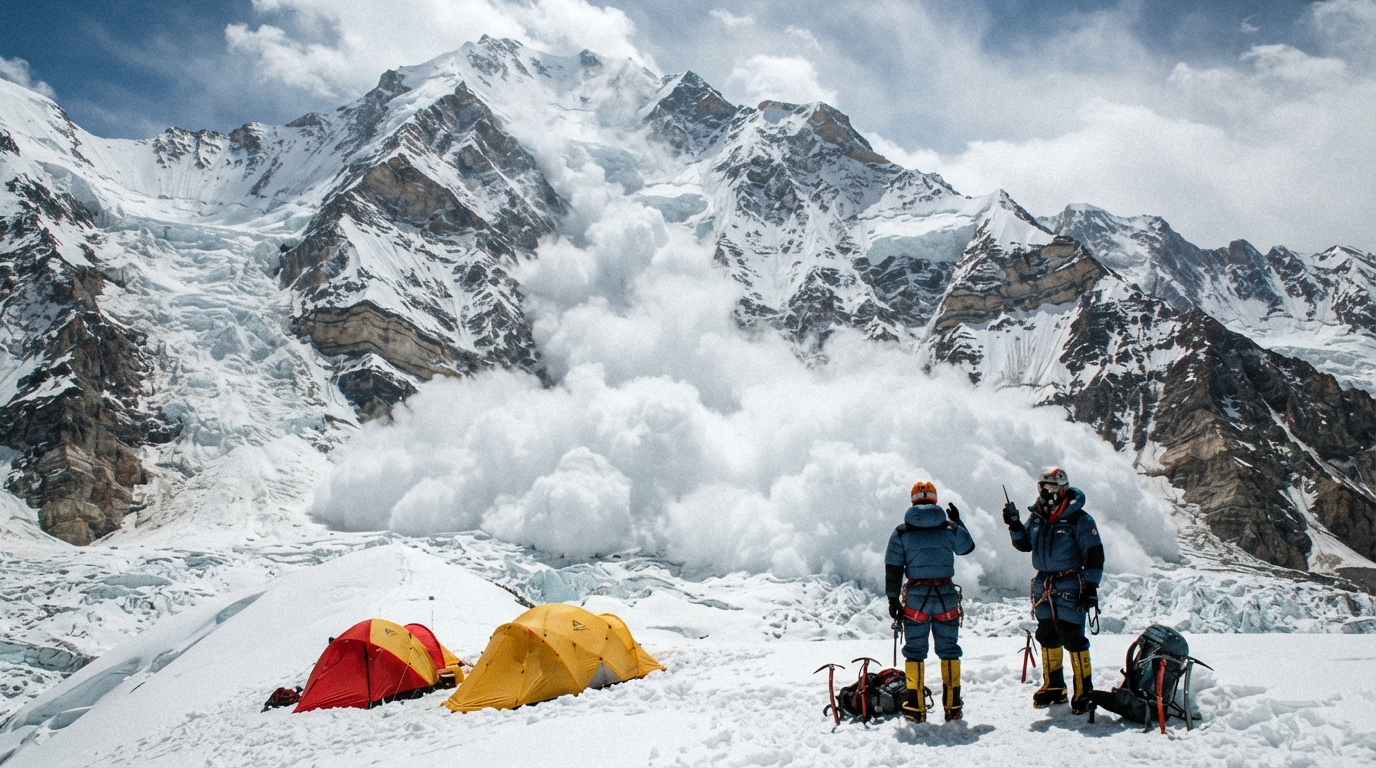
Nirmal Purja, the renowned mountaineer famous for conquering the world's 14 highest peaks in just over six months, is currently missing after an avalanche on Broad Peak. The British-Nepali climber, a highly recognized figure in mountaineering, holds multiple records.
His most celebrated achievement occurred in 2019 when he scaled all 14 of the world's tallest mountains in a mere six months and six days, establishing a new record for the fastest completion of this feat at the time. Purja, also known as Nims Dai, is among 10 climbers who disappeared following an avalanche on Thursday on Broad Peak, an 8,047m (26,400ft) mountain located in Pakistan-administered Gilgit-Baltistan. Search operations are actively underway.
The 43-year-old was born in a small village in Nepal's mountainous Myagdi district, situated approximately 1,600m above sea level. He hails from a family of Gurkhas, the globally recognized Nepalese soldiers who have served in various armed forces, including the British Army. Following in the footsteps of his father and elder brothers, Purja joined the Gurkhas in 2003 at the age of 18 and subsequently joined the UK Special Forces in 2009.
During his 16 years in the British military, he developed a passion for mountaineering. In 2012, he trekked to Everest base camp and, instead of returning to Kathmandu as initially planned, decided to learn "real" climbing, according to his website. He soon ascended the 6,119m Lobuche East, which he described as his "first peak."
This spontaneous adventurous spirit remained a core part of his character, even during his most recent expedition to Broad Peak. In his last post on X, published on Monday, Purja revealed that he had not initially intended to climb Broad Peak. "Initially, the plan was to climb just G2," he wrote, referring to Gasherbrum II, another peak in the Karakoram mountain range.
However, just before departing for Pakistan, he realized that if he also managed to climb Broad Peak while there, he would only have one more mountain to conquer to become the "first person in history to climb all 14 eight-thousanders twice. Without oxygen." An "eight-thousander" is a mountain exceeding 8,000m above sea level; there are only 14 such peaks globally, all situated in the Himalayan and Karakoram ranges.
"This wasn't planned," Purja wrote. "But opportunities don't scream: they whisper to those already working in silence." He added, "Broad Peak, I ask for nothing but safe passage up and back down. I take zero mountains for granted." He had successfully summited Gasherbrum II on July 21, marking his 57th ascent of an eight-thousander, as he noted in an X post.
As his fame grew, Purja also encountered skepticism and faced troubling allegations regarding his conduct. In 2024, a New York Times article detailed sexual allegations made by two women against Purja. One woman claimed he sexually assaulted her in a hotel room in 2023, while another stated he grabbed and propositioned her during an expedition to K2 in 2022. Purja denied these claims through his lawyer.
His mountaineering accomplishments earned him an MBE, a civilian honor, from Queen Elizabeth II in 2018. The following year, he embarked on his most ambitious challenge: setting a record for climbing the 14 peaks in the shortest time. While previous records stood at nearly eight years, Purja completed this in six months and six days in 2019. His record has since been surpassed by Norwegian mountaineer Kristin Harila, who climbed the 14 peaks in three months and one day in 2023.
Purja's journey, dubbed Project Possible, was documented in the film "14 Peaks: Nothing is Impossible." He expressed hope that the film would inspire others to pursue their dreams, regardless of their nature. "It's not about mountain climbing, it's about following your goals," he previously told the BBC upon the documentary's release.
Organizing that expedition was not easy; he had to re-mortgage his house to finance the 14 summit attempts. Throughout this, he received support from his wife, Suchi.
Despite the perilous and physically demanding nature of his challenge, Purja stated he never forgot to enjoy himself. He previously told the BBC that he could have climbed Everest, Lhotse, and Makalu in three days instead of five, had he not paused for two nights "to have a drink." Amidst rescuing weakened climbers and pursuing a world record, Purja and his teammates would host booze-filled parties at their camps at night. The documentary even shows him climbing at least one peak while hungover.
In May 2019, as he neared the summit of Everest, he captured a photograph of a long queue of climbers waiting to reach the top. This image of the "traffic jam" went viral, sparking a global discussion about dangerous overcrowding on the world's tallest peak.
Following the success of Project Possible, Purja returned to Nepal as a climbing superstar. He has since established an expedition guiding company and a mountaineering apparel brand. He also leveraged his newfound fame to advocate for Nepali mountain guides, calling for greater recognition of their crucial role in supporting high-profile ascents by foreign climbers.
In his final X post this week, he wrote: "This one is dedicated to everyone who carried me here. Supporters. Critics. All of you. Without both sides, there is no fire. So thank you genuinely."