

Volkswagen planning to cut up to 100,000 jobs globally
The group, which includes Porsche and Audi, has faced a steep fall in profits and tough competition from China.
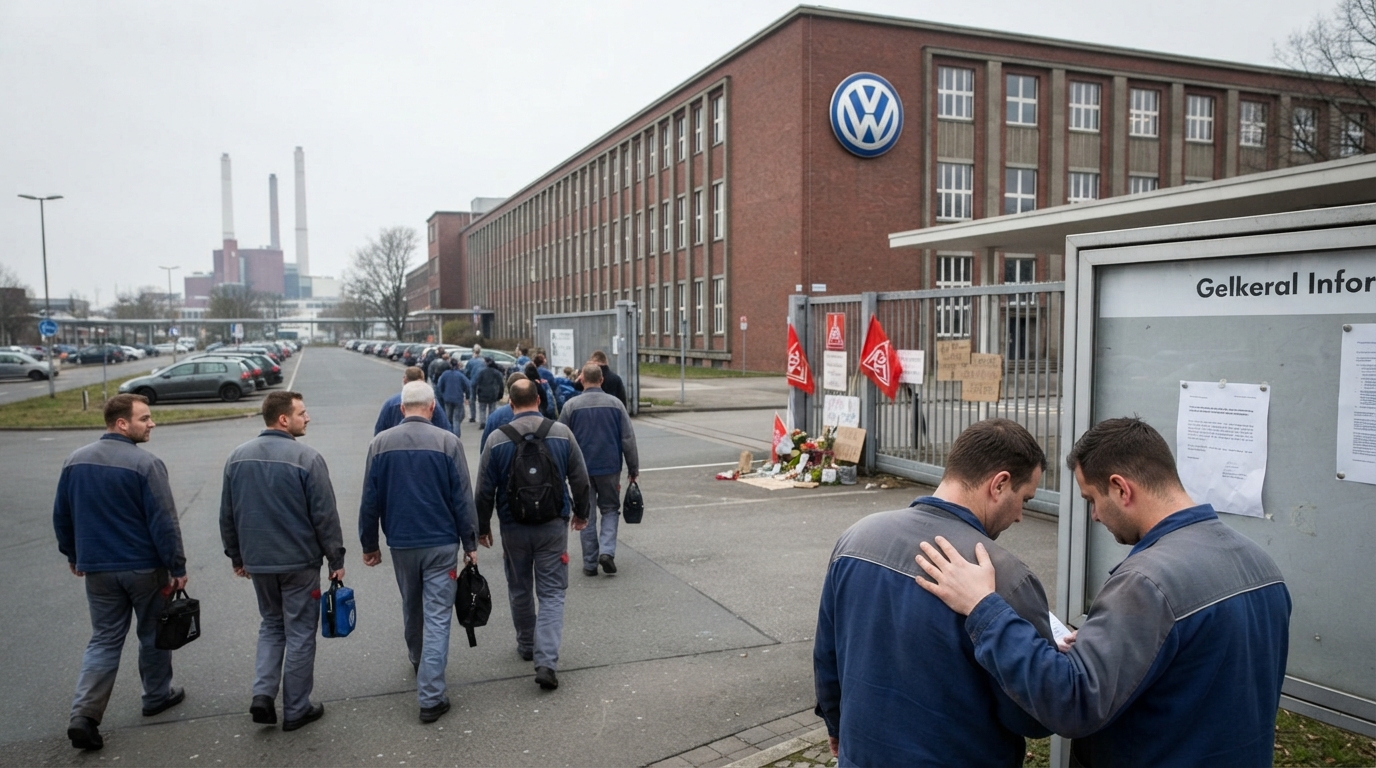
Volkswagen is set to reduce its global workforce by as many as 100,000 positions, according to the company's chief executive. This figure is double the earlier estimate of 50,000 job cuts in Germany by 2030. The Volkswagen Group, which encompasses brands such as Porsche, Audi, Seat, and Skoda, has faced a significant drop in profits due to declining sales in crucial markets and heightened competition from Chinese manufacturers entering Europe.
In a memo to employees that received considerable media attention, CEO Oliver Blume noted that the Group's expenses are 20% higher than those of its competitors, necessitating further cost reductions. He indicated that this could lead to a "theoretical deduction" of 50,000 jobs globally. "We are currently assessing across all brands, companies, and regions how many adjustments are actually necessary and feasible," he stated. "We need to become more efficient, more robust, and simpler. We must reduce our costs."
Blume also mentioned that the company has not been able to confirm alternative uses for four German factories that have been at risk of closure. Two of these facilities, located in Zwickau and Emden, are involved in electric vehicle production, but they, along with others in Hanover and Neckarsulm, are considered costly to operate.
Volkswagen's profits have seen a sharp decline in recent years, with an operating profit of €22.6 billion ($25.8 billion, £19.3 billion) in 2023, which fell to €19.1 billion in 2024, and further down to €8.9 billion last year. The company has been particularly affected by a 26% drop in sales in China during the first half of the year, a market that was once highly profitable for them. In the United States, sales decreased by over 7%, partly due to tariffs on car imports imposed by the Trump administration.
Additionally, Chinese brands have aggressively entered international markets, leveraging new technologies and lower production costs compared to their European counterparts, which has intensified pressure on established brands to manage their expenses and has reduced profit margins.
In late 2024, following threats of widespread strikes, Volkswagen reached an agreement with the German trade union IG Metall to eliminate 35,000 jobs at its main brand by 2030 in a "socially responsible manner," with an additional 15,000 jobs to be cut across its other brands. The current proposals under consideration appear to extend beyond these initial plans.
Last week, protests erupted at Volkswagen facilities nationwide in anticipation of a meeting of the company's supervisory board, which includes both labor representatives and management. Some industry analysts suggested to Agence France Presse that Volkswagen may have intentionally announced the 100,000 job figure as a negotiation strategy, implying that the final number of cuts could be lower. The German automotive industry, once a powerhouse, is now facing a crisis. What will it take to resolve this situation?