

Uzbekistan Leads Central Asia in Tourism Growth, WTTC Says
A WTTC report says Uzbekistan led Central Asia in tourism growth indicators in 2025 as the region became the world's fastest-growing tourism market.
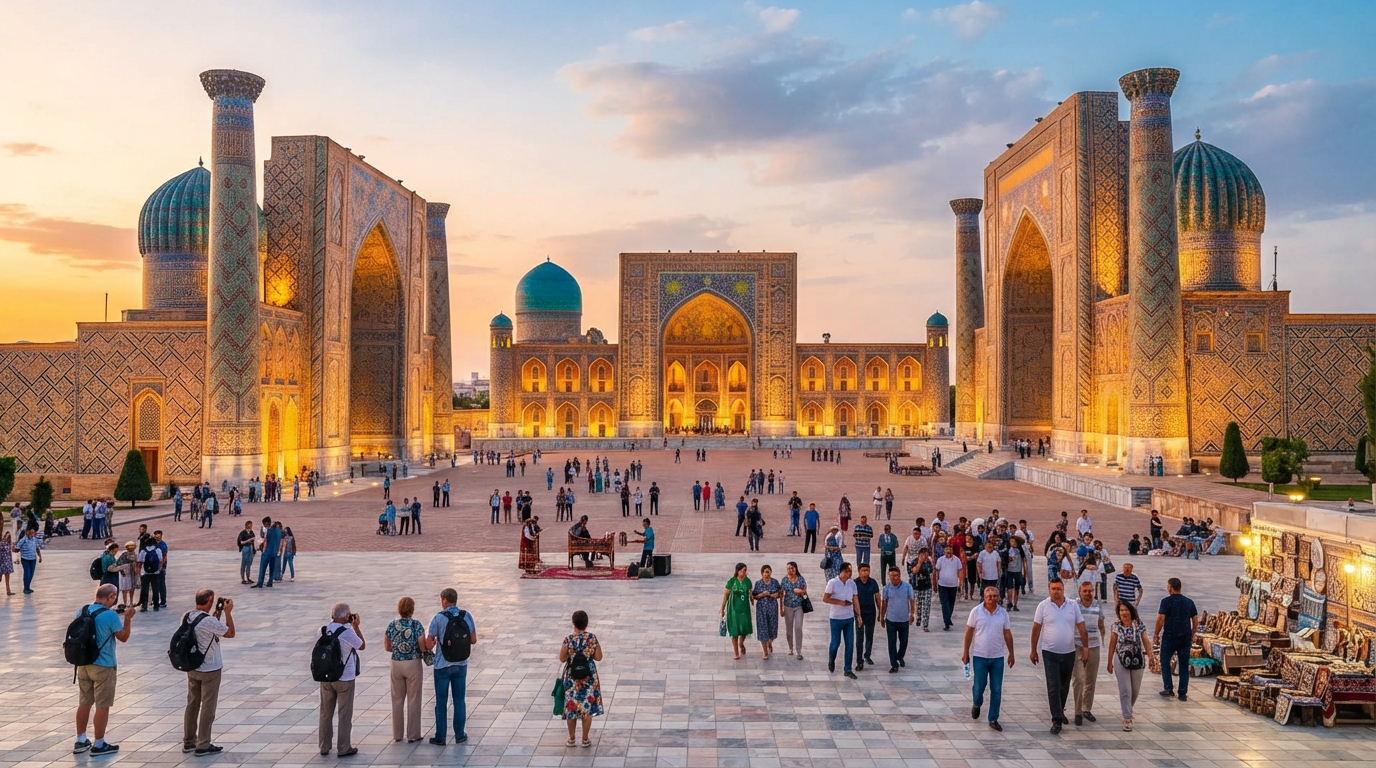
Uzbekistan has emerged as Central Asia's leader in tourism growth, according to the World Travel & Tourism Council (WTTC). The "Travel & Tourism Economic Impact Research 2026" report, published by the WTTC, indicates that Uzbekistan secured the top spot in Central Asia across key tourism development metrics in 2025.
The report identified Central Asia as the world's fastest-growing tourism region in 2025. The WTTC categorizes the global travel and tourism industry into 13 macro-regions. The study revealed that Central Asia experienced the most robust global growth in tourism's economic contribution, tourism exports, and other vital industry indicators, with Uzbekistan leading the region in these categories.
In 2025, the total contribution of travel and tourism to Central Asia's gross domestic product saw a 17.7% increase, while the sector's direct contribution grew by 19.6%.
The region also recorded the highest growth in visitor exports, which reached US$9.9 billion in 2025, a 26.4% increase from the previous year, marking the strongest performance among all global regions. Uzbekistan significantly contributed to this achievement, with its visitor exports totaling US$4.8 billion in 2025, representing nearly half of Central Asia's total.
The study further highlighted Uzbekistan's popularity among travelers from neighboring countries. According to the WTTC, Uzbekistan was the most favored travel destination for Central Asian residents in 2025. The breakdown of the region's primary travel destinations was as follows: Uzbekistan — 25%; Kazakhstan — 23%; Kyrgyzstan — 18%; Russia — 16%; Turkey — 6%.
The WTTC attributed Uzbekistan's leading position to its rich historical and cultural heritage, substantial tourism potential, and consistent government policies aimed at developing the sector.
The report noted that tourism in Central Asia is predominantly regional, with residents frequently traveling to neighboring countries. Concurrently, the WTTC stated that the region possesses considerable potential for developing a unified tourism area.
According to the report, further growth in international tourism could be fostered by streamlining border procedures, enhancing air connectivity, improving transport and logistics infrastructure, establishing cross-border tourism routes, and promoting Central Asia as a singular tourism destination in the global market.
The study found that international visitors accounted for 64.3% of all tourism spending in the region, while domestic tourism made up 35.7%. Of the international visitor spending, 84.5% was generated by leisure travel and 15.5% by business travel.
The WTTC projects continued long-term growth, estimating that by 2036, the total contribution of travel and tourism to Central Asia's economy will reach US$29.7 billion. The report stated that these findings underscore the region's strong growth potential and its strengthening position in the global tourism market.
The WTTC assessment, as per the report, reflects the effectiveness of Uzbekistan's reforms in developing its tourism sector, modernizing infrastructure, expanding international transport connectivity, and promoting the country's tourism offerings in foreign markets. The report concluded that Uzbekistan continues to solidify its standing as one of Central Asia's premier tourism destinations.